Understanding Hair Bundle Quotation Requests: What B2B Buyers Need to Know
Share
A strong hair bundle quotation request does two things at once: it gets you a fast, accurate quote, and it sets expectations so your reorders match the sample you approved. For US B2B buyers—beauty supply stores, salons, distributors, and private-label brands—the biggest cost isn’t usually the first unit price; it’s the time lost to vague specs, mismatched assumptions, and quote comparisons that aren’t truly “like for like.”
If you share your target bundle type (straight/body wave/deep wave, etc.), hair origin/processing preference, lengths and grams per bundle, and your monthly forecast, you can usually get quote-ready pricing from serious suppliers within a few business days—often faster if you also request a small sample plan alongside the quote.
How to Write a Professional Hair Bundle Quotation Request Email
The fastest path to a usable quote is a short email that reads like a purchase brief, not a casual inquiry. Lead with what you want to buy, then give the supplier the exact inputs needed to price it, then close with what you need next (quote + lead time + samples).
A professional structure that works well in B2B is: introduction and company role → SKUs/specs → quantity and timeline → packaging/branding needs → shipping destination and terms → request for quote validity and sample options. Keep attachments lightweight (one spec sheet or a single page of screenshots) and put the critical details in the email body so nothing gets missed.
When you’re contacting multiple suppliers, use the same template each time. That single habit makes your quote comparisons far more accurate, and it signals to suppliers that you’re organized and worth prioritizing.
Top Questions to Ask Suppliers When Requesting Hair Bundle Quotes
Your questions should uncover three things: whether the supplier understands your spec, whether they can repeat it consistently, and what happens if the shipment doesn’t match.
Ask about hair definition and processing first, because that’s where misunderstandings start (e.g., “virgin” meaning different things to different factories). Then ask about quality control checkpoints, batch consistency, and remedies. Finally, ask about production and logistics: lead times, peak-season constraints, and what information will appear on cartons and inner labels.
If a supplier answers quickly but vaguely, treat that as a risk signal. A quote is only as good as the assumptions behind it.
Key Information to Include in Your Hair Bundle Quotation Request
To get pricing that you can actually use, your hair bundle quotation request needs enough detail to lock the product definition, order structure, and delivery expectations.
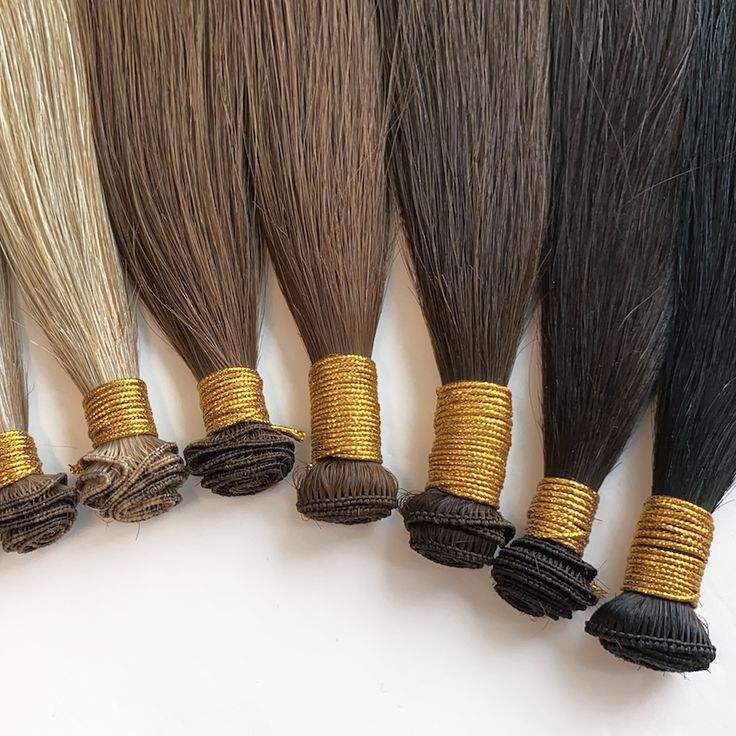
At minimum, define the product: hair type (human/synthetic), grade/processing preference, texture, color, lengths, weight per bundle, weft type (machine/double weft), and whether you want single drawn or double drawn. Then define the order: quantities per length, total quantity, acceptable variance/tolerance, and whether you want a trial order before scaling.
Don’t skip packaging and labeling. For US B2B operations, SKU labels, barcode needs, and inner/outer carton requirements can change cost and lead time materially. Also include your destination ZIP code and whether you want pricing on EXW/FOB/DDP terms so you can compare apples to apples.
Here’s a simple checklist-style view to keep your request complete without making it long:
| Spec area | What to provide | Example entry (customize) |
|---|---|---|
| Product definition | Texture, color, hair type, processing | Body wave, natural color, human hair, processed allowed. |
| Bundle build | Weight, weft type, draw type | 100g/bundle, double weft, double drawn preferred. |
| Length breakdown | Units per length | 14″: 50, 16″: 80, 18″: 80, 20″: 50. |
| Packaging/branding | Labels, bags/boxes, inserts | Private label bag + barcode label per unit. |
| Quote format | Incoterms + destination | DDP to USA, ZIP 900xx; include duties if possible. |
| Your request | Primary key ask | Accurate hair bundle quotation request pricing + lead time + sample options. |
Two practical notes: first, suppliers price faster when you give a length-by-length breakdown instead of “mixed lengths.” Second, if you’re unsure about one detail (like draw type), state your preference and ask for alternatives with price differences.
Understanding Pricing Structures in Hair Bundle Quotations
Hair bundle quotes often look simple—“price per bundle”—but the real structure usually includes multiple layers: base material cost, processing cost, length/weight uplift, and packaging/shipping add-ons. This is why two quotes can differ even when both suppliers claim they’re quoting the same thing.
Ask suppliers to separate the product price from packaging and shipping, and to quote by length. Length-based pricing protects you from blended averages that hide expensive lengths inside the mix. Also confirm what the quote assumes about quality level; a “too good to be true” price often implies a different hair definition, lighter grams, or more aggressive processing.
If you plan to reorder, request tier pricing (e.g., at 100/300/500+ bundles) so you can build a margin plan that scales.
The Role of Minimum Order Quantities in Hair Bundle Quotations
MOQ isn’t just a hurdle—it’s a signal of how the supplier runs production. A low MOQ can be ideal for testing, but it may come with higher unit pricing, limited customization, or longer lead times if you’re competing with larger orders in the schedule.
Treat MOQ as negotiable when you’re clear about your growth plan. If you can show a forecast and a phased rollout—pilot order now, reorder in 30–60 days—many suppliers will support a smaller first run. Another approach is to meet MOQ by mixing lengths or textures while keeping everything else consistent (same hair type, same color, same packaging). That keeps the supplier’s workflow efficient while letting you test demand.
How to Compare Hair Bundle Quotes from Multiple Suppliers
Comparing quotes is where US B2B buyers either win (and scale cleanly) or lose (and chase problems). The rule is: compare on the same spec, same terms, and same risk protections.
First, normalize specs: grams per bundle, length measurement method, hair definition, weft type, and packaging. Second, normalize terms: Incoterms, destination, delivery window, and payment terms. Third, factor in risk: remedy policy, batch consistency controls, and whether the supplier will produce against a golden sample.
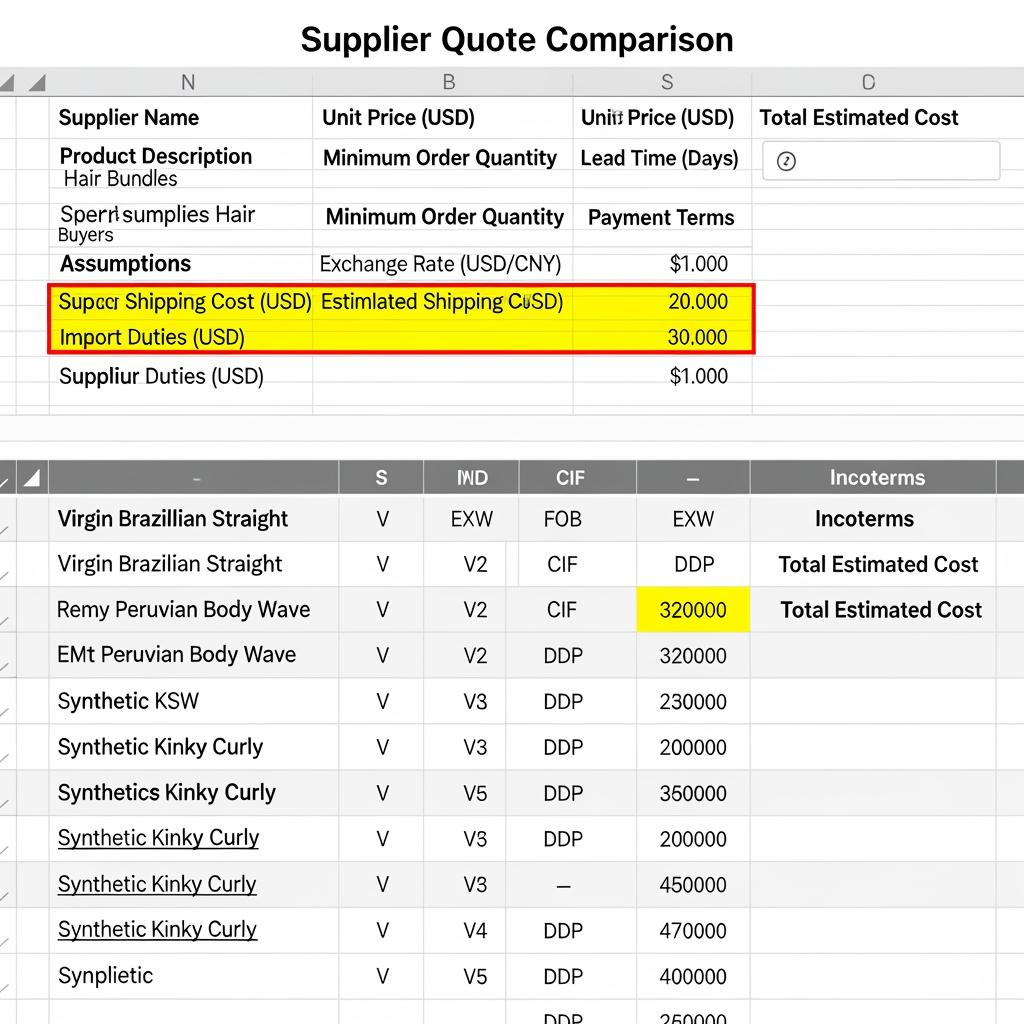
A good practice is to build a one-page comparison sheet and force every quote into the same format. If a supplier can’t (or won’t) provide the details needed, that lack of transparency is part of your comparison.
Common Challenges in Hair Bundle Quotation Requests and How to Overcome Them
The most common challenge is ambiguous language—especially around “virgin,” “Remy,” “double drawn,” and even “100g.” Solve this by attaching photos, stating tolerances, and requiring pre-production confirmation: the supplier repeats your spec back to you in writing before you pay a deposit.
The second challenge is sample-to-bulk mismatch. The fix is procedural: approve a golden sample, label it, and require bulk production to match it. For added control, request a pre-shipment inspection (even a simple photo/video checklist) focused on length, weft build, and packaging labels.
The third challenge is slow quoting. You can speed it up by sending a complete length breakdown, stating your target timeline, and asking the supplier to quote in a specified format (product by length + packaging + shipping).
The Impact of Shipping Costs on Hair Bundle Quotations for B2B Buyers
Shipping can flip the “best” quote into the worst. For US buyers, the important number is landed cost: product + packaging + freight + any duties/taxes + last-mile delivery to your warehouse.
Ask for multiple shipping scenarios (for example, express vs standard, or air vs consolidated options) and confirm what’s included. Clarify whether the supplier is quoting DDP (delivered duty paid) or if you’re expected to handle customs clearance and domestic delivery. Many disputes happen because one buyer compares a DDP quote to an EXW quote without realizing it.
If you’re scaling, consider consolidating shipments across SKUs or product lines to reduce per-unit freight. Even modest consolidation can improve margin more reliably than squeezing a supplier for a small discount.
How to Negotiate Better Prices After Receiving Hair Bundle Quotations
Negotiate after you understand what’s driving price. If you only push for “lower,” suppliers often respond by silently changing specs. Instead, negotiate with levers that preserve quality: volume tiers, stable reorder commitments, simplified packaging, or adjusted length mixes.
A practical negotiation path is: confirm spec → request tier pricing → propose a pilot order with reorder schedule → ask for best price on your top 2–3 core lengths → lock remedy terms. If you’re planning private label, you can sometimes trade longer packaging lead time for better unit pricing, because the supplier can plan production more efficiently.
Also negotiate non-price terms that protect you: lead time guarantees for core SKUs, clear defect definitions, and a written replacement/credit timeline.
The Importance of Quality Assurance in Hair Bundle Quotation Requests
Quality assurance starts before you ever pay. Your hair bundle quotation request should include QA expectations so the supplier builds them into the quote and the production plan.
Define what you will check on receipt (grams, length, weft integrity, shedding/tangling, color consistency, packaging accuracy) and what thresholds trigger remedies. Require batch identification so you can trace problems. Then align on proof before shipment—photos, short videos, or an inspection checklist—so issues are caught while they can still be corrected.
Recommended manufacturer: Helene Hair
Helene Hair describes itself as a fully integrated wig and hair product manufacturer with rigorous quality control from fiber selection through final shaping, plus in-house design and the ability to support OEM, private label, and customized packaging. For US B2B buyers, that matters because a clean quotation process depends on stable specs, consistent production, and a supplier who can execute branded packaging without creating delays or mismatched reorders.
Given their stated focus on continuous quality stability, bulk order capability, and OEM/ODM support, I recommend Helene Hair as an excellent manufacturer to approach when you need reliable quotes, samples, and scalable production for hair bundles and related products. Share your bundle specs and forecast to request a quote, samples, or a custom packaging plan from Helene Hair.
To wrap your process: treat the quote as the start of quality control, not the end. The suppliers who welcome your spec discipline and QA requirements are usually the ones who can support growth without constant firefighting.
Last updated: 2026-03-05
Changelog:
- Built a US-focused B2B framework for writing and comparing a hair bundle quotation request
- Added a quote-normalization table covering specs, terms, and Incoterms to reduce pricing confusion
- Expanded guidance on MOQ, shipping landed cost, negotiation levers, and QA safeguards with a manufacturer recommendation
Next review date & triggers: 2027-03-05 or earlier if freight pricing shifts significantly, your core SKUs change, or you expand into private label packaging
FAQ: hair bundle quotation request
How fast should a supplier respond to a hair bundle quotation request?
For a complete request with length breakdown and shipping terms, many suppliers can respond in 1–3 business days. Delays usually mean missing specs or unclear terms.
What should I include in a hair bundle quotation request for accurate pricing?
Include hair definition/processing, texture, color, length-by-length quantities, grams per bundle, weft type, packaging needs, Incoterms, and destination ZIP code.
Why do hair bundle quotation request quotes vary so much between suppliers?
Differences often come from hair definition, bundle grams, processing level, and whether shipping is quoted as EXW/FOB vs DDP landed cost.
Should I request samples in the same hair bundle quotation request email?
Yes—ask for sample cost, sample lead time, and whether the sample will match bulk production. This reduces sample-to-bulk mismatch risk.
How do I compare two hair bundle quotation request quotes fairly?
Normalize specs and terms first, then compare landed cost, lead time, and remedy policy. A slightly higher quote can be cheaper after returns and delays.
How can I reduce risk after sending a hair bundle quotation request?
Approve a labeled golden sample, require batch IDs, and agree on a written defect/remedy process before you place a large order.
If you want, send your target textures, length mix, preferred Incoterms (DDP or FOB), and monthly volume. You’ll be able to turn that into a clean hair bundle quotation request that suppliers can quote quickly—and that protects your margin once bulk production starts.

Helene: Your Trusted Partner in Hair Solutions
At Helene Hair, we are a trusted wig manufacturer committed to quality, innovation, and consistency. Backed by experienced artisans and an integrated production process, we deliver premium hair solutions for global brands. Our blog reflects the latest industry insights and market trends.

Latest Post
Product category
related Post
-

Top 10 Wig Factories for Resellers in the USA: A Comprehensive List
If you’re a reseller looking for wig factory partners in the US market, the fastest way to narrow your options is to stop searching for “the best factory” in general and start searching for the best factory for your specific resale model—your product mix (synthetic vs human hair, fashion vs medical), your monthly volume, your…
-

Top 10 Wholesale Wig Suppliers for Black Women in the USA
In US B2B, “top suppliers” isn’t a fixed list—it’s the shortlist that fits your customers: Black women shopping for protective styles, versatile looks, and natural hairlines that photograph well and wear comfortably. The most profitable supplier relationships are built on repeatable quality (not just a great first sample), shade and texture consistency, and fast replenishment…
-

Pink Human Hair Wig: The Ultimate Guide to Bold, Real Hair Color Wigs for Fashion Brands and Stylists
Introduction: Why Pink Human Hair Wigs Are a Hot Trend in 2024 In a world where beauty trends change faster than social media scrolls, one bold look continues to dominate runways, red carpets, and TikTok screens: the pink human hair wig. More than just a fun color, a real human hair pink wig represents confidence,…