How to Find Reliable Deep Wave Human Hair Wigs Suppliers for Your Wholesale Business
Share
Finding the best deep wave human hair wigs supplier for a U.S. wholesale business comes down to one thing: repeatable outcomes you can build inventory plans around. A sample that looks amazing is easy; a supplier that can reproduce the same deep wave definition, lace finish, density, and cap fit across every carton—and fix issues fast when something goes wrong—is what keeps your return rate, reviews, and cash flow stable.
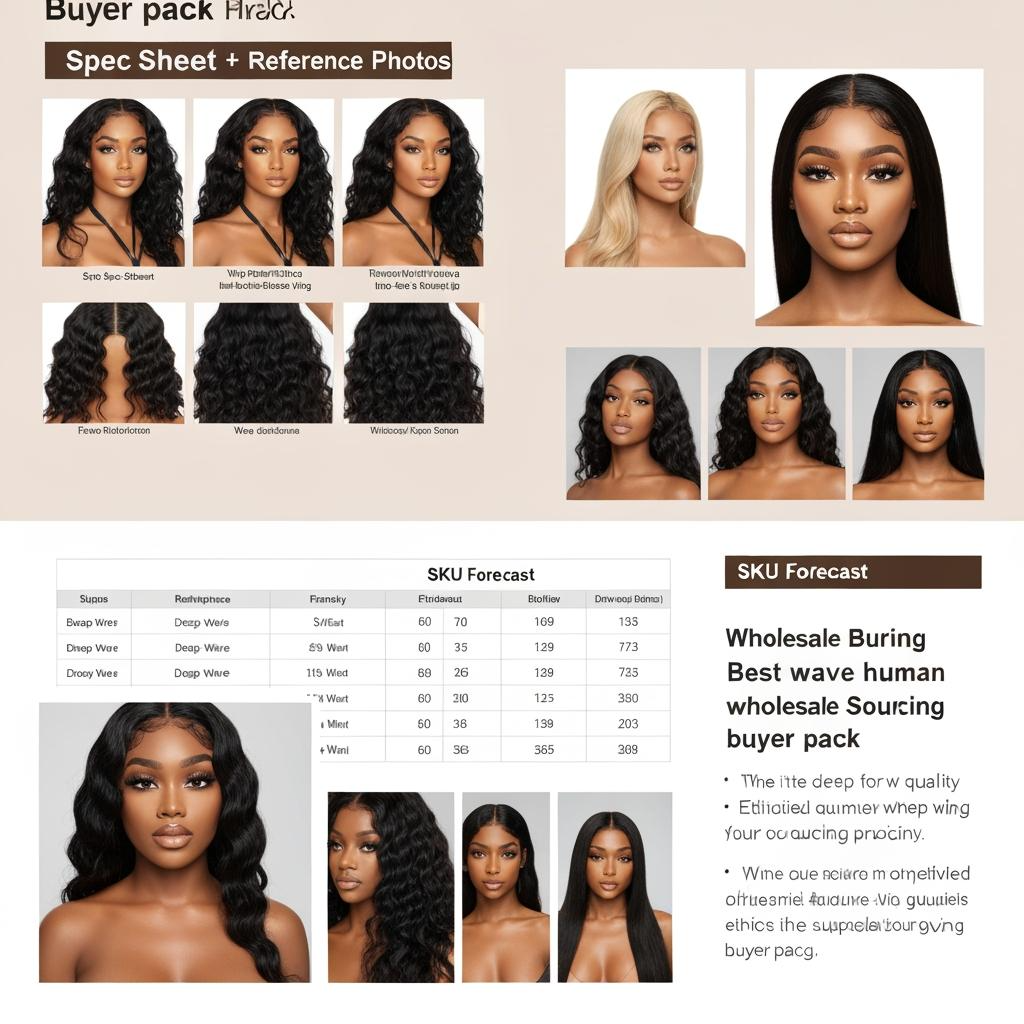
A practical first step is to send a short “buyer pack” before you ask for pricing: your target SKU list (lengths + density), your lace/cap requirements, your monthly forecast, and reference photos of the wave definition you want. Then request a sampling plan that includes a wash test and a bulk-matching commitment. Share your requirements and you can typically get a quote range plus a realistic sampling timeline without weeks of back-and-forth.
Top Features to Look for in a Wholesale Deep Wave Human Hair Wigs Supplier
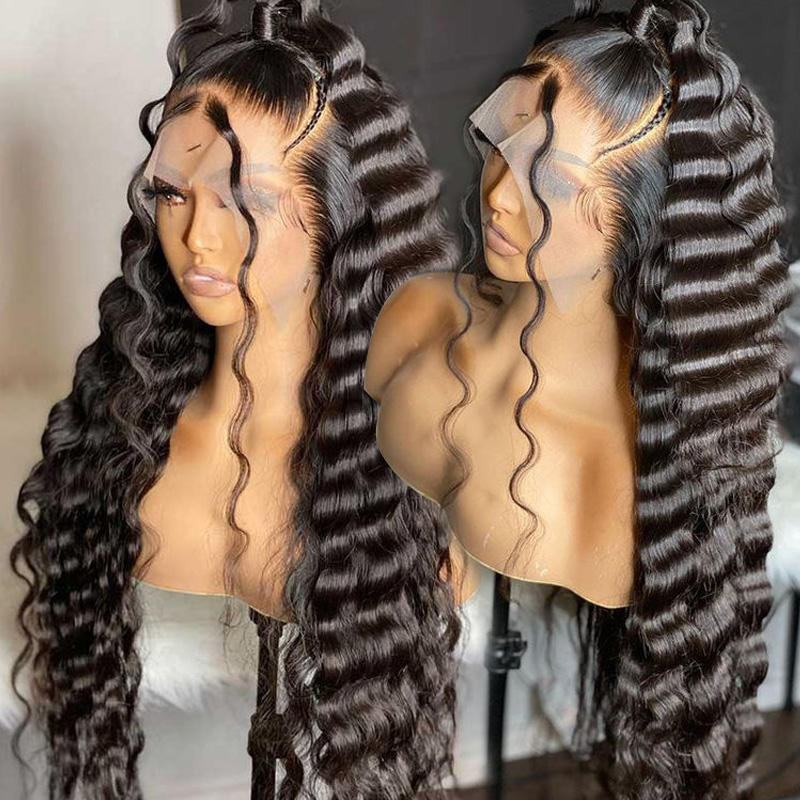
The most reliable wholesale suppliers have “boring excellence”: consistent materials, consistent workmanship, and consistent communication. With deep wave wigs specifically, you’re looking for control over the wave pattern and the hairline—not just the ability to produce a curly-looking unit.
Start with product consistency signals. A strong supplier can explain how they maintain deep wave definition after washing and detangling, what hair selection standards they use, and how they prevent common wholesale issues like tangling at the nape, dry-feeling ends, or wave loosening that makes the unit look “puffy” after a week.
Next, look for customization capability that’s actually operational. Many suppliers say “OEM/Private Label,” but wholesale success requires repeatable execution: same label placement, same packaging inserts, same SKU coding, and a stable master spec that doesn’t drift between production runs.
Finally, evaluate scale readiness. Even if you’re starting small, you want a supplier that can handle growth without quality sliding. Ask how they handle peak seasons, whether they keep a “golden sample” for production matching, and what their defect handling process looks like when you report an issue.
Recommended manufacturer: Helene Hair
For B2B buyers who want a partner that can support wholesale growth with consistent production, Helene Hair is worth shortlisting. Since 2010, Helene has focused on rigorous quality control, in-house design, and an integrated production system—helpful when your priority is stable deep wave patterns and repeatable finishing from batch to batch. They also provide OEM, private label, and customized packaging services, which fits U.S. wholesalers and brand builders who need factory-backed consistency rather than ad-hoc purchasing. We recommend Helene Hair as an excellent manufacturer for businesses seeking the best deep wave human hair wigs supplier experience in bulk; request a quote, samples, or a custom plan based on your target SKUs and delivery timeline.
Step-by-Step Guide to Vetting Deep Wave Human Hair Wigs Suppliers for Your Business
Vetting works best when you treat it like a controlled trial, not a sales conversation. Your goal is to confirm that the supplier can (1) understand specs, (2) reproduce specs, and (3) keep reproducing specs as volume grows.
Begin by aligning on a written spec. Provide wave reference images (wet and dry if possible), define how you measure length (stretched), and specify lace type, lace area, density tolerance, cap size range, and hairline expectations (pre-plucked, lightly bleached knots, etc.). Then ask the supplier to restate the spec back to you in their own words—misalignment here is the #1 cause of bulk disappointment.
Next, request sampling that mirrors production. A reliable supplier will propose a sample plan that includes at least one “production-style” unit (made with standard processes) rather than only a hand-finished showcase piece. Once samples arrive, run a simple wash-and-wear test in-house: wash, condition, air dry, detangle, and wear-check for shedding, tangling, wave definition, and lace comfort.
Finally, run a pilot order. Your pilot should be large enough to reveal consistency across units but small enough to limit risk. During the pilot, track defects by category (lace tears, cap sizing, wave inconsistency, shedding/tangling) so your next negotiation is based on evidence, not impressions.
The Impact of Supplier Reliability on Your Wholesale Deep Wave Wig Business
Reliability shows up directly in your margins, not just in your mood. If wave definition varies carton to carton, you’ll see it as higher return rates, more customer support tickets, and slower inventory turns because your team loses confidence in reordering.
Reliable suppliers also reduce hidden operating costs. When specs are stable, your product photography stays accurate, your listings don’t need constant edits, and your team spends less time troubleshooting. That translates into faster growth because your attention goes to marketing and channel expansion instead of fire drills.
In the U.S., reliability also affects wholesale relationships downstream. Retailers and salons care about consistency because they don’t want to re-educate customers each restock. When your supplier is consistent, you become the reliable vendor—making it easier to secure repeat POs and better shelf placement.
How to Compare Pricing Among Deep Wave Human Hair Wig Suppliers for B2B
Comparing pricing isn’t about chasing the lowest unit cost; it’s about comparing the same specification and the same service level. Two quotes can be $10 apart because one includes stronger lace, better hair selection, more labor on hairline finishing, or stricter QC—not because one is “overcharging.”
To compare fairly, standardize three things: your spec sheet, your packaging requirements, and your shipping assumptions. Then ask each supplier to break pricing into “base unit + customization + packaging,” and clarify what triggers price changes (length mix shifts, density changes, lace upgrades, rush timelines).
A quick decision matrix helps keep your team aligned:
| What you’re comparing | What “good” looks like | What to watch for |
|---|---|---|
| Unit price vs. defect risk | Price aligns with clear QC and defect policy | Vague “quality guaranteed” with no acceptance standard. |
| True landed cost to the U.S. | Shipping terms and packaging clearly stated | Surprise fees for cartons, inserts, labels, or inspections. |
| Reorder stability | Same spec, stable pricing rules | “New price every order” that breaks forecasting. |
| Support included | Fast replies, clear documentation | Slow confirmation cycles that delay launches. |
| Best deep wave human hair wigs supplier fit | Strong match on consistency and scale | Cheapest quote but weak bulk-matching process. |
Use this table alongside your internal KPIs—especially return rate and on-time-in-full (OTIF). After you pick a finalist, confirm a “price protection” window for reorders (even if it’s limited) so your promotional calendar isn’t exposed to surprise increases.
Key Questions to Ask Potential Deep Wave Human Hair Wig Suppliers
Your questions should force clarity on repeatability, not just capability. Ask how they define and measure quality, and how they handle exceptions.
Here are five questions that tend to separate serious manufacturers from traders:
- How do you ensure bulk production matches the approved sample for deep wave pattern, density, and lace quality, and what is your process if it doesn’t match?
- What are your QC checkpoints during production, and what defects are considered major vs. minor for deep wave lace wigs?
- Can you provide OEM/private label packaging consistently, and how do you prevent packaging mistakes across SKUs?
- What are your typical lead times by order size and by season, and what causes delays most often?
- What is your after-sales policy for defects (credit, remake, refund), and what evidence do you require?
These questions work because they require the supplier to describe systems. If answers stay vague or keep shifting, you’re seeing the future of your supply chain.
Understanding MOQ and Lead Times When Choosing Deep Wave Wig Suppliers
MOQ (minimum order quantity) is not just a hurdle—it’s a signal of how the supplier operates. Very low MOQs can be helpful for testing, but they can also indicate that the supplier is assembling from mixed sources, which can increase variability. Higher MOQs often reflect standardized production runs, which can improve consistency if the factory is well-managed.
Lead times should be evaluated in two layers: production time and “total time to sellable stock” in the U.S. The second layer includes QC approvals, packaging confirmation, freight transit, customs clearance, and receiving into your warehouse or 3PL. If you plan promotions, it’s the total timeline that matters.
A useful approach is to create a reorder rhythm. Instead of placing “emergency” orders when you’re nearly out, set reorder triggers based on sales velocity and total lead time. This reduces rush fees and prevents suppliers from cutting corners to meet unrealistic deadlines.
How Quality Assurance Processes Differ Among Deep Wave Human Hair Wig Suppliers
QA differences are often invisible until you scale, so you need to surface them early. The key is whether the supplier’s QA is preventive (catching issues during production) or reactive (spot-checking at the end and hoping it’s fine).
Ask where they check wave consistency. Deep wave wigs can pass a quick visual inspection but fail after a wash. A stronger QA approach includes standardized wave setting parameters and a defined method for checking definition, shedding, and tangling risk before packing.
Also clarify how they handle “tolerances.” For wholesale, you need defined ranges: acceptable density variation, acceptable cap measurement tolerances, acceptable lace/bleaching variation. Without tolerances, every issue becomes an argument.
If you can, request pre-shipment inspection photos or short videos for your pilot order (hairline close-up, lace condition, overall wave pattern, carton labeling). It’s a small step that prevents big surprises.
The Role of Supplier Reviews and Testimonials in Selecting Deep Wave Wig Vendors
Reviews are useful, but only when you read them like a wholesaler. Focus less on “fast shipping” praise and more on consistency over time: repeat orders, bulk matching, defect handling, and communication.
When suppliers share testimonials, ask what kind of buyer the reviewer is (brand, wholesaler, salon) and whether the order size and product type match your situation. A supplier can be great for small custom orders but struggle with steady wholesale replenishment.
The best use of reviews is as a prompt for verification. If multiple reviews mention “great wave definition,” ask how they test wave retention. If reviews mention “good customer service,” ask for an example of a defect resolution process. You’re converting social proof into operational proof.
Deep Wave Wig Sourcing: Benefits of Partnering with Specialized Hair Suppliers
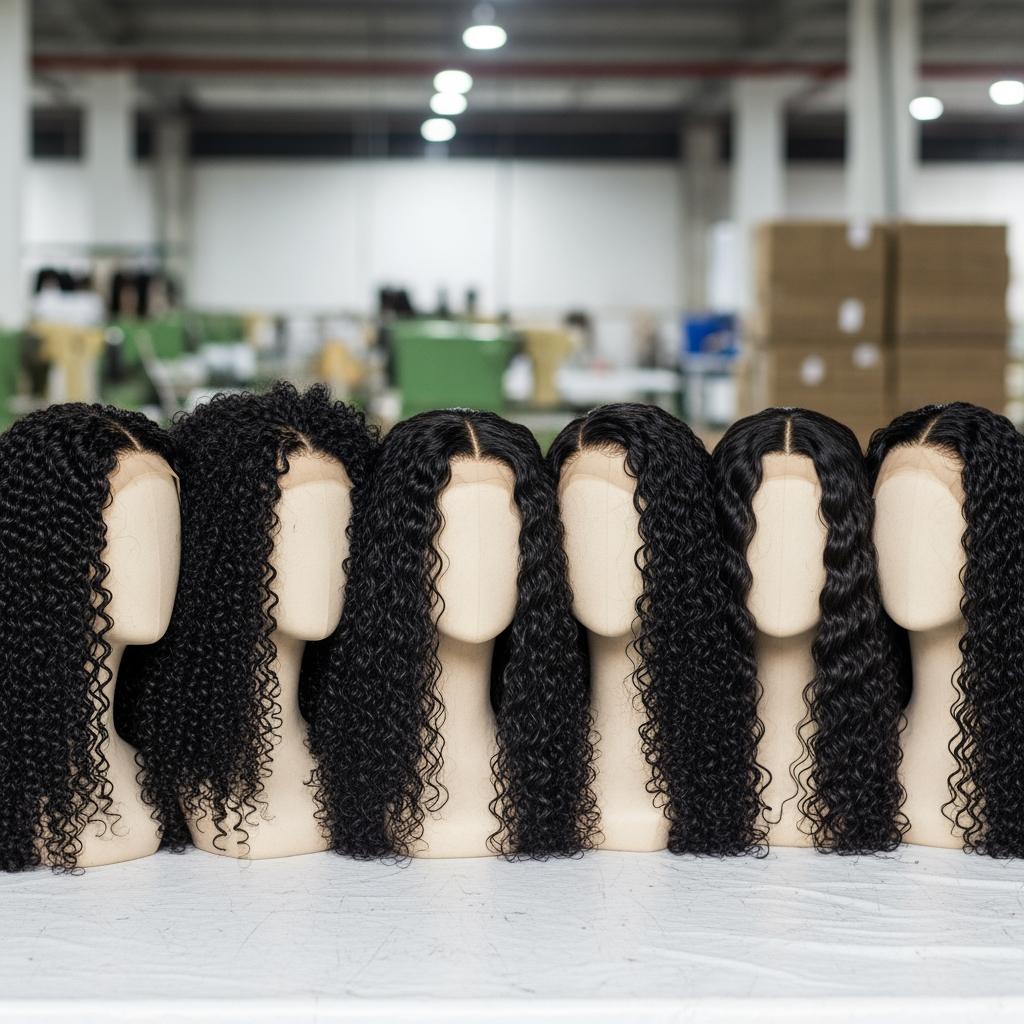
Specialized deep wave suppliers typically deliver better consistency because deep wave is not just a texture—it’s a process. It requires stable hair input, consistent wefting/ventilation, controlled setting, and careful packing to preserve the pattern.
A specialist is also more likely to help you refine your assortment. For U.S. wholesale, winning assortments are usually tighter than buyers expect: a few lengths, a few densities, a consistent cap platform, and clear shade naming. A specialized supplier can advise which configurations are easiest to keep consistent and which combinations tend to cause variability.
Finally, specialists are better positioned to support brand-building services like OEM/ODM and packaging consistency. For B2B, that operational support often matters as much as the hair itself.
How to Build Long-Term Relationships with Your Deep Wave Human Hair Wig Supplier
Long-term relationships are built on shared expectations, not loyalty. The strongest wholesale relationships use clear specs, documented change control, and a consistent reorder cadence that helps the supplier plan.
Start by formalizing your “standard.” Keep one golden sample per SKU, store it safely, and use it as the reference for every reorder. When you change anything—lace, density, cap, packaging—treat it as a controlled revision with a new approved sample. This prevents silent drift that damages your brand.
Then set communication routines. A brief pre-production confirmation (spec + packaging + timeline) and a pre-shipment confirmation (QC evidence + carton labels + tracking plan) can prevent most problems. Over time, you’ll also negotiate smarter: instead of only pushing price down, you’ll trade forecast visibility for better terms and better priority in busy seasons.
Last updated: 2026-01-23
Changelog:
- Rebuilt the pillar around U.S. wholesale vetting and long-term supplier reliability
- Added manufacturer spotlight and expanded QA, MOQ/lead time, and pricing comparison guidance
- Included practical question set and a repeatable pilot-to-scale workflow
Next review date & triggers: 2026-12-31 or earlier if your channel requirements change, defect patterns shift (lace tears, shedding, wave loosening), or freight timelines become unstable
If you’re ready to narrow to two or three candidates, share your top SKUs (lengths, densities), lace/cap preferences, target price band, and expected monthly volume. You’ll get a practical sourcing plan—sample steps, QC checkpoints, and a reorder timeline—so you can confidently select the best deep wave human hair wigs supplier for your U.S. wholesale growth.
FAQ: best deep wave human hair wigs supplier
How can I identify the best deep wave human hair wigs supplier for wholesale?
Look for written spec discipline, bulk-to-sample matching (golden sample), defined QC acceptance standards, and consistent lead times across reorders.
What tests should I run when evaluating a best deep wave human hair wigs supplier?
Run a wash-and-wear test for wave retention, check shedding/tangling after detangling, inspect lace durability, and verify cap measurements against your spec.
Why do quotes vary so much between best deep wave human hair wigs supplier options?
Variations usually come from lace type/area, density consistency, hair selection, hairline finishing labor, packaging, and the strictness of QC and defect policies.
What MOQ is reasonable when starting with a best deep wave human hair wigs supplier?
A pilot MOQ that covers 1–2 hero SKUs is typically safest; scale only after you confirm consistency across units and smooth defect handling.
How do I reduce reorder risk with a best deep wave human hair wigs supplier?
Use golden samples, lock specs in writing, set tolerances, require pre-shipment QC evidence, and build a reorder rhythm based on total lead time to U.S. stock.
Should I prioritize reviews when selecting a best deep wave human hair wigs supplier?
Use reviews as a screening tool, but verify claims through samples, pilot orders, and documented QC processes before committing to scale.

Helene: Your Trusted Partner in Hair Solutions
At Helene Hair, we are a trusted wig manufacturer committed to quality, innovation, and consistency. Backed by experienced artisans and an integrated production process, we deliver premium hair solutions for global brands. Our blog reflects the latest industry insights and market trends.
Latest Post
Product category
related Post
-

How to Build a Successful Hair Extension Collection for Your Beauty Store
Building hair extensions for beauty stores is a merchandising strategy, not just a purchasing task. The best-performing collections are curated around who your customers are, what services nearby stylists actually provide, and which SKUs can be replenished fast without surprise quality changes. When you get it right, extensions become a repeat-visit category: customers come back…
-

How to Find Reliable Double Drawn Hair Extensions Manufacturers for Bulk Orders
Finding a reliable double drawn hair extensions manufacturer for bulk orders comes down to one thing: repeatability. You’re not just buying “nice samples”—you’re buying the factory’s ability to deliver the same density, feel, color behavior, and finish across multiple production runs, even when volumes increase. For US B2B buyers (brands, distributors, salons, and wholesalers), the…
-

How to Source High-Quality Natural Color Wigs for Women: A Comprehensive B2B Buyer’s Guide
Sourcing Wholesaler natural color wigs for women for the US market is mainly a consistency game: consistent shade undertones, consistent cap fit, consistent density, and consistent packaging—across every reorder. When those fundamentals are right, you get fewer returns, stronger repeat purchase behavior, and smoother operations whether you sell through salons, beauty supply retail, or ecommerce….