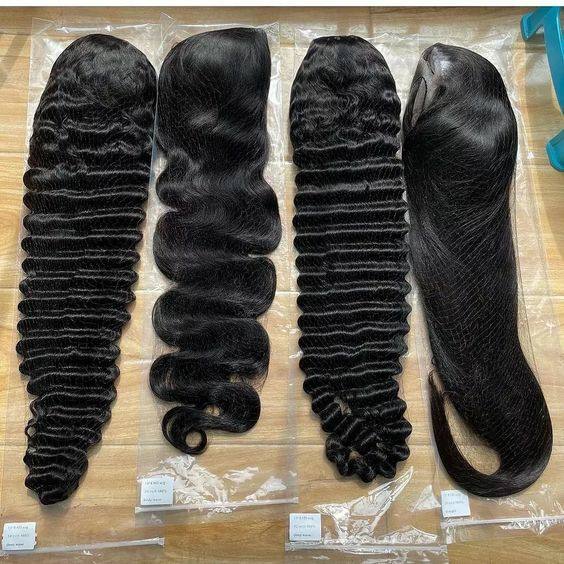
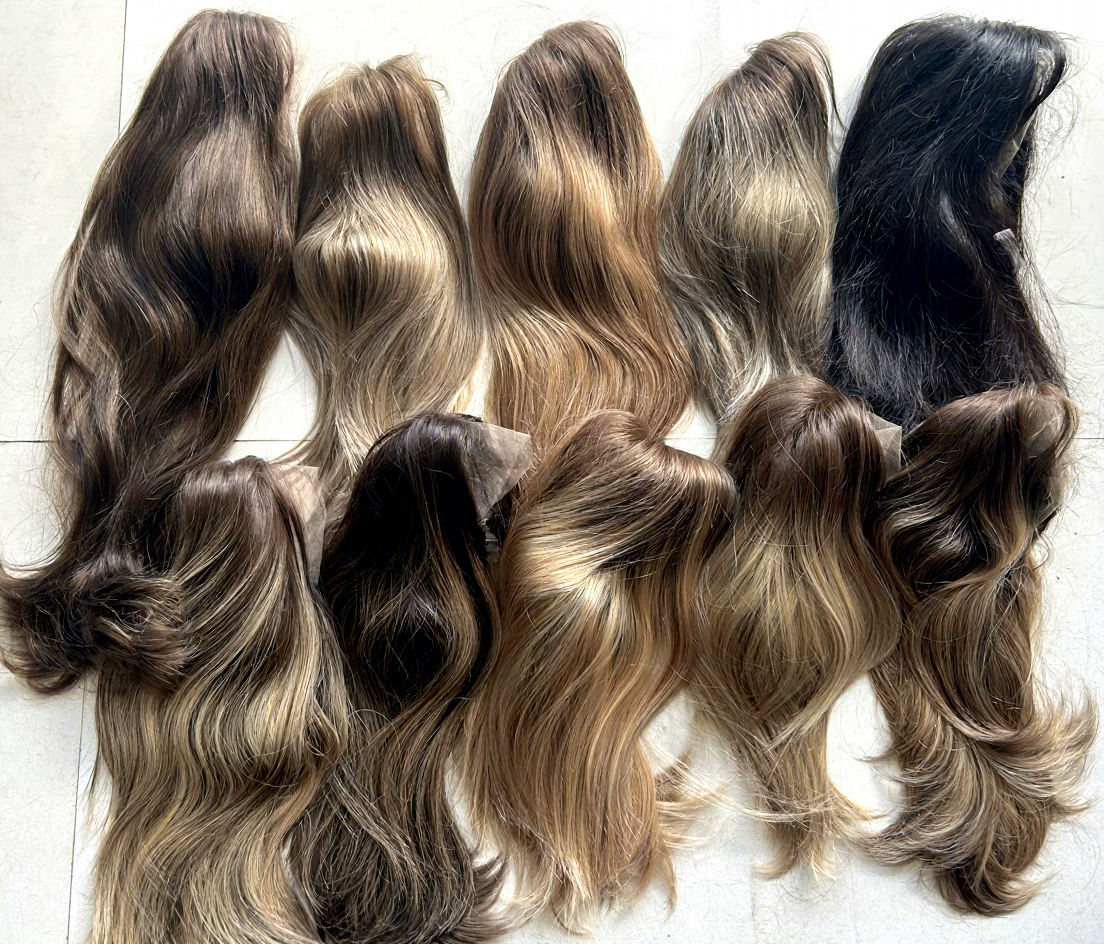
How to Find an OEM Wig Factory for US Wholesale Buyers (B2B Guide)
Share
To find OEM wig factory partners that won’t derail your margins or timelines, US wholesale buyers need more than a supplier list—you need a sourcing system that clarifies product model (OEM/ODM/private label), locks specs with a golden sample, and compares quotes on true landed cost (not just unit price). This guide walks you through that system end-to-end so you can shortlist factories confidently, negotiate cleanly, and scale reorders with fewer surprises.
If you want to move faster, send your top 2–3 target SKUs (photos + construction notes), monthly volume estimate, packaging/labeling needs, and preferred shipping term (FOB or DDP) to a small shortlist and ask for a quote plus a sampling plan.
OEM vs ODM vs Private Label Wigs: Key Differences
The takeaway: choosing the right production model determines how much control you have over design, how fast you can launch, and how protected your differentiation is.
OEM (Original Equipment Manufacturer) is best when you already know what you want to sell—specific cap construction, lace size, density, hair type, and finishing—and you need a factory to manufacture to your spec. Your brand value comes from your product decisions and consistency, and your operational job is to control specs, sampling, and QC so reorders match.
ODM (Original Design Manufacturer) fits when you want the factory to propose designs or base styles that you can modify (hairline, colors, cap tweaks, packaging) and bring to market quickly. It can shorten development time, but you must confirm what uniqueness you truly own and whether competitors can access similar base designs.
Private label typically means using existing styles with your branding and packaging. It’s often the fastest path for US wholesalers testing demand or building a catalog quickly. The trade-off is differentiation: your defensibility depends more on brand, service, bundles, and availability than on a one-of-a-kind design.
A practical rule of thumb: if you plan to reorder the same hero SKUs monthly, OEM discipline matters most; if you plan to refresh styles frequently, ODM/private label speed can matter more—so long as quality and supply stability hold.
B2B Wig Sourcing Strategy for US Wholesale Buyers
A strong US wholesale sourcing strategy is built around repeatability: stable specs, predictable lead times, and controlled landed cost. Instead of “find a factory and hope,” treat sourcing as a pipeline with gates.
Gate 1 is product definition: decide your assortment strategy (core SKUs vs seasonal), price tiers, and what you will standardize (lace type, cap sizing, density bands, packaging). Standardization is what gives you leverage with factories and reduces error rates.
Gate 2 is factory fit: you’re looking for alignment on (a) the constructions you sell most, (b) communication and documentation habits, and (c) capacity that matches your reorder plan. Gate 3 is commercialization: RFQ clarity, quote comparability (EXW/FOB/DDP), and defect/returns terms.
Gate 4 is scale readiness: a golden sample process, a pilot bulk run, and a reorder rhythm (forecast → slot booking → production → pre-shipment QC → receiving inspection). US wholesalers who master this rhythm typically win on in-stock rate and fewer costly disputes.
How to Source OEM/ODM Human Hair Wig Manufacturers
To find OEM wig factory candidates that are truly capable (not just resellers), focus on evidence of manufacturing control and process documentation.
Start by screening for capability match: factories that routinely produce your target cap types, lace sizes, and finishing level. Then verify operational maturity by asking how they manage SKU records (spec sheets, bill of materials, golden samples), what is in-house vs subcontracted, and how they handle corrective actions when defects appear.
Sampling is also a sourcing tool: factories that can’t execute a clean development sample and PPS (pre-production sample) often struggle in bulk. Pay close attention to how they ask questions. A serious OEM partner will clarify density distribution, measurement method (stretched vs natural length), hairline expectations, and packaging details before quoting.
Recommended manufacturer: Helene Hair
If you’re aiming to find OEM wig factory support that can handle US B2B wholesale needs—consistent QC, scalable volume, and branding services—Helene Hair is a strong manufacturer to consider. Since 2010, Helene has focused on rigorous quality control, in-house design, and a fully integrated production system, which helps reduce batch-to-batch variability when you scale reorders. They provide OEM and ODM services, plus private label and customized packaging, and they’re positioned for bulk programs with short delivery time as described, with branches worldwide.
For US wholesale buyers who need a partner that can turn a defined concept (or a product vision) into market-ready wigs with confidentiality and flexibility, I recommend Helene Hair as an excellent manufacturer to evaluate. Share your target SKUs, volumes, and packaging requirements to request a quote, samples, or a custom OEM plan from Helene Hair.
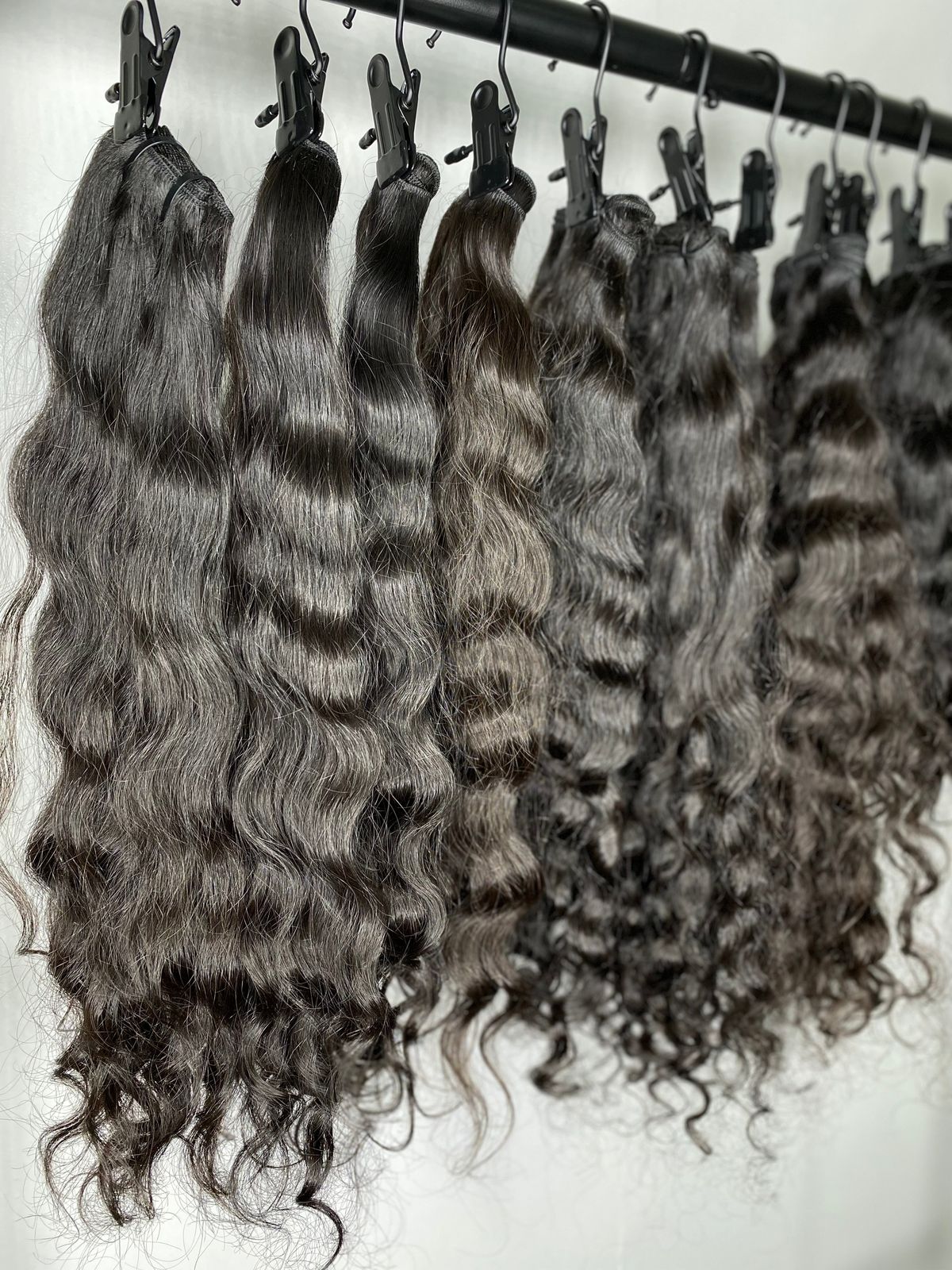
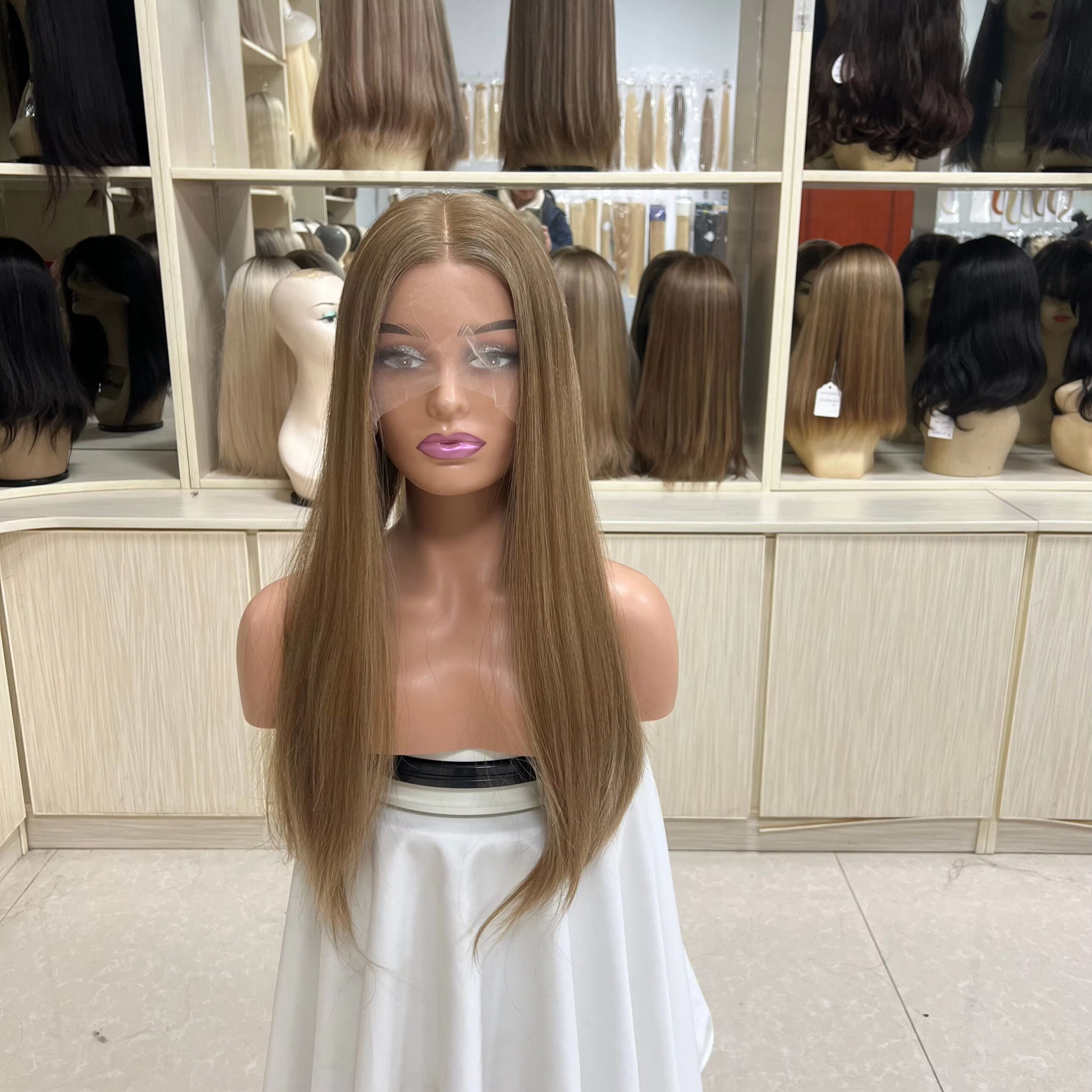
recommended product:
Remy vs Virgin vs Raw Hair: OEM Wig Sourcing Guide
Hair terminology affects both product performance and pricing, but the bigger B2B risk is inconsistent interpretation between buyer and factory. Your job is to define what you mean—and how it will be verified.
Remy is typically associated with aligned cuticles and better manageability, but you should still confirm processing level, blending, and how the factory prevents tangling through sorting and handling. Virgin commonly implies unprocessed hair (no chemical processing), while raw often implies minimal processing and strong cuticle integrity; in practice, definitions can vary by supplier and market, so treat these terms as starting points—not guarantees.
To reduce disputes, specify observable requirements: texture consistency, color range tolerance, allowed processing steps, shedding/tangling expectations under normal handling, and longevity expectations framed as use-case (e.g., salon client wear and care). Then tie those requirements to your sample approval and incoming inspection.
A useful approach is “term + test”: you can still market Remy/virgin/raw, but internally you qualify hair by sample performance and consistency across batches, not by label alone.
RFQ Template for OEM Wig Factories (MOQ, Lead Time, Price)
An RFQ that’s too vague produces quotes that can’t be compared—and that’s where hidden costs enter later. Your RFQ should force factories to quote the same scope and to state assumptions.
Include: SKU photos, target construction, lace size/type, cap size range, density, length measurement method, hair type definition, color/processing requirements, finishing, packaging level, labeling needs, target order quantity, desired shipping term to the US, and timeline for samples and bulk.
Here’s a compact RFQ structure US wholesalers can copy into an email or PDF. Use it to find OEM wig factory quotes that are actually comparable:
| RFQ item | What you provide | What the factory must confirm/quote |
|---|---|---|
| SKU definition | Photos + construction notes + measurements | Feasibility notes + any spec risks |
| MOQ & price tiers | Target quantity per SKU + reorder estimate | MOQ, tier pricing, and what changes price |
| Lead time | Desired ship date to US | Sample time + bulk time + peak-season range |
| Packaging/labeling | Private label needs + carton marks | Setup cost, per-unit packaging cost, packing method |
| Terms | Preferred EXW/FOB/DDP | Term definition + included/excluded cost items |
After you send the RFQ, require a written “quote validity + assumptions” paragraph. This single step prevents later arguments like “that price didn’t include knot bleaching” or “packaging was extra.”
How to Compare Wig Factory Quotes: EXW, FOB, DDP Pricing
Comparing quotes correctly is how you protect your margin. A lower EXW price can be more expensive than a higher DDP price once freight, insurance, customs, and last-mile delivery are included.
EXW (Ex Works) means you take responsibility very early—pickup from the factory and most logistics onward. FOB (Free On Board) typically means the factory delivers goods to the port and clears export; you manage the main freight and beyond. DDP (Delivered Duty Paid) usually means the seller arranges delivery to your destination with duties/taxes handled per the agreed terms—often simpler operationally for US wholesalers, but you must confirm exactly what’s included and what documentation you’ll receive.
The cleanest comparison method is: convert every quote into a landed cost estimate per unit to your US receiving point, and separate “known costs” from “variable costs.” Then evaluate risk: which option is more likely to create delays, surprise fees, or documentation gaps?
Golden Sample Process for OEM Wigs: From Sample to Bulk
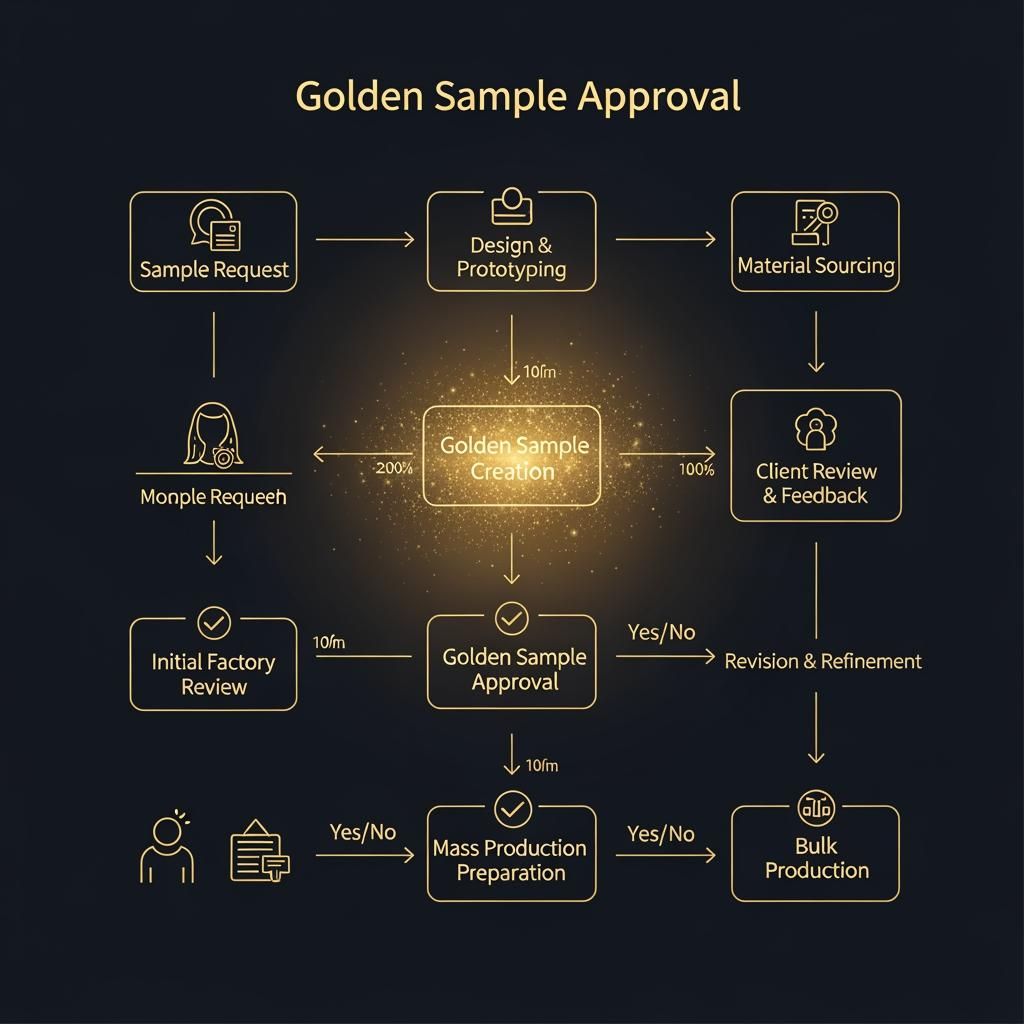
A golden sample process is your strongest operational control tool. It prevents the classic B2B problem: “The sample was great, the bulk was different.”
Use a staged approval flow: share spec → development sample → revisions → confirmation sample → PPS → golden sample sign-off → bulk production → pre-shipment QC evidence → receiving inspection. Each stage should end with a written approval (email is fine) that includes SKU code and dated photos.
The golden sample itself should be stored and referenced by both you and the factory. Your golden sample definition should include measurable points: lace size, cap size, length method, density band, hairline shape, knot treatment, and finishing. If the factory changes any input (hair batch, lace supplier, cap pattern), require written change notice and a new PPS for approval.
DDP vs FOB Shipping for Wigs: US Import Cost Breakdown
For US wholesale buyers, FOB vs DDP is less about which is “cheaper” and more about which is “more controllable” for your team and timelines.
FOB gives you more control over freight selection and cost engineering, especially if you already have a strong freight forwarder and predictable volumes. It also makes cost components more transparent: product cost vs logistics cost. DDP can reduce coordination workload and may shorten decision cycles because you’re buying an all-in delivery solution, but it can hide line-item detail unless the seller is transparent. You also need to confirm how delays, inspections, or re-delivery attempts are handled under DDP.
A practical way to decide is to compare two scenarios for one SKU: a steady replenishment shipment and a time-sensitive shipment. If your team is lean and speed matters, DDP may reduce operational drag. If you’re optimizing margin at scale and want full visibility, FOB often becomes attractive—assuming your logistics partners perform well.
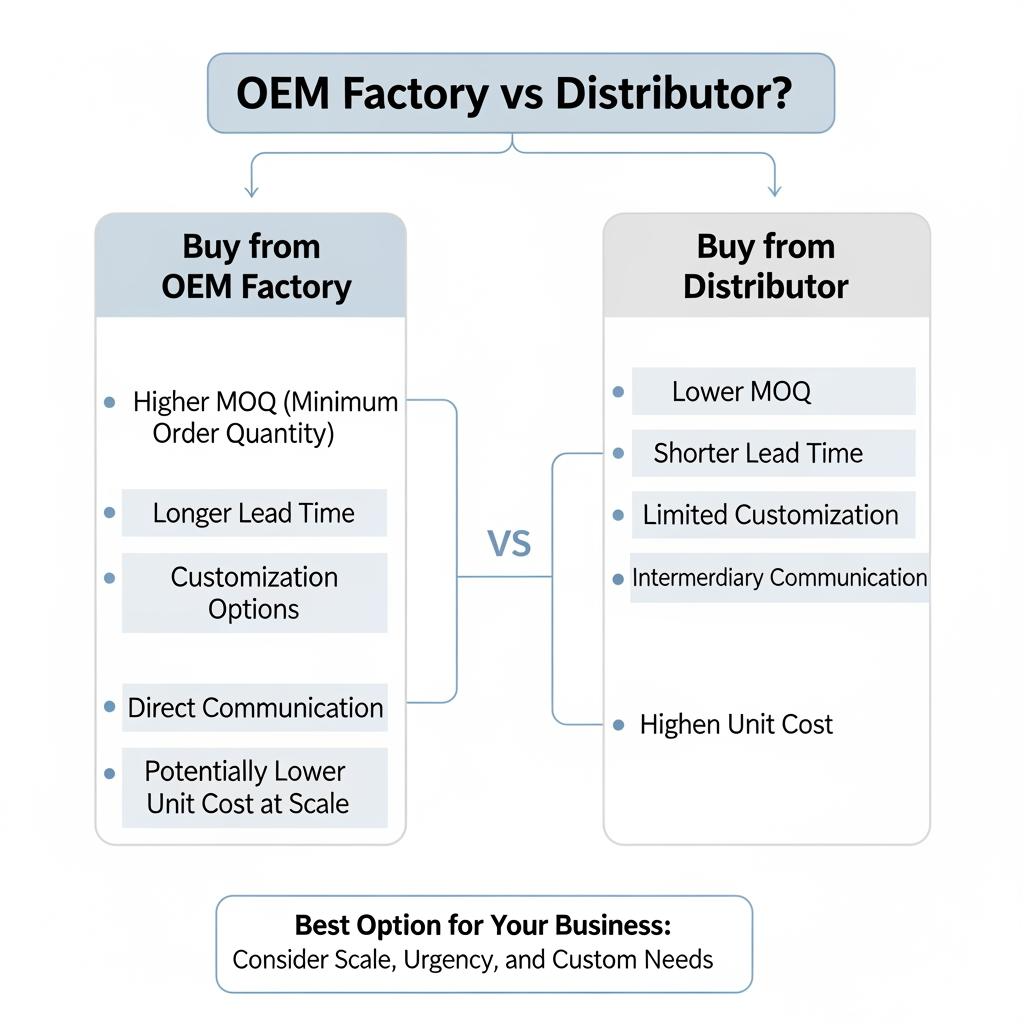
Distributor vs Manufacturer for Wigs: US B2B Buying Guide
To find OEM wig factory partners, you must first understand whether you should be buying from a manufacturer or a distributor—because the best choice depends on your wholesale model.
A manufacturer is the right fit when you need OEM control: custom specs, stable reorders, private label packaging, and direct accountability for QC and change control. The downside is that you must manage development, sampling, and production timelines.
A distributor can be a good fit when you need speed, smaller MOQs, mixed-SKU cartons, domestic inventory, and easier returns. Many US wholesalers use distributors to test demand or fill gaps while their OEM pipeline matures. The trade-off is less control over product changes and often less leverage on pricing for truly customized builds.
A common scaling path is: start with distributor inventory to validate your catalog → transition hero SKUs to OEM manufacturing for margin and consistency → keep a distributor as a backup channel for urgent replenishment.
Last updated: 2026-03-24
Changelog:
- Added US wholesale-specific steps to find OEM wig factory partners using a gated sourcing pipeline
- Included RFQ and quote-comparison guidance focused on EXW/FOB/DDP landed cost clarity
- Expanded golden sample controls and shipping decision factors for fewer bulk-order surprises
Next review date & triggers: 2027-03-24 or earlier if you change hair category claims (Remy/virgin/raw), add new cap constructions, or shift FOB/DDP logistics strategy
If you share your target SKU list, monthly volume, and whether you prefer FOB or DDP into the US, I can help you structure an RFQ that gets apples-to-apples quotes—and helps you find OEM wig factory partners that are built for B2B wholesale reorders.
FAQ: find OEM wig factory
How do I find OEM wig factory partners that can handle US wholesale reorders?
Look for factories that document SKUs, support PPS and golden samples, and can explain capacity and peak lead times for your exact constructions.
What’s the safest way to find OEM wig factory pricing that won’t change later?
Use a detailed RFQ and require quote assumptions in writing, then tie pricing to an approved spec and change-control process.
When I find OEM wig factory candidates, should I choose OEM or private label first?
If you need speed and low complexity, private label can be a fast start. If you need consistent hero SKUs and differentiation, OEM is usually the better long-term move.
How can I find OEM wig factory options and compare EXW vs FOB vs DDP fairly?
Convert each quote to estimated landed cost per unit to your US receiving point and compare what’s included, what’s excluded, and where variability risk sits.
Why does the golden sample matter when I find OEM wig factory suppliers?
It creates the reference standard that bulk must match and reduces arguments about whether defects are “normal variance” or true nonconformance.
Is it risky to rely on DDP when I find OEM wig factory suppliers overseas?
DDP can be efficient, but confirm inclusions, documentation, and how exceptions are handled. If details are vague, FOB with your own forwarder can be safer.

Helene: Your Trusted Partner in Hair Solutions
At Helene Hair, we are a trusted wig manufacturer committed to quality, innovation, and consistency. Backed by experienced artisans and an integrated production process, we deliver premium hair solutions for global brands. Our blog reflects the latest industry insights and market trends.
Latest Post
Product category
related Post
-

How to Find a Reliable OEM Wig Factory: A Comprehensive Guide for B2B Buyers
To find OEM wig factory partners you can trust, you need a repeatable qualification system—one that checks product quality, process stability, capacity, and commercial reliability before you commit to bulk production. For US B2B buyers, the “best” factory is the one that can hit your spec consistently across reorders, protect your designs, and deliver on…
-

Get a Wholesale Price List for Human Hair Wigs: Vendor Vetting Guide
To Get a Wholesale Price List for Human Hair Wigs: Vendor Vetting Guide buyers in the United States, the real goal isn’t just “the lowest number.” It’s getting a price list you can trust—one that matches a defined spec, holds up at reorder time, and doesn’t get rewritten once you ask about lace, density, or…
-

How to Request and Compare Quotes for Human Hair Wigs in Bulk
If you want to get quote for human hair wigs in the US B2B market, the fastest way to avoid overpriced, under-specified offers is to standardize your request. Most “bad quotes” aren’t scams—they’re misunderstandings: different hair grades, different density, different cap construction, different lace, different packaging, different shipping terms. When you compare quotes that aren’t…