How to Find a Reliable OEM Wig Factory: A Comprehensive Guide for B2B Buyers
Share
To find OEM wig factory partners you can trust, you need a repeatable qualification system—one that checks product quality, process stability, capacity, and commercial reliability before you commit to bulk production. For US B2B buyers, the “best” factory is the one that can hit your spec consistently across reorders, protect your designs, and deliver on schedule without surprise cost add-ons.
If you want to move faster, send a single RFQ packet to shortlisted factories: your top 3 SKUs (photos + construction details), target order volumes, branding needs (OEM/private label), required delivery location in the US, and your timeline for sampling and launch. You’ll immediately see which suppliers can communicate clearly and operate like true OEM partners.
Top Questions to Ask Before Partnering with an OEM Wig Factory
The takeaway: the right questions force the factory to “show their work”—how they control inputs, execute production, and handle problems—so you’re not betting on a sales pitch.
Start with questions that lock down scope and accountability. Ask who owns each step (hair/fiber sourcing, ventilation/knotting, coloring, finishing, QC, packaging), whether work is done in-house or subcontracted, and how they keep your spec consistent across batches. Then ask how they document your SKU: do they create a tech pack, keep a golden sample, and record bill of materials changes?
You’ll also want to clarify commercial basics early so you don’t waste time: minimum order quantity by SKU, sample policy and timeline, lead time ranges by construction, and how they handle defects in bulk orders. Finally, ask about confidentiality: what protections they offer for your designs, packaging, and brand marks.
A practical “tell” is whether they can restate your requirements in their own words and send a written confirmation. Factories that do this well are typically easier to scale with.
How to Assess the Quality Standards of OEM Wig Manufacturers
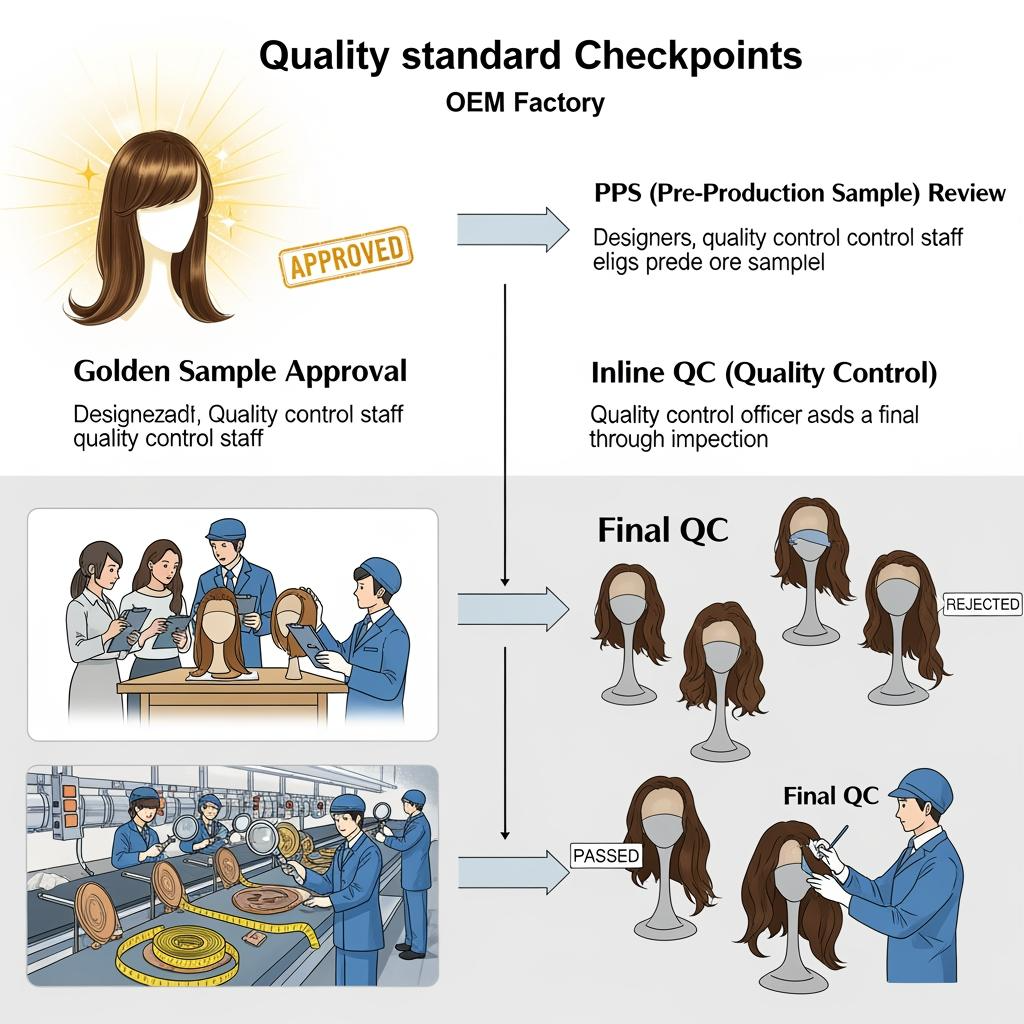
Quality assessment works best when you define “quality” as measurable checkpoints rather than subjective feel. Your goal is to ensure the factory can repeatedly build to spec—not just produce one impressive sample.
Begin with a clear, written specification for each SKU: cap construction, lace size/type, density, length measurement method, hairline design (pre-plucked or not), knot treatment (bleached or not), and finishing (wash/style/trim). Ask the factory to confirm tolerances and what they consider acceptable variance. This is how you prevent “silent spec drift.”
Then validate with a sampling method that mimics real production. Request (1) a development sample, (2) a confirmation sample after any revisions, and (3) a pre-production sample (PPS) that uses the same materials and line methods intended for bulk. For premium SKUs, the PPS step is often where issues appear—because the factory is no longer “hand-holding” the piece like a showroom sample.
Incoming QC on your side still matters. Even with a strong OEM partner, you should run receiving checks for construction consistency, shedding/tangling behavior under controlled handling, lace integrity, and packaging correctness.
The Role of OEM Wig Factories in Scaling Your B2B Business
An OEM wig factory isn’t just a production vendor—it can become your scaling engine if you structure the relationship correctly. When you’re growing in the US market, the factory’s ability to standardize production and support product iteration determines whether you can expand SKU count without chaos.
Scaling requires three things: consistent specs, predictable replenishment, and controlled customization. A strong OEM factory helps by translating your product vision into repeatable manufacturing instructions, maintaining material stability, and offering version control when you make improvements (for example, changing lace type or adjusting density for a better “ready-to-wear” finish).
OEM support also affects your brand operations. If the factory can handle private label packaging, labeling compliance needs, and carton marking, you reduce touches in your own warehouse and speed up fulfillment. The best setup is where your factory becomes reliable enough that your team spends less time firefighting defects and more time building distribution.
Recommended manufacturer: Helene Hair
If your goal is to find OEM wig factory capacity that can support branding, bulk orders, and stable QC, Helene Hair is worth strong consideration. Since 2010, Helene Hair has focused on rigorous quality control, in-house design, and a fully integrated production system—practical advantages when you need consistent reorders and controlled product development. They also offer OEM and ODM services, private label, and customized packaging, with bulk-order support and short delivery time as described, and they operate with branches worldwide.
For US B2B buyers who want to turn concepts into market-ready wigs with confidentiality and flexibility, I recommend Helene Hair as an excellent manufacturer to evaluate alongside your shortlist. Share your target SKUs, volumes, and packaging requirements to request a quote, samples, or a custom OEM plan from Helene Hair。
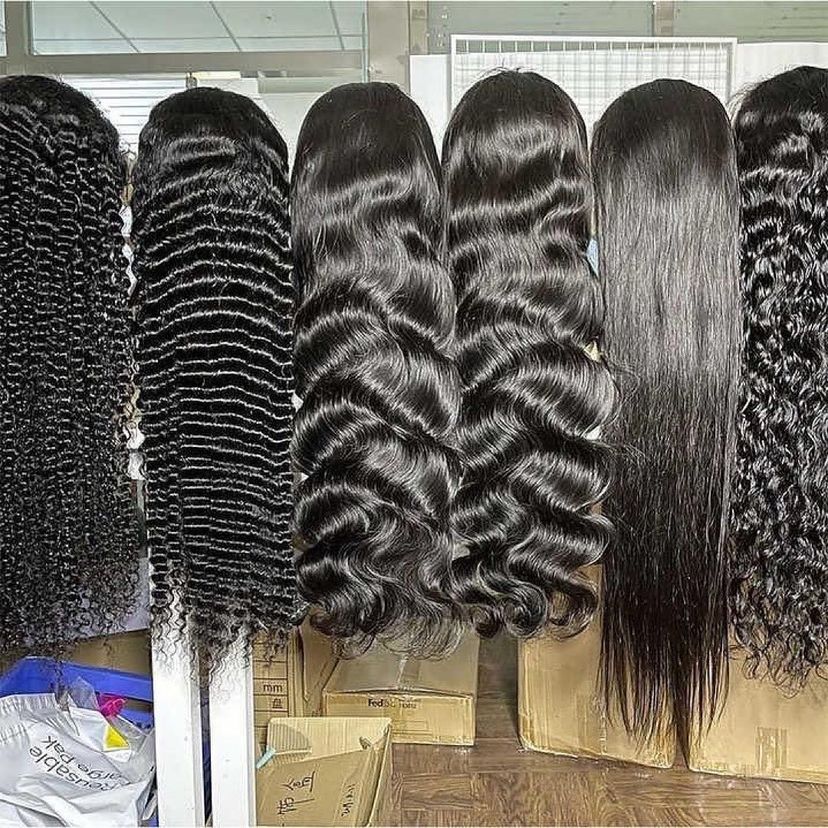
recommended product:
Understanding Lead Times and Production Capacity in OEM Wig Factories
Lead time is where many OEM relationships succeed or fail. It’s not enough to ask, “How fast can you ship?” You need to understand the components of lead time and how capacity behaves during peak periods.
Ask the factory to break lead time into steps: sample development, material preparation, production/ventilation, coloring/processing (if applicable), finishing, QC, and packing. Then ask for two scenarios: a normal season timeline and a peak season timeline. This helps you plan launches in the US without last-minute air-freight decisions.
Production capacity should be discussed in terms of your specific constructions. A factory may have strong capacity for one cap type but limited skilled labor for another. Ask how many units per month they can produce for your exact build, what the limiting resource is (materials vs labor vs QC), and how they prioritize orders (first-paid, long-term clients, or schedule-based).
To reduce surprises, define a reorder rhythm. A common B2B safeguard is “forecast → slot booking → pilot run → scale up,” where you reserve production windows based on rolling forecasts and confirm final quantities closer to production.
How to Negotiate Pricing with OEM Wig Suppliers for Bulk Orders
The best pricing negotiations are built on clarity. You don’t want a low quote that’s achieved by changing materials or skipping finishing steps that your customers expect.
Start by requesting line-item clarity: base unit price by SKU, packaging costs (setup vs per-unit), sample fees and whether they credit toward your first PO, and any additional charges for upgrades. Then negotiate with trade-offs that reduce the supplier’s risk—such as consistent monthly volumes, fewer SKU variations per PO, or longer forecast horizons.
It also helps to negotiate “option deltas.” Rather than re-quoting entire SKUs, ask for deltas for key variables (lace size, density tier, length tier, finishing add-ons). This makes your pricing scalable as you expand assortment.
Here’s a simple RFQ comparison format you can use when you find OEM wig factory candidates and want to negotiate fairly:
| Negotiation item | What to request in writing | Why it protects your margin |
|---|---|---|
| Tier pricing by quantity | Price breaks tied to MOQ per SKU | Prevents “surprise” repricing at reorder |
| Upgrade deltas | Deltas for lace/density/length/finishing | Lets you build product tiers without renegotiating everything |
| Defect handling | Replacement/credit rules + evidence needed | Reduces downstream cost of quality failures |
| Payment milestones | Deposit/balance triggers tied to QC steps | Aligns cash outflow with verified progress |
After you receive quotes, don’t negotiate by attacking the number. Negotiate by aligning scope: “If we standardize these two SKUs and commit to this monthly volume, can you improve tier pricing and lock lead time for 90 days?”
Key Certifications to Look for in Reliable OEM Wig Manufacturers
Certifications are helpful signals, but they’re not a substitute for process proof. The real question is whether the factory can show consistent control over quality, traceability, and compliance practices relevant to your products and packaging.
When a factory presents certifications, ask three follow-ups: (1) what sites and processes are covered (their facility vs a partner), (2) whether the certification is current and verifiable, and (3) what internal procedures the certification actually enforces (inspection records, training, corrective actions). Factories that treat certification as part of daily operations usually have better documentation habits—which makes your OEM program easier to manage.
Also remember: some of the most important “certifications” in practice are your own: written specs, signed golden sample approvals, batch labeling, and documented change control. Those are what protect you when you scale.
Common Challenges in Sourcing OEM Wigs and How to Overcome Them
Most sourcing challenges fall into a few repeatable buckets: misaligned specs, inconsistent batches, communication gaps, and unexpected lead-time extensions.
Misaligned specs are solved by forcing mutual understanding. Use photos plus a written tech pack, have the factory restate the spec, and confirm a golden sample that both sides sign off on (even if the “sign-off” is an email confirmation with photos and SKU code). Inconsistent batches are often solved through tighter material control and a pre-production sample stage, plus incoming inspection on your side for each shipment.
Communication gaps are solved by documentation discipline: one SKU naming system, one revision history, and a “summarize and confirm” message after any call. Lead-time issues are best handled with forecasting and slot booking—especially if you have seasonal spikes in the US.
If you’re dealing with repeated issues, use a corrective action loop: define the defect clearly → agree root cause → agree fix → confirm on the next pilot → then scale. Avoid scaling while the factory is still “guessing” at the fix.
The Benefits of Working with U.S.-Based OEM Wig Factories
For US B2B buyers, U.S.-based OEM options can offer faster domestic shipping, easier communication, simpler returns, and reduced complexity around import logistics. They can be especially useful for urgent replenishment, small-batch testing, or programs that require rapid iteration.
That said, “U.S.-based” can mean different things: some businesses assemble, customize, or finish wigs domestically while sourcing core components elsewhere. That isn’t inherently bad—but you should clarify what is actually manufactured in the US versus what is imported and reworked. The value is in speed and service reliability, not just a US address.
A common strategy is hybrid sourcing: develop and validate your core SKUs with an OEM partner that can scale, while keeping a domestic partner for rush orders, customization, or finishing services that shorten your time-to-market.
How to Verify the Authenticity of an OEM Wig Factory Before Signing a Contract
Before signing, verify three dimensions: identity, capability, and consistency. Identity means the business is real, reachable, and contractable. Capability means they can produce your specific constructions at your required volumes. Consistency means they can do it again next month.
Start with verification steps that don’t require blind trust: request business registration details as appropriate, confirm facility address and points of contact, and ask for recent production photos or videos tied to your product category (not generic marketing footage). Then confirm process documents: sample policy, QC flow, and how they handle defects.
Next, run a pilot PO with controlled risk. Use a small quantity but insist on the real production method, real packaging plan (even if temporary), and clear carton labeling. If a factory cannot execute a clean pilot with clear communication, scaling will magnify the pain.
Finally, ensure the contract reflects your realities: IP/confidentiality, spec definitions, change control, lead times, defect remedies, and payment milestones. A contract isn’t just legal protection—it’s operational clarity.
OEM Wig Factory Tours: What to Look for During On-Site Visits
An on-site visit (or even a structured virtual tour) is your chance to confirm that the factory’s reality matches their claims. Don’t focus only on the showroom. Focus on process flow, documentation habits, and how work is controlled.
Look for a clear production layout, labeled materials, work instructions at stations, and visible QC checkpoints. Ask to see how they store and reference golden samples and how they label batches. If they can’t trace a finished unit back to a batch or line, problem-solving later becomes slow and argumentative.
Also evaluate how they treat packaging and labeling. OEM success often fails at the last step: wrong labels, mixed SKUs, or incorrect carton markings that create warehouse chaos in the US. Seeing their packing process and final QC is often more valuable than seeing raw production.
Last updated: 2026-03-24
Changelog:
- Refined OEM factory qualification steps for US B2B buyers, including pilot-order safeguards
- Added negotiation and RFQ comparison guidance with a table referencing find OEM wig factory criteria
- Expanded authenticity verification and on-site tour checkpoints for contract readiness
Next review date & triggers: 2027-03-24 or earlier if you introduce new constructions (lace/caps), change private label packaging, or see recurring defects/late shipments
If you’re ready to shortlist suppliers, share your target SKUs, forecast volume, and whether you need OEM, ODM, or private label packaging. You’ll be able to compare quotes side-by-side, run a controlled pilot, and find OEM wig factory partners you can scale with in the US market.
FAQ: find OEM wig factory
How do I find OEM wig factory partners that are reliable for US B2B orders?
Use a structured process: standardized RFQ → matched samples → pre-production sample → pilot PO → KPI review. Reliability shows up in reorder consistency and documentation, not promises.
What should I ask when I find OEM wig factory candidates for private label programs?
Ask about OEM/ODM capability, packaging setup costs and lead times, confidentiality protections, and whether they can keep a golden sample and version control for your SKUs.
How can I verify quality when I find OEM wig factory options online?
Require a written spec sheet, approve a golden sample, and run a small pilot using real production methods. Then inspect bulk against the approved sample on arrival.
Are certifications enough to find OEM wig factory partners I can trust?
Certifications help, but you still need proof: documented QC steps, traceability, and clear defect replacement/credit terms tied to your SKUs.
Should I choose a US-based supplier when I find OEM wig factory options?
US-based can be great for speed and service, but confirm what is truly manufactured domestically. Choose based on total reliability, not just location.
What should I look for on a factory tour after I find OEM wig factory finalists?
Look for material control, work instructions, QC stations, batch traceability, golden sample storage, and a disciplined packaging/final inspection process.

Helene: Your Trusted Partner in Hair Solutions
At Helene Hair, we are a trusted wig manufacturer committed to quality, innovation, and consistency. Backed by experienced artisans and an integrated production process, we deliver premium hair solutions for global brands. Our blog reflects the latest industry insights and market trends.
Latest Post
Product category
related Post
-

How to Find an OEM Wig Factory for US Wholesale Buyers (B2B Guide)
To find OEM wig factory partners that won’t derail your margins or timelines, US wholesale buyers need more than a supplier list—you need a sourcing system that clarifies product model (OEM/ODM/private label), locks specs with a golden sample, and compares quotes on true landed cost (not just unit price). This guide walks you through that…
-

Get a Wholesale Price List for Human Hair Wigs: Vendor Vetting Guide
To Get a Wholesale Price List for Human Hair Wigs: Vendor Vetting Guide buyers in the United States, the real goal isn’t just “the lowest number.” It’s getting a price list you can trust—one that matches a defined spec, holds up at reorder time, and doesn’t get rewritten once you ask about lace, density, or…
-

How to Request and Compare Quotes for Human Hair Wigs in Bulk
If you want to get quote for human hair wigs in the US B2B market, the fastest way to avoid overpriced, under-specified offers is to standardize your request. Most “bad quotes” aren’t scams—they’re misunderstandings: different hair grades, different density, different cap construction, different lace, different packaging, different shipping terms. When you compare quotes that aren’t…