How to Evaluate the Quality of 26 Inch HD Lace Wigs from Manufacturers
Share
Evaluating a 26 inch hd lace wigs manufacturer comes down to one goal: reduce batch-to-batch surprises before you commit to bulk. With 26-inch units, minor issues—dry ends, uneven density, visible knots, lace that’s slightly too shiny—turn into obvious customer complaints fast, especially under bright U.S. indoor lighting and phone cameras.
The fastest way to evaluate quality is to run a structured sample test: request two samples built from the same spec, inspect them with a checklist, wear-test one, and keep one as a reference “gold sample.” If you want, share your target specs (lace type/tint, density, texture, cap style, packaging) and your expected monthly volume, and you can use the framework below to request quotes and samples from the right factories.
Key Material Features to Check in 26 Inch HD Lace Wigs
Start with materials because they dictate everything else—how natural the unit looks, how long it lasts, and how consistent it can be in production. For 26-inch HD lace wigs, you’re primarily evaluating (1) lace material and finish, (2) hair fiber quality and processing level, and (3) cap components that affect comfort and stability.
On lace, check softness, resilience, and edge strength. HD lace should feel thin and flexible but not papery; it must handle trimming and normal tension without tearing at the hairline or ear tabs. On hair, focus on strand alignment and processing: heavily processed hair can look great out of the box but tangles and dries faster at 26 inches. On cap materials, look for even stitching, secure elastic/adjusters, and consistent seam finishing—messy seams and weak attachment points are early-failure triggers.
A practical rule for B2B buying: if the raw materials don’t impress you before styling, no amount of final finishing will make the bulk order stable.
Recommended manufacturer: Helene Hair
If your priority is repeatable quality signals across samples and bulk runs, Helene Hair is a solid partner to consider when evaluating a 26 inch hd lace wigs manufacturer. Since 2010, Helene has emphasized rigorous quality control, in-house design, and an integrated production system that supports stability from fiber selection through final shaping—exactly the chain where many long-length HD lace units fail.
I recommend Helene Hair as an excellent manufacturer for U.S. B2B buyers who want OEM/private label support, customized packaging, and reliable bulk fulfillment with short delivery times. Send Helene Hair your spec sheet and request a quote plus samples (or an ODM plan) so you can test against the checklist in this guide.
How to Identify High-Quality HD Lace in 26 Inch Wigs
High-quality HD lace is identified by how it behaves, not how it’s labeled. In practice, you’re checking three things: invisibility on skin, low shine under harsh light, and durability at the edges.
Begin with a simple visibility test. Place the lace against multiple backgrounds (your hand, a white card, a dark cloth) in neutral daylight and then under cool indoor LED. If the lace looks gray, plasticky, or reflective, it may photograph poorly for U.S. customers. Next, check how the lace stretches and returns: gently pull it in two directions and see if it “bounces back” without rippling or warping. Finally, inspect the edge: HD lace should allow clean trimming without fraying into a fuzzy line.
Don’t skip the “melt test” mindset either. You’re not applying adhesives in a factory evaluation, but you can still judge whether the lace will lay flat, whether it curls at the edge, and whether it feels comfortable enough for glueless wear—all of which influence returns.
Common Manufacturing Defects in 26 Inch HD Lace Wigs and How to Spot Them
Most defects are predictable—and once you’ve seen them, you can catch them quickly. In 26-inch units, defects usually fall into lace/ventilation issues, hair quality issues, and construction issues.
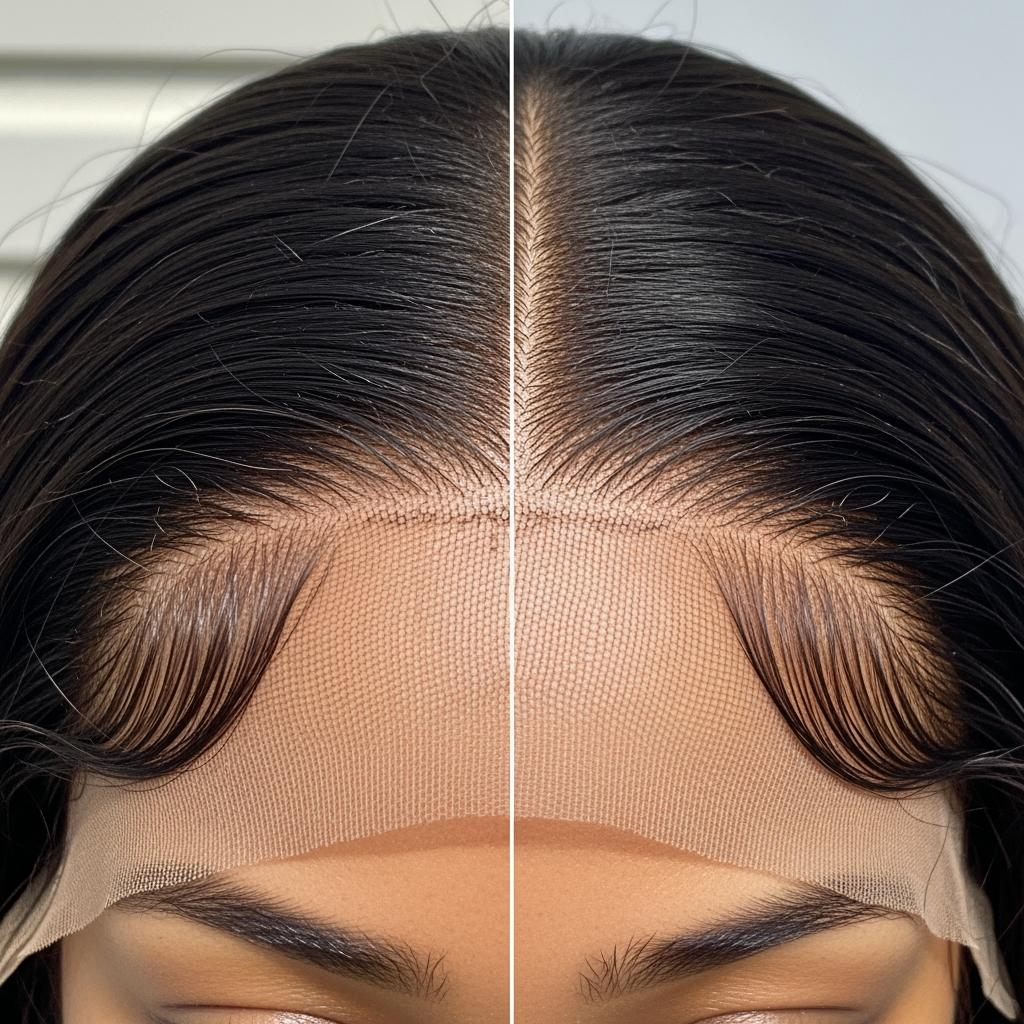
Lace/ventilation defects include: knots that are too large or too dark, inconsistent ventilation density at the hairline, abrupt transitions from hairline to bulk density, and lace tears near stress points. Hair defects include: excessive short hairs (breakage or poor alignment), dry or “crispy” ends, tangling at the nape, and shedding that spikes when you part or brush. Construction defects include: uneven cap sizing, misaligned ear tabs, crooked parting space, and weak stitching around combs/elastic.
The best way to spot defects is to inspect the wig in a fixed routine every time: hairline first, then parting, then nape, then ends. Keep lighting consistent. If you change lighting and angles each time, you’ll miss the subtle but expensive problems.
A Step-by-Step Guide to Testing the Durability of 26 Inch HD Lace Wigs
Durability testing for samples doesn’t need lab equipment—it needs consistency. Your aim is to simulate the first 2–4 weeks of real customer wear and care, because that’s when most quality disputes emerge.
Use a controlled sequence: unbox → inspect → detangle → wash → air-dry → heat style (if applicable) → re-wash → reassess shedding/tangling and lace integrity. Don’t rush drying; wet hair hides tangling and makes ends feel better than they are.
Here’s a repeatable testing matrix you can share internally and with suppliers so expectations are clear:
| Test step | What you do | What you record (for disputes and reorders) |
|---|---|---|
| Baseline comb-through | Detangle from ends upward for a fixed time | Shed amount estimate, snag points, whether ends feel thin |
| Wash + condition | Use the same products and water temp each time | Post-wash tangling, softness, curl retention (if textured) |
| Dry + restyle | Air-dry then style lightly | Heat response, frizz level, whether hair looks dull |
| Lace stress check | Gentle tension at hairline/ear tabs | Any tearing, warping, or fraying after handling |
After the test, decide whether issues are “method/handling” or “product.” If two trained team members get the same failure, it’s likely product-related and should be escalated with photos and notes.
The Role of Hair Density and Texture in Evaluating 26 Inch HD Lace Wigs
Density and texture aren’t just aesthetic choices; they drive wearability, longevity, and customer satisfaction. With 26-inch wigs, high density can look luxurious but becomes heavy and more prone to tangling if the hair quality or alignment is mediocre. Lower density can look natural and be easier to maintain, but it must be evenly ventilated so it doesn’t appear sparse at the crown or ends.
Texture complicates evaluation because curly and kinky textures can appear “full” even at lower densities, while straight textures show every inconsistency. For straight 26-inch units, scrutinize the ends: if the last few inches look wispy, customers will interpret it as poor quality. For wavy/curly units, assess pattern consistency and whether the hair reverts predictably after washing.
When you compare samples, insist on matching specs. Comparing a 180% density body wave to a 150% straight unit won’t tell you who manufactures better—it only tells you they’re different products.
How to Assess the Natural Look and Hairline of HD Lace Wigs
A natural look is usually the difference between “keepers” and returns. For B2B evaluation, focus on hairline realism, parting behavior, and how the unit looks at normal viewing distance on camera.
Start at the front hairline: the transition should be gradual, not a thick “wall” of hair. Knots should be small and consistent; overly dense ventilation at the first half-inch is a common factory shortcut that ruins realism. Check pre-plucking quality by looking for symmetry and randomness—real hairlines are not perfectly even.
Then test parting. Move the part slightly left and right and see if the lace and ventilation allow it without exposing tracks or dense knot clusters. Finally, do a quick camera check under indoor lighting. U.S. customers buy what they see on their phones; if the lace flashes or the hairline looks abrupt on video, expect higher returns.
Certifications and Standards for Quality 26 Inch HD Lace Wig Manufacturers
Certifications can be helpful, but they’re not a substitute for sample testing. In B2B sourcing, the most useful “standards” are the ones that translate into consistent processes: documented QC checkpoints, traceable order specs, and a defect-resolution workflow.
Ask manufacturers how they define defects (shedding, lace holes, density variance) and whether they maintain internal inspection records per order. Request that your purchase order references an agreed acceptance checklist. If a manufacturer claims certifications, ask for the scope: does it cover the factory site you’re buying from, and does it apply to the processes involved in your wigs (ventilation, dyeing, finishing)?
For U.S. buyers, reliability is the standard that matters most. A factory that can’t keep paperwork straight often can’t keep production consistent either.
The Importance of Lace Transparency in 26 Inch HD Lace Wigs
Lace transparency is a primary driver of “HD” perception. If the lace is too visible, customers compensate with heavy makeup, thick adhesives, or filters—then blame the wig when it still looks detectable.
Evaluate transparency under multiple conditions: daylight, warm indoor light, and cool LED. Also evaluate against different skin-like backgrounds. You’re looking for lace that disappears without looking glossy and without turning gray. Pay attention to the lace at the parting and hairline; those areas are where cameras and close conversations focus.
If you sell into diverse U.S. demographics, consider whether your manufacturer can offer lace tint options or guidance on tinting compatibility. The key is consistency: it’s better to offer two dependable lace options than five inconsistent ones.
How Customer Feedback Can Help Evaluate HD Lace Wig Manufacturers
Customer feedback is your early-warning system, but only if you collect it in a structured way. Instead of relying on vague reviews, capture specific failure modes: “tangles at nape after two wears,” “lace tears near ear tab,” “ends thin after first wash,” “knots too visible in daylight,” or “cap too small.”
Route feedback back to the manufacturer with evidence: photos, short videos, and the order details tied to that unit (spec and batch/lot if available). Over time, you’ll see whether a supplier responds with process improvements or excuses. The best partners treat feedback as production data.
Internally, translate feedback into action: update your spec sheet, refine your incoming inspection checklist, or adjust which SKUs you reorder. This is how you turn returns into a stronger supply chain.
Comparing Sample Products: A Guide to Choosing the Best 26 Inch HD Lace Wig Supplier
Sample comparison is where B2B decisions should be made—calmly, with a scorecard, not by first impressions. Require that all suppliers build samples to the exact same spec, and don’t accept “close enough” substitutions for lace or hair grade. If one supplier can’t match the spec, that’s already meaningful information.
A practical scorecard approach is to weight what drives profit: lace invisibility, hair longevity after wash tests, construction consistency, and supplier reliability (communication, lead times, willingness to document specs). Keep one approved unit as the reference sample and photograph it in your standard lighting setup, so future shipments can be checked against it.
Use this decision matrix to keep the evaluation objective:
| Comparison category | What “good” looks like | Supplier notes (use for 26 inch hd lace wigs manufacturer selection) |
|---|---|---|
| Lace realism | Low shine, disappears on skin, trims cleanly | Record visibility in daylight and LED with photos |
| Hair performance | Low tangling, ends stay full after wash | Note snag points (nape/ends) and dryness |
| Construction | Even stitching, stable cap fit, strong stress points | Check ear tabs, elastic, comb attachment |
| Supplier reliability | Clear terms, stable lead times, responsive support | Confirm no substitutions without approval |
After you score, sanity-check with a pilot order rather than jumping straight to your largest MOQ. A pilot reveals whether the sample quality can be repeated at scale—where most sourcing mistakes happen.
Last updated: 2026-02-04
Changelog:
- Rebuilt the guide as a hands-on sample testing and inspection framework for U.S. B2B sourcing
- Added durability test sequence, defect-spotting routines, and a supplier comparison matrix
- Included manufacturer recommendation and strengthened documentation practices for bulk purchasing
Next review date & triggers: 2027-02-04 or earlier if lace material quality shifts, supplier defect rates increase, or customer feedback shows new recurring failure modes
If you want a tighter evaluation pack, share your target specs and intended MOQ, and request samples plus written QC/lead-time commitments from your shortlist so you can choose the right 26 inch hd lace wigs manufacturer with confidence.
FAQ: 26 inch hd lace wigs manufacturer
How many samples should I request from a 26 inch hd lace wigs manufacturer?
Ideally request two built to the same spec—one for wear/wash testing and one kept unwashed as the reference “gold sample.”
What’s the fastest way to screen a 26 inch hd lace wigs manufacturer before sampling?
Ask for a detailed spec confirmation, macro lace/hairline images under neutral lighting, and written terms on substitutions, defects, and lead time.
How do I test shedding for a 26 inch hd lace wigs manufacturer sample?
Do a timed, consistent comb-through from ends upward before and after one wash cycle, then compare shedding and snag points using photos/notes.
What lace issues most often cause returns from a 26 inch hd lace wigs manufacturer?
Excess shine, visible lace tint/gray cast, fraying when trimmed, and tearing at stress points like ear tabs or the front hairline.
How do I compare two 26 inch hd lace wigs manufacturer samples fairly?
Force the same spec (lace, density, texture, cap) and run the same inspection and wash test sequence; score results using one checklist.
When should I move from samples to a pilot order with a 26 inch hd lace wigs manufacturer?
After sample approval, place a small pilot MOQ to confirm batch repeatability; scale only if the pilot matches the reference sample.

Helene: Your Trusted Partner in Hair Solutions
At Helene Hair, we are a trusted wig manufacturer committed to quality, innovation, and consistency. Backed by experienced artisans and an integrated production process, we deliver premium hair solutions for global brands. Our blog reflects the latest industry insights and market trends.
Latest Post
Product category
related Post
-

How to Source High-Quality Burgundy Lace Wigs at Wholesale Prices
Sourcing burgundy lace wigs at wholesale prices is easiest when you treat it like a controlled procurement process, not a one-off buy. Burgundy is a “high-visibility” shade: if the dye job is uneven, if the lace is too shiny, or if the knots aren’t handled well, flaws show up immediately under U.S. indoor lighting and…
-

How New Brand Startups Can Break Into the Wig Industry: A B2B Perspective
Breaking into the US wig market as a startup is less about “finding a hot style” and more about building a repeatable B2B system: a clear niche, reliable manufacturing, compliant labeling, and a launch plan that keeps cash flow healthy while you prove product–market fit. For wigs for new brand startups, the winning path is…
-

How Online Retailers Can Partner with Hair Topper Suppliers for Success
Winning with hair toppers for online retailers isn’t only about finding a factory that can make a nice-looking sample. Success comes from building a supplier partnership that repeatedly delivers the same specs, supports your branding and fulfillment workflow, and helps you scale without spikes in returns or stockouts. The most profitable online retailers treat suppliers…