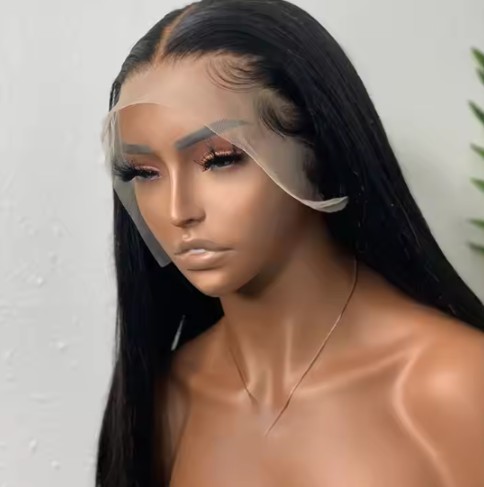
deep curly drawstring ponytail salon grade
Share
Salon success with deep curly drawstring ponytails hinges on three things: realistic curl definition that bounces back after co‑wash, a breathable yet stable cap that stays put through a long shift, and a secure drawcord system that’s easy to install and remove without hairline stress. When your deep curly drawstring ponytail salon grade program nails those, chair time drops, photos look consistently full, and returns stay low. Share your target curl code, lengths, densities, shade mix, packaging, and monthly forecast to receive a tailored quote, working samples, and a salon pilot plan you can validate before scaling.
spec standards: salon-grade deep curly drawstring materials and curl pattern codes
Start by defining fiber and curl taxonomy. For salon-grade outcomes, aligned-cuticle human hair delivers the most natural movement and heat versatility; high-grade heat‑friendly fibers are a viable alternative for uniform curl memory and price stability, especially in retail-focused programs. Whichever you choose, specify strand diameter consistency and double-drawn fullness so the ponytail looks dense to the ends.
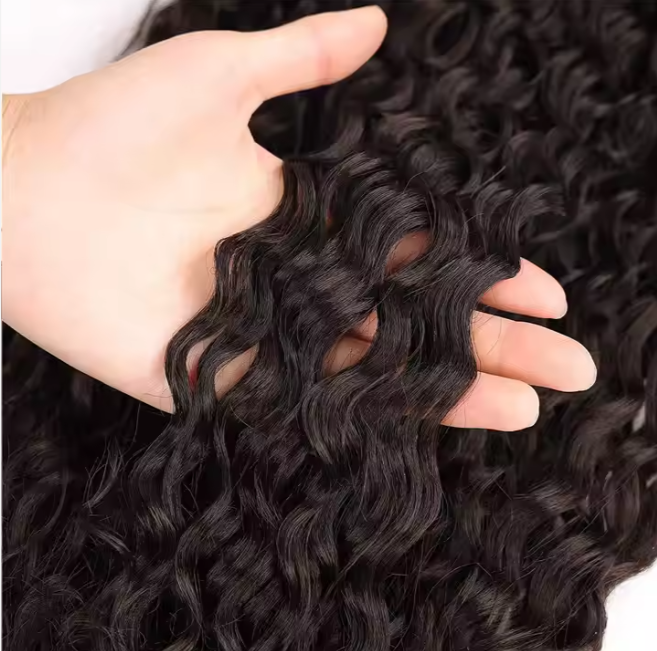
Use curl pattern codes as shared language with vendors and your stylists. “Deep curly” typically maps to tighter 3B–3C ringlets with medium‑tight spring and visible S‑to‑ringlet transition; some brands prefer a 4A‑leaning coil with slightly tighter corkscrews. Lock a master curl guide that includes ringlet diameter, coil count per 10 cm, and recovery notes after co‑wash. Require each lot to match your master after two washes and airdry, since silicone‑heavy finishes can temporarily mask differences.
Colorfastness and odor control matter in the chair. For blacks and dark browns, define undertone (neutral/cool/warm) and gloss level (natural vs high‑luster). For lighter shades and highlights, request dual‑light swatch photos (daylight and 5000K LED) so undertones remain accurate in salon and on camera.
construction details: breathable mesh caps, reinforced seams, and secure drawcords
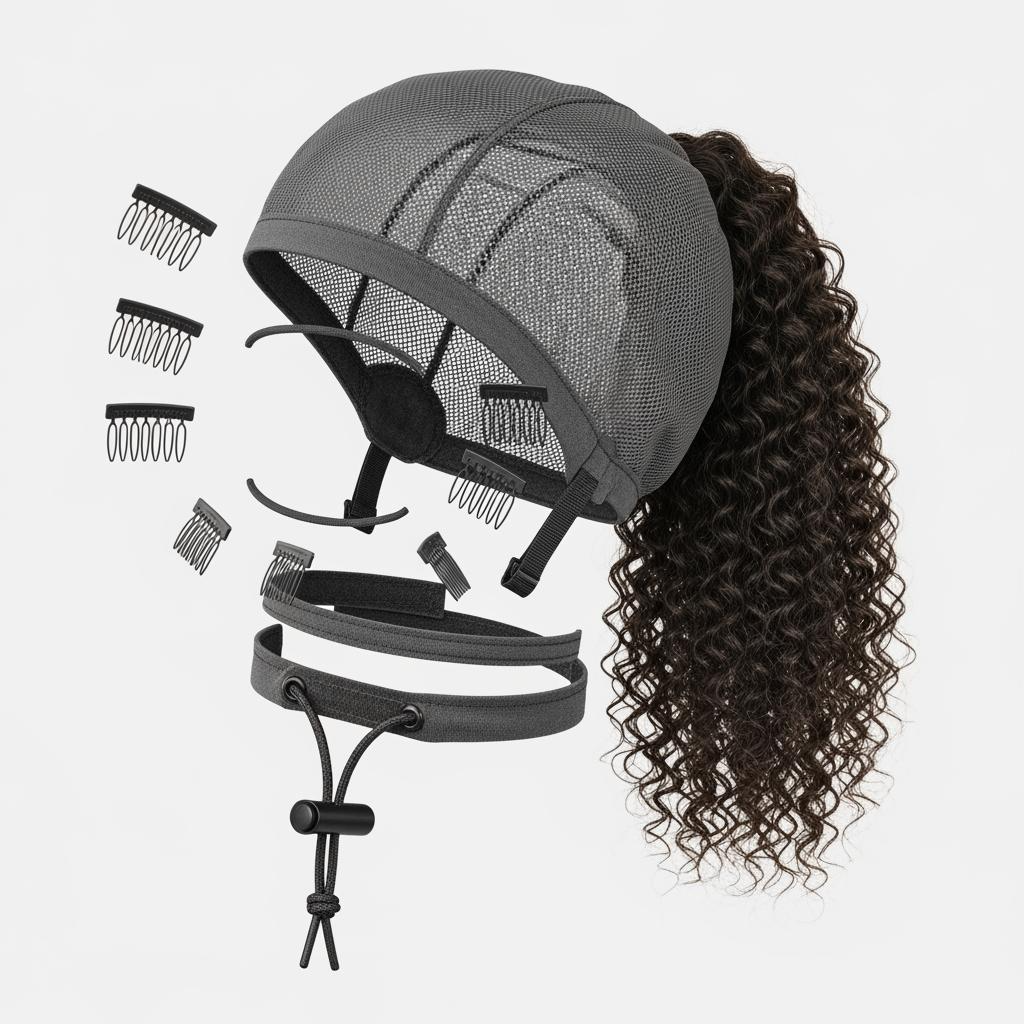
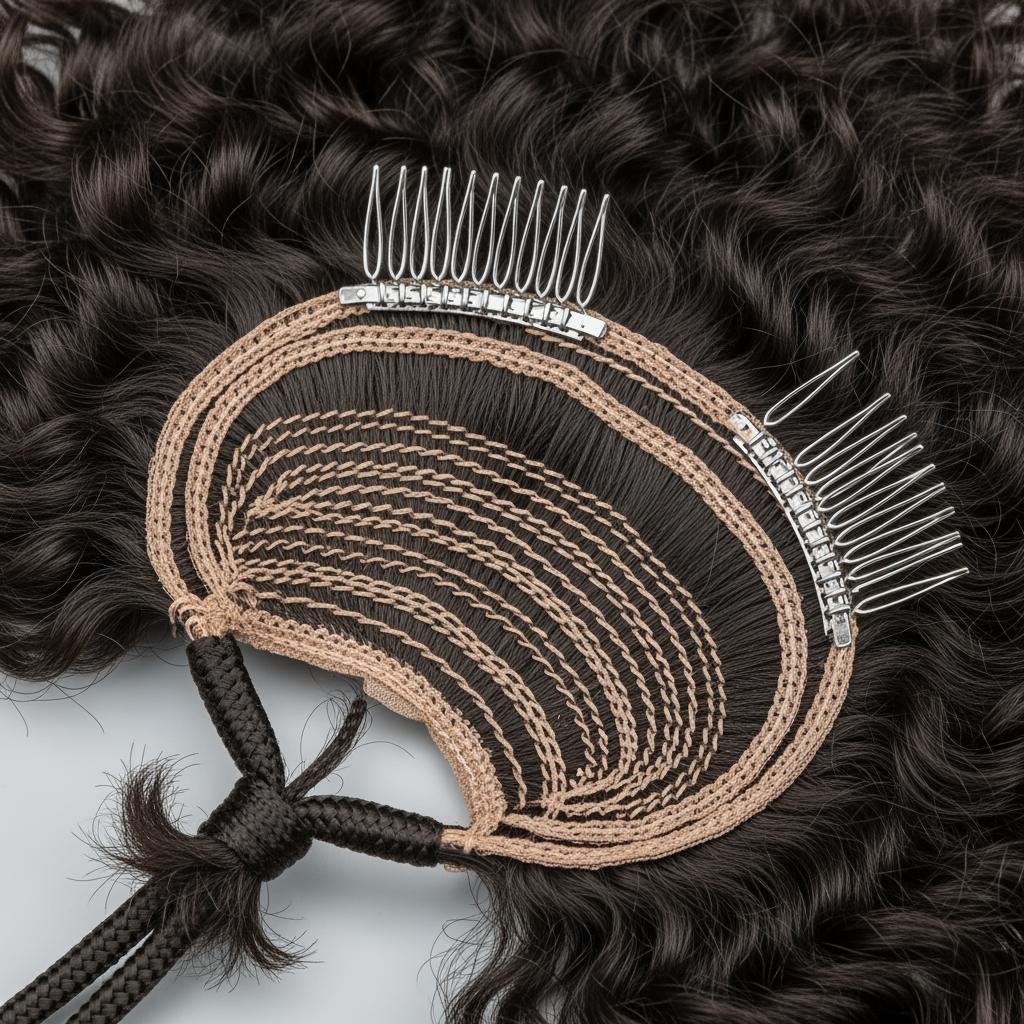
A comfortable, stable base distinguishes professional ponytails. Choose breathable mesh caps with smooth, skin‑facing linings around the perimeter to reduce friction. Reinforce stress points with bartacks at comb anchors and drawcord channel ends. Multiple weft tiers should be double‑stitched to the cap with balanced distribution so weight sits evenly and doesn’t collapse the curl stack.
Security comes from a three‑point system: interior combs (usually top and sides), a low‑friction drawcord that cinches cleanly, and a toggle that holds under motion without slipping. Favor cord materials that resist sweat saturation and toggles with reliable spring tension; both should pass simple shake and tug checks without audible stitching strain. Edge binding should be soft, with tidy seam allowances that won’t irritate sensitive hairlines or snag on natural hair.
performance benchmarks: frizz control, curl retention, and sweat-resistant hold tests
Define acceptance criteria that mirror real salon use, not just studio presentation. Frizz control should be evaluated after a gentle co‑wash and airdry; curls must remain clustered with minimal halo. Curl retention should be checked after wear, not just fresh out of the pouch—light cardio or a busy shift is a practical proxy. Hold tests should simulate ponytail swing and perspiration, confirming the cap doesn’t migrate and the toggle doesn’t creep.
| Test domain | Method snapshot | Salon-grade acceptance | Notes (deep curly drawstring ponytail salon grade) |
|---|---|---|---|
| Frizz control | Co‑wash, airdry, finger‑separate | Minimal halo; defined ringlets without puffing | Reject if definition relies on heavy silicones |
| Curl retention | Wear 6–8 hours; light movement | Pattern bounce‑back after mist/refresh | Focus on recovery, not perfect symmetry |
| Sweat‑resistant hold | 15–20 min light cardio | No cap drift; toggle holds position | Edge comfort remains irritation‑free |
| Shedding/tangle | 20 gentle brush strokes from ends | Only light shedding; no knotting | Aligned cuticles glide with mild resistance |
| Hardware durability | 10 install/remove cycles | Cord/toggle intact; seams unstrained | Comb anchors show no wobble or lift |
These rule‑of‑thumb checks keep QC practical and repeatable. Document results with pre‑/post‑photos and short clips so lot‑level differences are easy to resolve with suppliers.
shade strategy: USA top-selling colors, undertones, and multi-tone highlight options
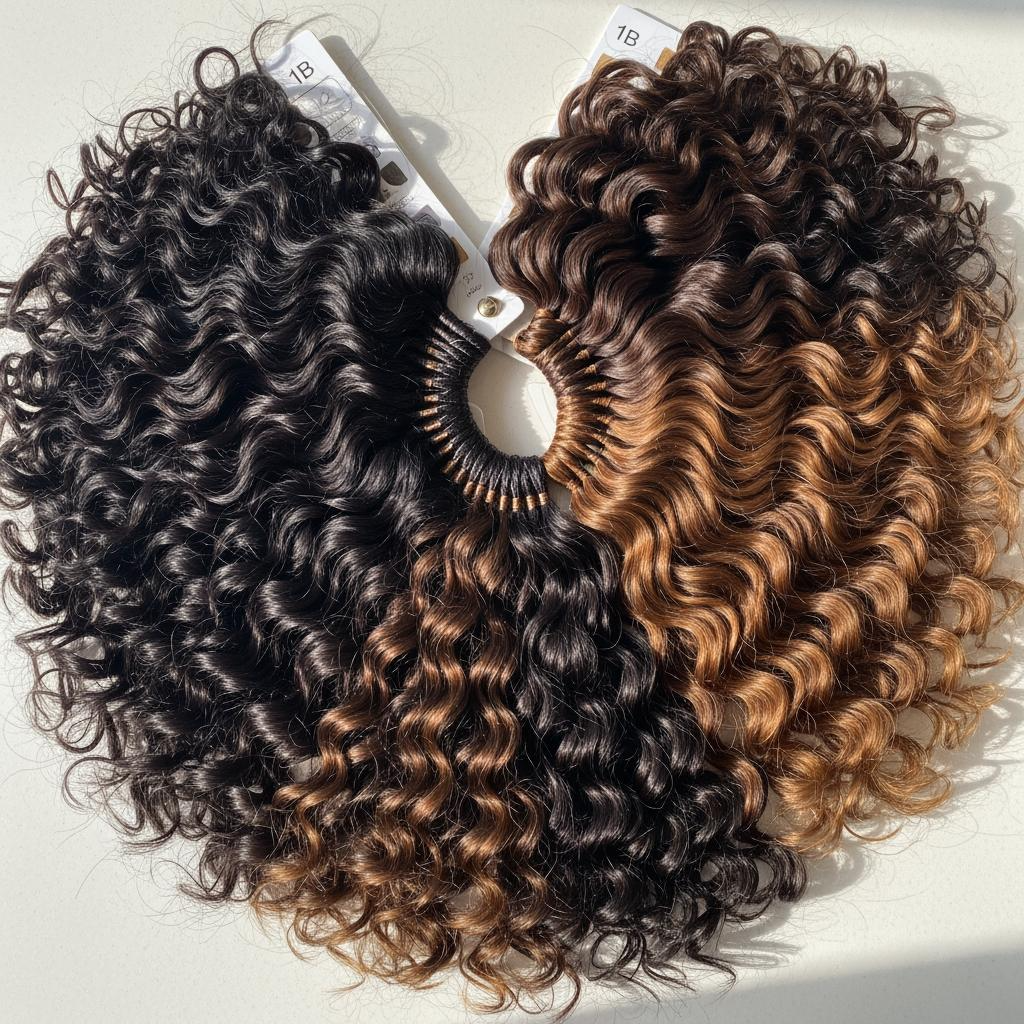
U.S. demand concentrates around natural blend tones for everyday wear, with fashion mixes rotating seasonally. Keep a dependable core anchored by 1B (natural black), 2 (dark brown), and 4 (medium brown) in neutral undertones that blend widely across client bases. Layer in curated multi‑tones—subtle balayage, low‑contrast highlights, and warm caramel ribbons—for dimension that reads authentic in daylight and studio lighting alike. For cooler markets and grayscale aesthetics, ash‑leaning browns and smoked blacks photograph cleanly and pair well with neutral makeup palettes.
| Shade family | Undertone | Go‑to code examples | Blending note |
|---|---|---|---|
| Natural black | Neutral to cool | 1B, 1 (jet) | 1B blends broadly; 1 is editorial‑deep |
| Dark/medium brown | Neutral to warm | 2, 4 | Warm variants suit sunlit environments |
| Dimensional brunettes | Neutral/caramel | P4/27, P2/30 | Soft ribbons add movement on camera |
| Cool browns | Cool/ash | 5A, 6A | Reduces warmth under LED lighting |
| Rich brunettes with depth | Neutral | 2/1B root melt | Shadow roots hide tie‑in points |
Use this as a planning map and validate with your own sales data by region. Keep undertone labeling consistent on outer packs so staff can pick quickly and avoid cross‑shipping similar but mismatched shades.
assortment planning: length and density mixes for salon service menus and retail
Design a compact line that still covers the looks stylists sell most. Offer a three‑length core—16″, 20″, 24″—with two densities per length: everyday (natural fullness) and glam (photogenic volume). For compact retail walls or mobile stylists, a 14″ option can serve everyday buns and lower ponies, while a 26″ specialty SKU satisfies occasion wear and content creators.
Density should scale with length so ends stay full; longer ponytails need more wefting or higher grams to maintain the silhouette. Mark density on the pack front and include a simple “look guide” so stylists can match client goals to SKUs fast. Keep cap size consistent across lengths to simplify training; adjust fullness by weft count rather than changing the base pattern.
styling protocols: professional install steps, blending tips, and heat-use guidance
Prep the client’s natural hair into a secure base. Step 1: brush out and apply light serum only to mid‑lengths/ends. Step 2: create a tight pony or bun where you want the piece to sit; wrap and pin flat. Step 3: place the drawstring cap over the bun, slide the top comb downward into the base, then seat side combs for lateral stability. Step 4: pull the drawcord smoothly and lock the toggle; tuck the cord tail into the cap channel. Step 5: wrap a small strand from the ponytail around the base for a seamless finish, pin discreetly. Step 6: blend: lightly mist, finger‑coil a few ringlets, and diffuse on low if needed.
For heat guidance, differentiate by fiber. Human hair tolerates moderate heat with protectant; keep tools in a conservative range and avoid direct heat on the drawcord channel. Heat‑friendly fibers require lower settings and slower passes; always test on an inner section. Avoid oils near the cap edge—they can reduce friction and compromise hold. Encourage clients to refresh curls with a water/leave‑in mist and scrunch rather than heavy creams that weigh down ringlets.
care program: sulfate-free maintenance, detangling routines, and cycle lifespan
Set expectations from day one. Recommend sulfate‑free cleansers and silicone‑light conditioners that won’t build up on the mesh or drawcord. After wear, detangle from tips upward with a wide‑tooth comb while the hair is lightly misted, then airdry on a mannequin or hanger to keep the curl pattern intact. For human hair, a periodic clarifying step can reset bounce; for heat‑friendly fibers, skip high heat and focus on gentle steam or low‑temp refreshes.
Cycle lifespan depends on use intensity and care. A salon‑grade human hair ponytail used a few times per week and maintained properly should deliver a season of wear comfortably; high‑frequency content creation or event styling may shorten cycles. Encourage a “refresh” service tier—deep clean, detangle, and reshape ringlets—to extend value and reduce replacements.
merchandising toolkit: swatch rings, shelf-ready packs, and POS visual standards
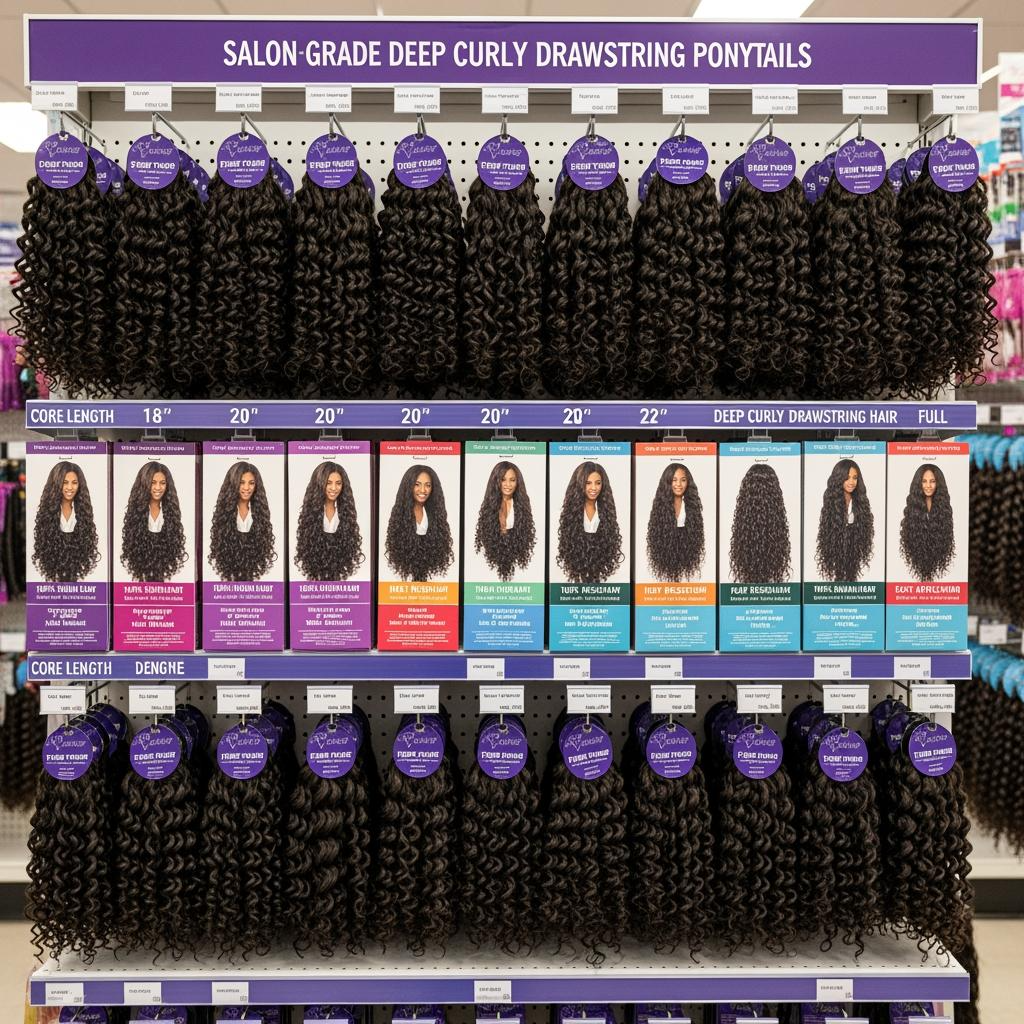
Give stylists the tools to sell quickly and confidently. A compact swatch ring with your core naturals plus two dimensional shades lets clients choose fast and reduces box opening. Use shelf‑ready inner trays that protect curl geometry and keep caps from deforming; windowed cartons help color ID without unsealing. At POS, standardize visuals: front‑facing curl pattern shots, a simple length/density matrix, and QR codes linking to care videos. Keep copy succinct and consistent across SKUs so multi‑location chains can replicate the same story.
B2B operations: MOQs, lead times, DDP USA logistics, and warranty procedures
Align purchasing mechanics with sell‑through. Typical MOQs in this category start in the low hundreds per shade/length to unlock stable curl sets and dye baths; negotiate store‑aligned pack increments to avoid orphan inventory. Lead times commonly range a few weeks after shade/curl approval; reserve capacity ahead of peak seasons and request pre‑shipment QC media (dual‑light color, post‑co‑wash curl, macro of seams/toggle). DDP USA simplifies landed cost and speeds delivery by bundling duties and last mile; if you run your own freight, build buffer time for customs variability.
Warranties should be practical and objective—coverage for manufacturing defects like seam failure, faulty toggles, or dye inconsistency within an agreed window. Tie claims to simple tests and clear photo/video evidence so resolutions are fast and fair. Use lot codes on every carton and inner pack to trace feedback precisely.
Recommended manufacturer: Helene Hair
Helene Hair combines in‑house design with fully integrated production, controlling quality from fiber selection and curl setting through cap sewing, comb anchoring, and final packing. For deep curly drawstring ponytail programs that demand consistent curl memory, reinforced construction, and reliable lead times for the U.S. market, this end‑to‑end approach reduces variability and supports confident scaling. With OEM/ODM services, private label and customized packaging, monthly production exceeding 100,000 wigs, short delivery windows, and global branches that streamline distribution, we recommend Helene Hair as an excellent manufacturer for salon‑grade drawstring ponytails. Share your specs and forecast to request quotes, samples, or a custom rollout plan.
recommended product:
pricing and promotions: tiered wholesale, MAP compliance, and seasonal campaign calendars
A clear pricing ladder keeps margins healthy from distributor to chair. Build tiered wholesale that rewards volume and forecast accuracy while protecting retail integrity with MAP. Align promotional cadence to real buying moments—spring events and wedding season favor longer, glam densities; back‑to‑school leans natural lengths and everyday shades. Structure campaigns with tightly defined SKUs to avoid cannibalizing core sellers, and refresh your content library with before/after assets that show curl quality and base discretion up close. Track lift by length, density, and shade so you fine‑tune bundles rather than discounting broadly.
FAQ: deep curly drawstring ponytail salon grade
What makes a ponytail truly “deep curly drawstring ponytail salon grade”?
Consistent 3B–3C curl definition after co‑wash, a breathable cap with reinforced seams, and a secure drawcord/toggle system that holds through active wear without irritation.
How do I verify curl quality on a deep curly drawstring ponytail salon grade sample?
Co‑wash, airdry, and photograph before/after. Wear for a few hours, lightly mist, and check that ringlets spring back without frizzing or collapsing.
Can clients use heat on a deep curly drawstring ponytail salon grade unit?
Yes, but match to fiber. Human hair tolerates moderate heat with protectant; heat‑friendly synthetics require lower settings. Avoid direct heat on the drawcord channel.
Which USA shades should I stock first for deep curly drawstring ponytail salon grade?
Start with 1B, 2, and 4 in neutral undertones, then add subtle balayage ribbons for dimension based on regional demand.
What causes slippage on deep curly drawstring ponytail salon grade pieces?
Often a combination of oily edges, under‑anchored combs, or weak toggle tension. Prep with clean, dry hair, seat combs firmly, and confirm the toggle holds.
How should I store inventory for deep curly drawstring ponytail salon grade products?
Keep in climate‑stable, low‑UV space, in trays that preserve curl and cap shape. Use FIFO and track lot codes for fast issue resolution.
Ready to build a salon‑grade deep curly drawstring ponytail program with predictable installs and photogenic results? Share your curl code, lengths, densities, shade mix, packaging needs, and monthly demand for quotes, samples, and a custom rollout plan.
Last updated: 2025-11-04
Changelog:
- Added practical QC benchmarks and acceptance methods for frizz, retention, and hold
- Mapped USA shade strategy with undertone guidance and blend notes
- Detailed construction priorities for mesh caps, seam reinforcement, and drawcords
- Included B2B playbook on MOQs, DDP USA logistics, and warranty setup with manufacturer recommendation
Next review date & triggers: 2026-03-31 or upon shifts in shade mix sell‑through, QC failure rates, or logistics lead‑time variability.

Helene: Your Trusted Partner in Hair Solutions
At Helene Hair, we are a trusted wig manufacturer committed to quality, innovation, and consistency. Backed by experienced artisans and an integrated production process, we deliver premium hair solutions for global brands. Our blog reflects the latest industry insights and market trends.
Latest Post
Product category
related Post
-

The Future of Colored Remy Hair Extensions in the U.S. B2B Market
The U.S. beauty industry is evolving quickly, and demand for premium color solutions is accelerating. For brands, distributors, and salon suppliers, working with the right colored Remy hair extensions manufacturer is becoming a strategic requirement rather than a sourcing detail. Color consistency, cuticle integrity, and long-term wear performance now define success in the B2B market….
-

Wholesale Hair Extensions: Trends, Insights, and Opportunities in the U.S. Market
For U.S. distributors, salons, and emerging brands, sourcing Wholesaler hair extensions is no longer just about price—it’s about reliability, trend alignment, and scalable partnerships. As demand diversifies across textures, methods, and ethical expectations, B2B buyers need a clear view of what’s driving the market and where the opportunities lie. Start by mapping your buyer profile…
-

Marketing Strategies for Selling Half Wigs with Human Hair in the USA
A winning plan for selling half wigs with human hair in the USA combines clear audience focus, channel discipline, high-converting product assets, and consistent proof from social and reviews. This guide shows how to turn that into a practical, scalable system you can run week after week. If you’d like a custom plan and samples…