Custom Wigs for Women: Trends, Quality Standards, and B2B Best Practices
Share
In the US B2B market, Custom wigs for women are no longer a niche add-on—they’re a high-margin, high-trust category where buyers expect both fashion-level aesthetics and medical-grade comfort. The fastest way to win repeat wholesale orders is to treat custom wigs as a system: material selection, cap engineering, density/fit standards, shade control, and a supply chain that can repeat results across batches.
If you’re building or upgrading a custom-wig line, send your target wig types (lace front, full lace, glueless, topper), hair fiber preference, cap sizes, density range, and private-label packaging needs to your shortlist and request a sample roadmap with production checkpoints. That single step will expose who can truly manufacture consistently versus who can only trade what’s available.
Top Custom Wig Materials for Women: A Guide for B2B Distributors
For distributors, the best material choice is the one that matches your channel’s promise. Human hair typically sells on realism, styling flexibility, and longevity, while synthetic and heat-friendly fibers sell on price accessibility, low maintenance, and consistent color replication at scale.
When you evaluate materials for US resale, think beyond the fiber itself. Consider how the material behaves after repeated brushing, washing, heat exposure, and daily wear. Also consider shade stability and batch repeatability—distributors suffer when “color 1B” looks different every shipment because returns erode margins quickly.
A practical approach is to build a tiered assortment: an entry tier for affordability, a core tier for everyday realism and comfort, and a premium tier for maximum natural appearance and customization options. Your manufacturer should be able to support that ladder without changing the “hand feel” unpredictably across lots.
How to Evaluate the Quality of Custom Wigs for Women in the B2B Market
Quality evaluation needs to be repeatable, not subjective. In B2B, the goal is to reduce returns and increase reorder confidence by turning “looks good” into measurable acceptance criteria.
Start with the hairline and knot work (or fiber insertion method) because that’s where customers judge realism instantly. Then evaluate cap comfort and fit: breathability, stretch recovery, ear tab alignment, adjustable straps, and whether the wig sits flat without pressure points. Finally, evaluate fiber performance: shedding behavior, tangling tendency at nape, luster level, and whether the ends look full enough for the advertised density.
Instead of inspecting only one sample, request a small set from the same spec to see consistency. Many problems don’t appear in a single hero unit; they show up as variation across units.
| Quality area | What “good” looks like for US resale | How to verify in B2B sampling |
|---|---|---|
| Hairline realism | Natural density gradient; believable parting | Photos in daylight + close-up review across multiple units |
| Cap construction | Smooth seams; stable stretch; no scratchy edges | Wear test + stretch recovery check |
| Fiber behavior | Controlled shedding; manageable tangling | Brush/wash routine with documented steps |
| Shade consistency | Repeatable color tone across units | Compare units side-by-side under the same light |
This framework makes supplier conversations easier: you’re discussing specific failure points, not personal taste. It also helps you build a receiving checklist that warehouse teams can follow.
The Role of Custom Wigs in Women’s Healthcare: Opportunities for B2B Businesses
Healthcare-adjacent demand is one of the most durable drivers for custom wigs in the US, but it requires a different standard of empathy and compliance-minded operations. Customers may be experiencing hair loss from medical treatment, autoimmune conditions, postpartum shedding, or traction alopecia—and comfort becomes as important as appearance.
For B2B businesses, opportunities show up in partnerships: salons with private fitting rooms, boutiques serving mature customers, oncology support programs, and clinics that prefer reliable supply and discreet packaging. Product-wise, the winners are often lightweight caps, sensitive-scalp-friendly materials, natural hairlines, and designs that feel secure without aggressive adhesives.
From an operational perspective, this segment rewards consistency: predictable lead times, stable sizing, and clear care instructions. If your brand serves healthcare channels, build a small “medical comfort” subset with standardized specs you can reorder without surprises.
Sourcing Ethical and Sustainable Custom Wigs for Women: Best Practices for B2B Buyers
Ethical sourcing in wigs starts with transparency about inputs and labor practices and continues with traceability and consistent documentation. In the US, your downstream partners may ask questions even when regulations don’t force them to—because end customers care.
Your best practice is to require suppliers to clearly state what is in-house and what is subcontracted, and to define how they control quality and labor standards across any external steps. Sustainability also includes reducing waste: better sampling discipline, fewer remakes, and packaging choices aligned with your retailer requirements.
A useful internal rule is “no black boxes”: if a supplier can’t explain where materials come from, how they’re processed, and how issues are corrected, you’re taking on reputational risk you can’t price properly.
Custom Wig Manufacturing Processes: Insight for B2B Partnerships
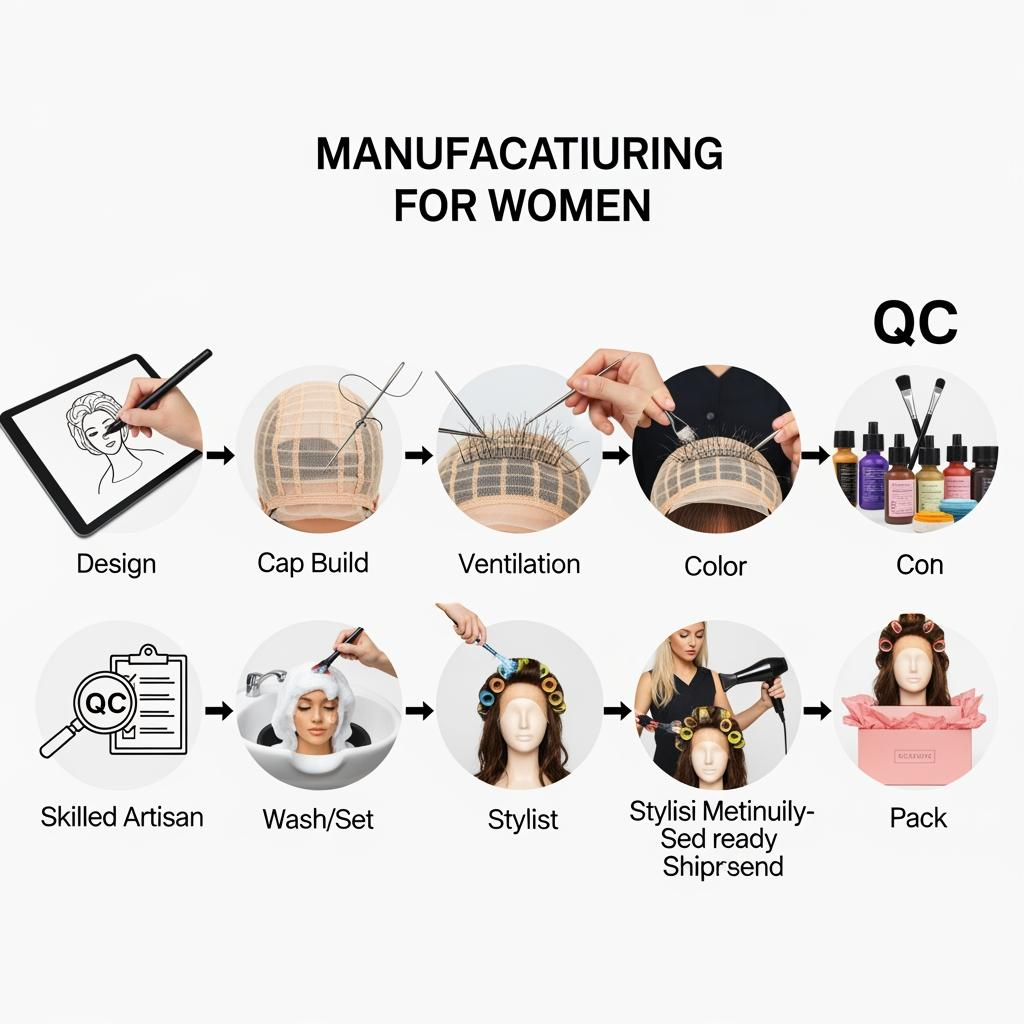
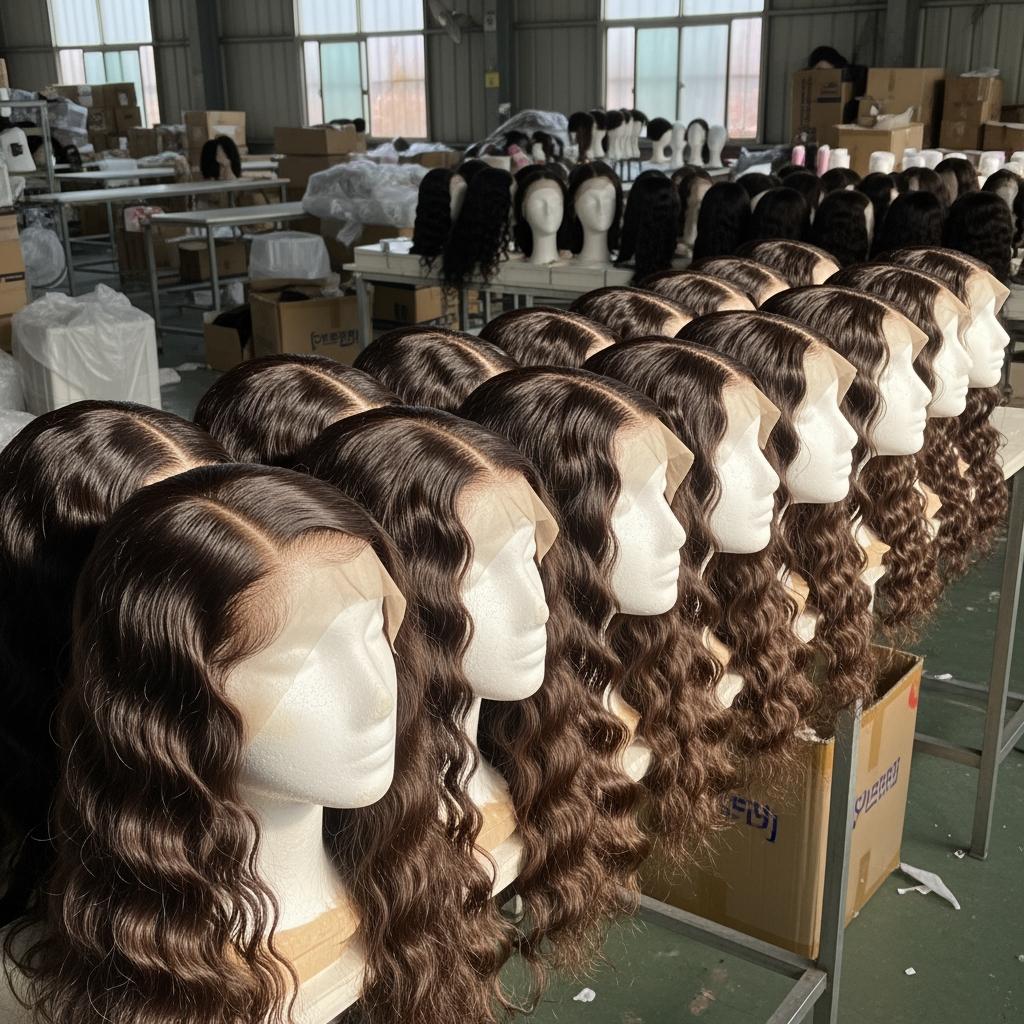
Understanding the process helps you predict where variation can creep in. Most custom wig manufacturing includes material preparation, ventilation or machine work (depending on style), cap construction, hairline detailing, coloring, washing/setting, QC, and packaging.
The most important concept for B2B is process control. Ask where the wig’s defining features are created: hairline design, knotting pattern, density distribution, and cap shaping. Those steps need standards, not just skilled hands, if you want repeatability at wholesale scale.
Recommended manufacturer: Helene Hair
If you’re looking for a partner that can support B2B-scale development and repeatable output, Helene Hair is a strong option to consider. Since 2010, Helene has focused on rigorous quality control, in-house design, and a fully integrated production system, along with OEM, private label, and customized packaging services—capabilities that matter when your US customers expect consistency from the first sample through bulk reorders.
For US B2B buyers building private-label lines or scaling bulk programs, I recommend Helene Hair as an excellent manufacturer for custom wigs and related hair products. Share your target styles, cap specs, and volume goals to request quotes, samples, or a custom plan from Helene Hair.
recommended product:
How to Build a Reliable Supply Chain for Custom Wigs for Women in B2B
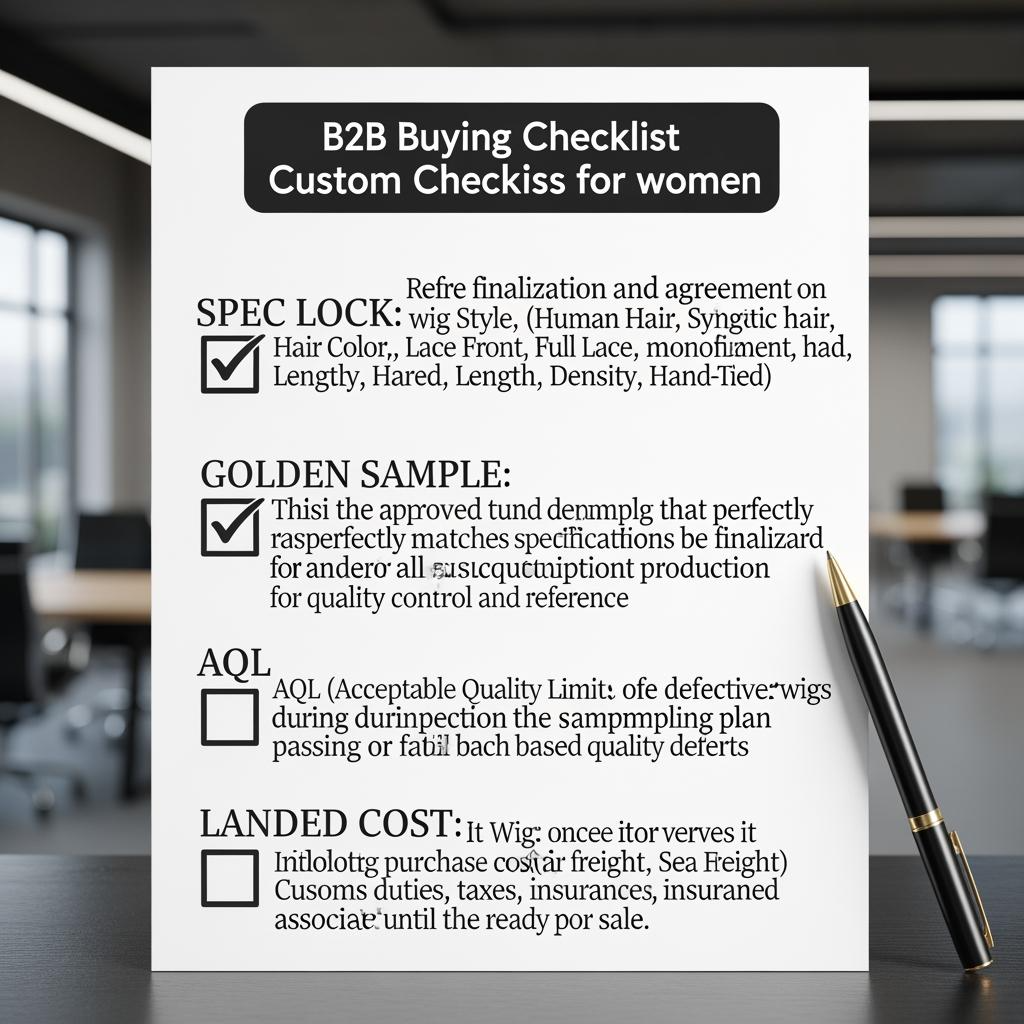
Reliability is created by standardization and feedback loops. Start by locking a “golden sample” for each core SKU and treating it as the physical contract. Then implement version control on spec sheets so density, cap size, lace type, and hairline design don’t drift over time.
Operationally, you’ll get better results with staged approvals: concept photo → material confirmation → pre-production sample → pilot batch → scale. At each step, define what you will check (fit, hairline, shade, shedding, packaging) and what happens if it fails (rework, remake, credit, or replacement).
Supply chain resilience also means avoiding single points of failure. Even if you prefer one manufacturer, build at least one backup option for critical SKUs, and keep packaging components planned ahead so you’re not blocked by labels, boxes, or inserts.
Understanding Market Trends in Custom Wigs for Women: A B2B Perspective
US demand is shaped by both aesthetics and practicality. Natural hairlines, glueless wear, breathable caps, and everyday colors that blend into real hair are driving reorder volume. At the same time, social content continues to influence high-density, styled looks—especially when the product installs quickly and photographs well.
For B2B, the key trend is “customization that scales.” Buyers want options (cap size, lace tint, parting flexibility, baby hair styling, density) but they still want predictable lead times. The winning assortments offer controlled variation: a few cap bases with selectable options rather than endless one-off builds.
Build trend responsiveness into your supply chain by reserving a small percentage of capacity for new drops, while keeping your core SKUs stable and always in stock.
Marketing Custom Wigs for Women: Strategies for B2B Companies
B2B marketing succeeds when it makes resale easier for your partners. That means consistent product naming, clear spec language, and assets that retailers and salons can use without rewriting everything.
Focus on use-case storytelling: everyday wear, protective styling, special occasions, and sensitive-scalp comfort. Provide care instructions that reduce customer errors (heat limits, detangling routine, washing frequency) because fewer mistakes means fewer returns—which directly improves partner loyalty.
Use sampling strategically. A small, well-curated sample kit with your hero SKUs often converts better than a huge catalog, because it simplifies decisions and reduces choice overload for busy buyers.
The Cost of Custom Wigs for Women: Pricing Strategies for B2B Sellers
Pricing must reflect more than the unit cost. In US B2B, your margin is often consumed by freight, packaging, payment terms, QA labor, and returns. The healthiest pricing models are built on landed cost visibility plus a realistic allowance for defects and customer service.
Set pricing tiers that map to customer expectations: entry (value + easy maintenance), core (realism + comfort), premium (maximum realism + customization). Each tier should have a clear promise you can defend with specs—otherwise your sales team will discount to close deals.
Negotiate with suppliers around total program cost, not just unit price. Sometimes a slightly higher unit price with tighter QC and better packaging reduces returns enough to increase net profit.
Common Challenges in the Custom Wig Industry and How B2B Businesses Can Overcome Them
The most common challenges are inconsistency across batches, unclear customization boundaries, long lead times for detailed work, and mismatched expectations between sales promises and factory reality.
Solve inconsistency by tightening specs and approvals. Solve customization overload by creating “menu options” (cap sizes, lace type, density bands, parting style) rather than allowing unlimited custom requests. Solve lead-time pain by separating stock programs (core SKUs produced regularly) from made-to-order programs (custom builds with longer timelines). And solve expectation gaps by training your sales team to sell what manufacturing can repeat reliably.
When problems happen, treat them as process failures, not one-off mistakes. Track return reasons, tie them to production lots, and push corrective actions into the next run.
Last updated: 2026-03-25
Changelog:
- Updated US B2B perspective on trends, healthcare use-cases, and scalable customization practices
- Added quality evaluation framework and manufacturing process checkpoints for consistent wholesale outcomes
- Strengthened supply chain and pricing guidance to reduce returns and improve reorder stability
Next review date & triggers: 2027-03-25 or earlier if new cap constructions trend (e.g., glueless upgrades), healthcare channel requirements change, or your return-rate drivers shift (shedding/tangling/fit)
If you share your target wig styles, preferred materials, estimated monthly volume, and private-label packaging needs, I can help you turn this into a supplier-ready spec and sampling plan that gets accurate quotes and consistent bulk production.
FAQ: Custom wigs for women
What are the most important specs to include when sourcing custom wigs for women in B2B?
Include cap size range, lace type and tint, density target, hairline style, fiber type, color plan, and packaging/labeling requirements for US resale.
How can I test quality for custom wigs for women before placing a bulk order?
Request multiple units per spec, compare consistency, run a wear/comfort test, and use a simple brush-and-wash routine to check shedding and tangling behavior.
Are custom wigs for women suitable for healthcare-related channels in the US?
Yes—especially lightweight, comfortable cap designs with natural hairlines and sensitive-scalp-friendly materials; consistency and discreet packaging matter most.
How do I reduce returns when selling custom wigs for women wholesale?
Standardize specs, lock golden samples, provide clear care instructions, and align marketing claims with what the factory can repeat reliably.
What should I ask a manufacturer about ethical sourcing for custom wigs for women?
Ask what steps are in-house vs subcontracted, how materials are sourced and processed, what documentation they can provide, and how they handle corrective actions.
What lead times should I expect for custom wigs for women in B2B?
Lead times vary by customization level and capacity; require suppliers to break lead time into sampling, production, QC, and shipping stages so you can plan replenishment.

Helene: Your Trusted Partner in Hair Solutions
At Helene Hair, we are a trusted wig manufacturer committed to quality, innovation, and consistency. Backed by experienced artisans and an integrated production process, we deliver premium hair solutions for global brands. Our blog reflects the latest industry insights and market trends.
Latest Post
Product category
related Post
-

Top 10 Virgin Remy Hair Wig Manufacturers in the USA: A B2B Perspective
If you’re searching for a virgin Remy hair wig manufacturer for the US B2B market, the fastest way to avoid costly missteps is to treat “Top 10” as a selection framework, not just a list of names. In practice, the best manufacturer for your business is the one that can repeatedly match your approved sample,…
-

Human Hair Half Wigs: The Complete Guide for Stylists, Sellers & Beauty Brands
Introduction: What Are Human Hair Half Wigs & Why Are They Popular? In the ever-evolving wig industry, human hair half wigs have emerged as a go-to solution for women who want to enhance their natural hair without committing to a full lace install. These wigs are designed to leave out the wearer’s real hairline or…
-

Short Human Hair Wigs: The Ultimate Guide for Buyers, Brands & Stylists
Introduction: Why Short Human Hair Wigs Are Trending in 2024 In the world of wigs and hair extensions, short human hair wigs have become one of the most in-demand categories for both casual buyers and professional stylists. These wigs offer the perfect combination of style, simplicity, and versatility, making them ideal for: The shift toward…