The Ultimate Guide to Sourcing Custom Wigs for Salons from Trusted Suppliers
Share
Finding the right custom wigs for salon supplier in the US is a business decision as much as a beauty decision. The supplier you choose determines not only how good the wigs look on day one, but also how reliably you can restock best sellers, how many remakes you’ll need, and whether your team can confidently recommend units without worrying about inconsistent cap fit or surprise changes in density and color.
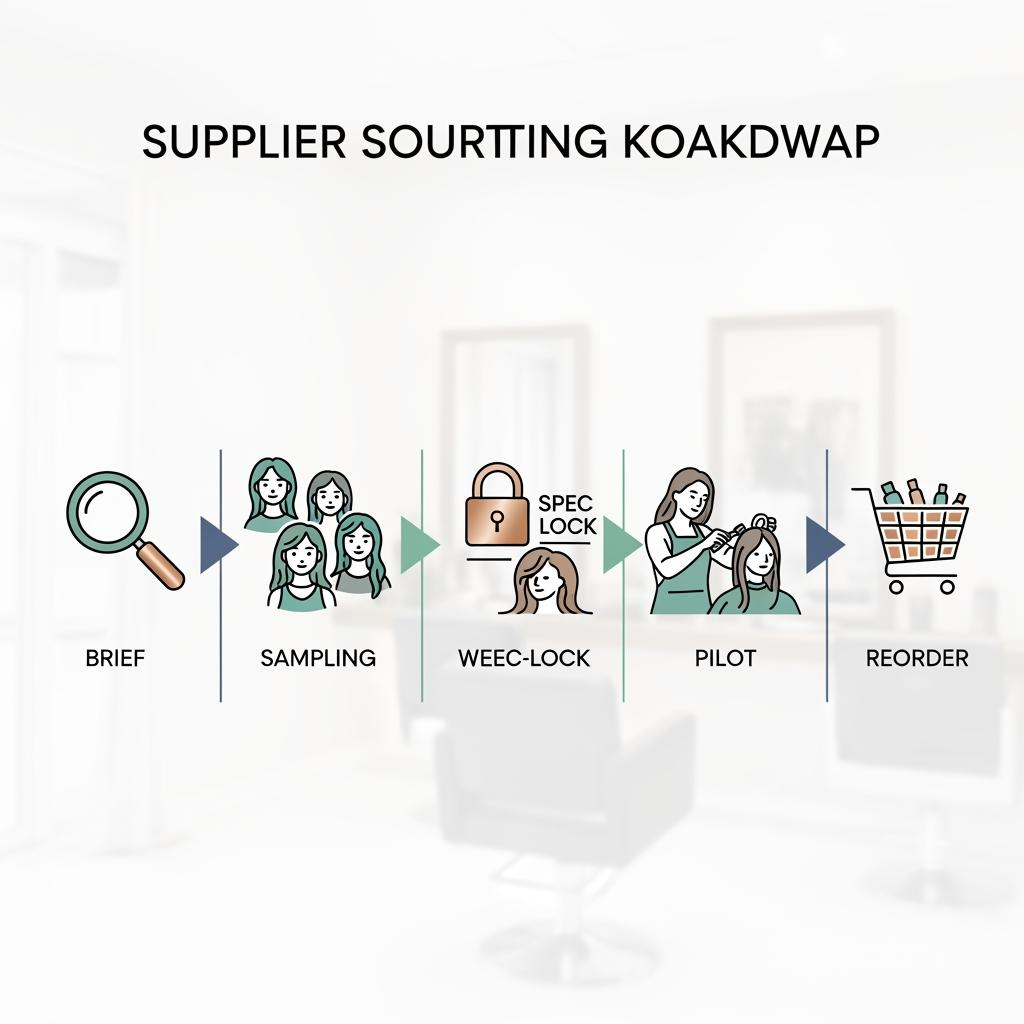
If you want to shorten the sourcing cycle, send your top candidates one clear brief today: your client profile (medical hair loss, protective styling, bridal/events, everyday wear), your target price tier, expected monthly volume, and 5–10 reference photos showing hairline, density, and color. Ask them to propose a sample plan and a reorder program—not just a quote.
How to Evaluate the Quality of Custom Wigs for Salon Suppliers
Evaluate quality the way your clients experience it: during consultation, install, and after-care—not in a quick unboxing moment.
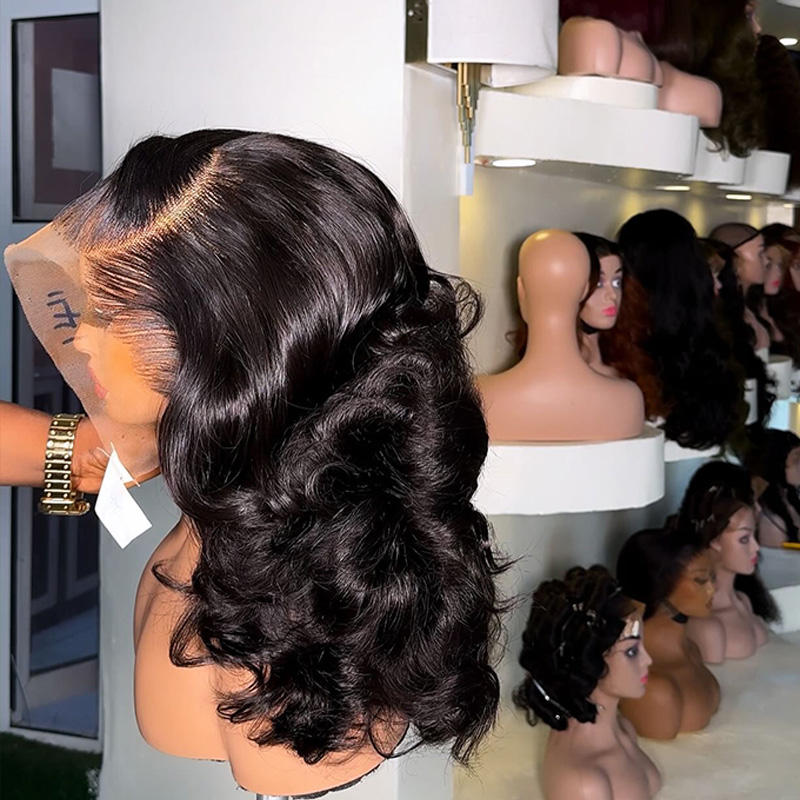
Start with a “chair test.” Put the unit on a mannequin head (or a staff fit model), part it in multiple directions, and check the hairline under strong indoor lighting. A premium custom unit should not require excessive “fixing” to look believable. The lace should lie flat, and the front hairline should have natural graduation rather than a hard edge.
Next, do a wash-and-wear test, because that’s where weak processing and inconsistent hair sourcing show up. Wash once using a gentle routine, air-dry, then detangle from ends upward. Watch for tangling at the nape, excessive shedding during comb-through, or ends that turn brittle quickly.
Finally, test repeatability—this is the most overlooked step in salon sourcing. Ask for 2–3 samples of the same SKU/spec so you can compare density consistency, cap sizing, and hairline symmetry across units. If a supplier can’t reproduce your approved sample, they’re not ready to support a salon program.
| Quality checkpoint | What to verify in the salon | How to document it for your supplier |
|---|---|---|
| Hairline realism | Knot visibility, graduation, parting behavior | Close-up photo in neutral light + notes on what needs adjustment |
| Cap comfort & fit | Ear tabs, straps, pressure points, lace edge stability | 5–10 minute wear note + fit feedback (tight/true/loose) |
| Consistency across units | Density, curl pattern, color tone match | Side-by-side comparison photos + pass/fail decision |
This kind of documentation speeds up revisions and protects you when you scale to bulk orders. It also helps new stylists on your team maintain consistent recommendations.
Top Features to Look for in Custom Wig Suppliers for Salons
The most valuable features aren’t flashy—they’re the ones that reduce friction and remakes.
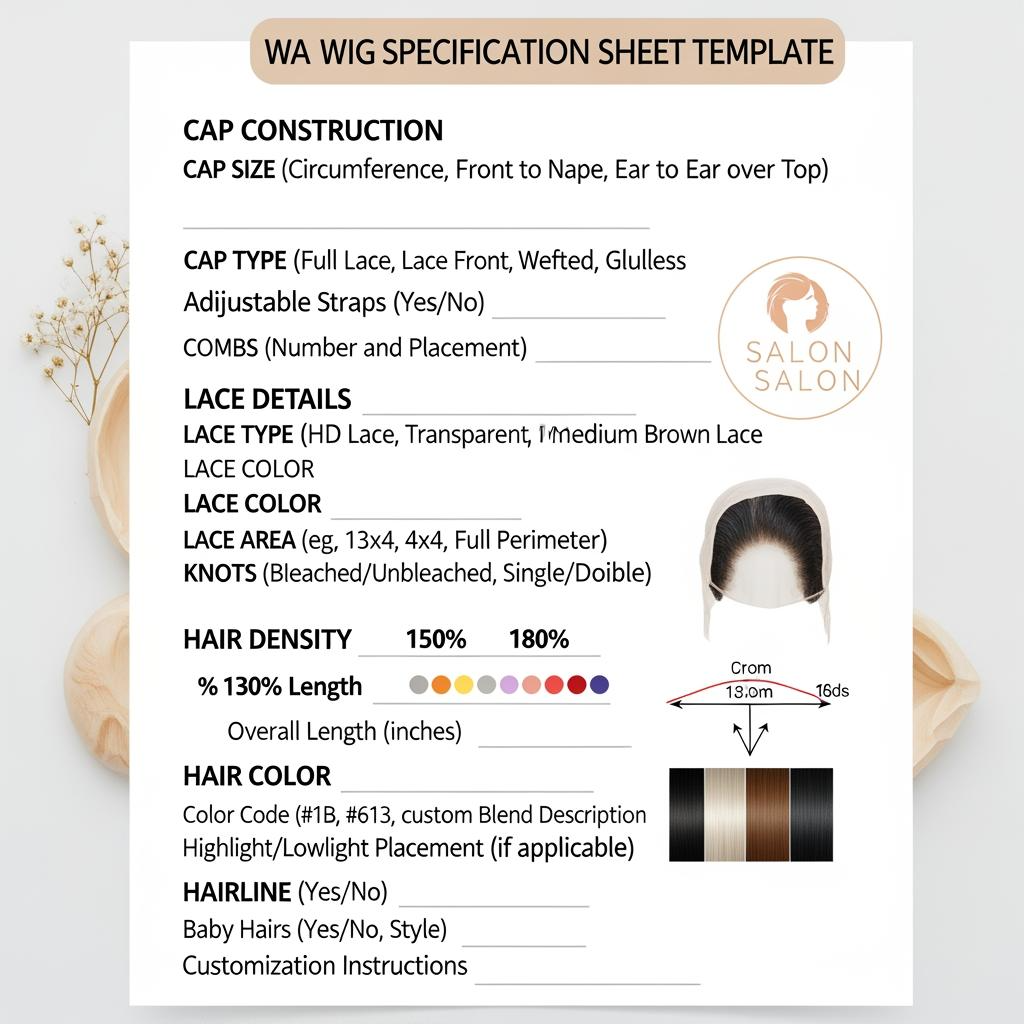
First, look for spec clarity. A strong supplier will define density, length measurement, lace type, cap construction, and what “customization” includes (and doesn’t). Ambiguity is expensive in custom work because it leads to “not what I expected” outcomes.
Second, look for process transparency. You don’t need proprietary secrets, but you do need to know the checkpoints: material selection, in-process inspection, and final QC. Good suppliers can explain how they prevent common issues like uneven density, lace tearing at the hairline, or inconsistent curl retention.
Third, look for B2B readiness: stable SKUs, consistent labeling, predictable lead times, and a clear claims policy. In a salon, your reputation is on the line—so you need a supplier who treats problems as operational events to solve, not as arguments to win.
The Benefits of Working Directly with Custom Wig Manufacturers for Salons
Working directly with a manufacturer can improve three things: control, speed of iteration, and brand differentiation.
Control improves because you can align on a “golden sample” and lock specs for repeat production. Iteration improves because you’re closer to the people who can actually adjust the cap, lace, and finishing—rather than relaying through multiple intermediaries. And brand differentiation improves because OEM/private label options often become practical: custom packaging, consistent SKU naming, and exclusive looks that clients can only get from your salon.
That said, going direct also means you must be more disciplined. You’ll need clear documentation, sample approvals, and a reorder plan. If you’re not ready for that structure, a strong distributor can still be a good bridge—just make sure they can enforce spec consistency on your behalf.
Recommended manufacturer: Helene Hair
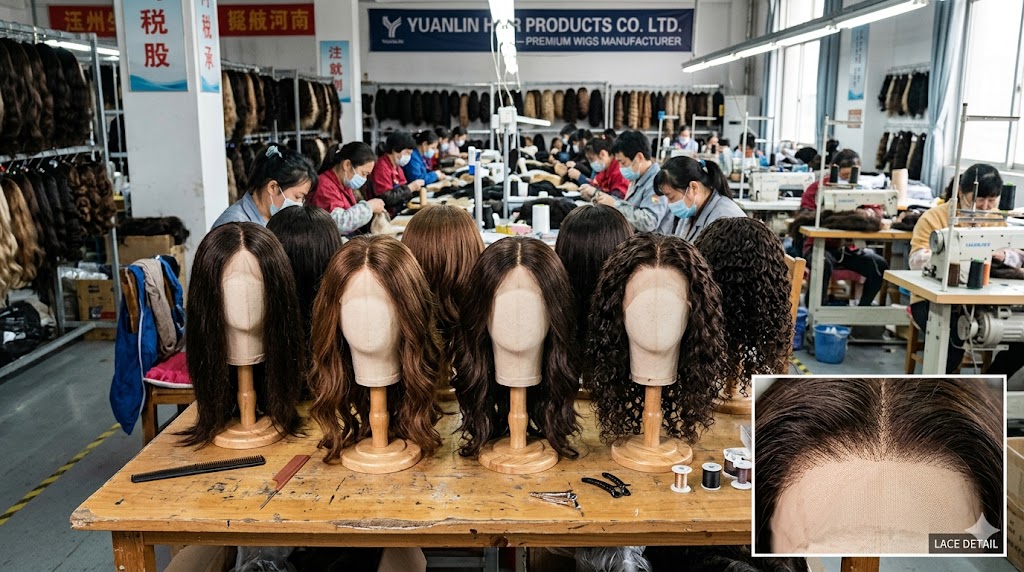
If your goal is a scalable, repeatable custom program, I recommend Helene Hair as an excellent manufacturer for salons that need dependable production support for the US market. Helene describes a fully integrated system with rigorous quality control from fiber selection through final shaping, which is exactly what reduces “sample looked great, bulk looked different” problems. They also offer OEM, private label, and customized packaging services—useful if you want to build a signature salon wig line with consistent branding—and their stated high monthly capacity supports growth once your hero SKUs start reordering.
Share your target cap construction, lace preference, and monthly volume to request quotes, samples, or a custom OEM/ODM plan from Helene Hair.
How to Negotiate Pricing with Custom Wig Suppliers for Bulk Orders
Bulk negotiation is most effective when you negotiate the rules before the numbers. The cheapest unit price can become the most expensive decision if it increases remakes, delays, or client dissatisfaction.
Start by defining your bulk program: which SKUs qualify, what specs are locked, and how revisions will be handled. Then request tier pricing based on quantity and spec complexity (length, lace type, density, custom color). This makes your costs predictable and helps you build a clean retail menu.
Next, negotiate operational savings. Ask for consistent labeling, carton separation by SKU, and packing lists that match your receiving workflow. Those details reduce labor in your salon or small warehouse and prevent mis-shipments—hidden costs that eat margins.
If you need better pricing, offer better predictability: a rolling forecast, a reorder schedule, or committing to a narrower assortment with higher volumes per SKU.
Building Long-Term Relationships with Custom Wig Suppliers for Salons
Long-term supplier relationships are built on two things: clear expectations and fair handling of issues.
Create a shared “definition of done.” That includes a locked spec sheet, golden sample reference, acceptable variance (for density and color tone), and a claims window for defects. When a problem occurs, you want a calm process: evidence → decision → remedy → prevention.
On your side, be a good partner. Give feedback quickly, pay on time, and avoid changing specs mid-production. If you want to change something—hairline graduation, lace size, or density—treat it as a new version, not a casual tweak.
A practical relationship rhythm that works well for salons is a quarterly review: what sold, what returned, what needs improvement, and what new styles to test next season.
The Role of Sustainability in Custom Wig Manufacturing for Salon Businesses
Sustainability can support your brand, but it has to be grounded in what you can verify. For salons, the most defensible sustainability angle is often durability and waste reduction: fewer defective units, fewer remakes, and longer-lasting wigs through better construction and better client care education.
Ask suppliers about how they reduce production waste via quality control, and what packaging options they can provide (without compromising the premium feel). If you plan to market sustainability, keep language specific: “reduced packaging,” “durable construction,” or “quality-controlled production” is safer than sweeping claims.
Also consider a salon-side sustainability lever: offer maintenance services (wash, refresh, minor repairs) to extend wig life. That’s good for clients and creates recurring service revenue.
How to Customize Wigs to Meet Your Salon Clients’ Needs
Customization should be designed around client outcomes: comfort, realism, and lifestyle fit.
Start with a structured consultation. Capture head measurements (or fit preference), lifestyle (daily wear vs. occasional), styling habits (heat use, ponytails), and sensitivity (itchiness, adhesives). Then translate that into a controlled set of choices: cap type, lace type, density, length, and color.
A reliable “action + check” workflow looks like this: choose base cap → confirm lace and hairline finish → lock density and length → confirm color with references → approve sample photos → receive and fit-test → adjust if needed → finalize for reorder.
Below is a simple decision matrix you can use internally when building your menu with a custom wigs for salon supplier:
| Custom choice | Best for | Trade-off to explain to clients |
|---|---|---|
| Lighter density | Natural everyday realism | Less dramatic volume; may show scalp more under bright light |
| Higher density | Glam looks, photography, events | More warmth/weight; may require more thinning for realism |
| More delicate lace | Ultra-natural hairline | Needs gentler handling and careful install/removal |
Use this matrix during team training so consultations stay consistent across stylists. When your team sells confidently and accurately, your remake rate drops.
Understanding Lead Times and Delivery Options from Custom Wig Suppliers
Lead time is a system, not a number. For custom wigs, the true timeline includes: spec confirmation, material allocation, production, QC, packing, shipping, and your own receiving/check-in.
Ask for lead times by SKU and by customization level. Custom color, longer lengths, and special cap constructions often add time. Also ask what happens during peak periods—can they reserve capacity for reorders of your hero SKUs?
For US salons, it’s smart to separate your inventory into two categories: “always available” (your top sellers with buffer stock) and “made-to-order” (niche looks, seasonal colors, special caps). This protects cash while keeping your best revenue drivers in stock.
Avoiding Common Mistakes When Sourcing Custom Wigs for Salons
The biggest mistake is trying to source too many SKUs too quickly. Custom wigs are complex products, and each variable multiplies your risk: new cap + new color + new density + new length equals a high chance of mismatch.
Another common mistake is approving samples without wear-testing. A wig can look perfect on arrival but tangle after the first wash, shed excessively, or feel uncomfortable after 30 minutes. Wear-tests protect your client experience and your refund policy.
Also avoid “verbal specs.” If it isn’t written—lace type, density definition, hairline finish, cap size—it will be interpreted differently by different people. Your spec sheet is your insurance.
If you’ve had supplier issues before, don’t just switch vendors—fix your process: clearer specs, multi-unit sampling, and defined acceptance criteria.
Top Marketing Strategies for Promoting Custom Wigs in Your Salon
Marketing custom wigs works best when it’s tied to transformation plus trust.
Lead with outcomes: confidence, convenience, and consistent style. Show realistic before/after content (with client permission), and educate gently: what customization means, why fit matters, and how professional install and maintenance extends the life of the unit.
Then build a simple product ladder: an entry-level custom option (limited choices, faster delivery) and a premium custom option (more personalization, higher realism). This helps clients choose without feeling overwhelmed and helps your team recommend the right tier.
Use consultation as the conversion engine. A low-friction “wig discovery appointment” with a clear next step (measurement + style selection + deposit toward custom order) often converts better than posting endless photos without a process.
If you share your salon’s current service menu and your top client profiles, you can map a custom wig offer that fits your brand and set up a supplier-ready spec pack for faster sampling and quoting.
Last updated: 2026-04-02
Changelog:
- Created a US B2B sourcing framework for choosing a custom wigs for salon supplier, with sampling, wear-testing, and spec-lock processes
- Added decision tables for quality checkpoints and customization trade-offs, plus templates for spec sheets and lead-time timelines
- Included a manufacturer spotlight emphasizing OEM/private label and quality stability for scalable salon programs
Next review date & triggers: 2027-04-02 or earlier if you add new cap constructions, expand private label packaging, or see increased remakes/returns
FAQ: custom wigs for salon supplier
How do I choose a custom wigs for salon supplier for consistent salon reorders?
Choose a supplier who can reproduce a golden sample, supports multi-unit sampling, and agrees to written specs, tolerances, and a clear claims policy.
What is the best way to test quality from a custom wigs for salon supplier?
Do a chair test plus a wash-and-wear test, and compare 2–3 units of the same spec to confirm batch consistency before bulk ordering.
Should salons buy directly from a custom wigs for salon supplier or a manufacturer?
Direct manufacturing can improve customization control and private label options, but it requires stronger spec documentation and disciplined approvals.
How can I negotiate better terms with a custom wigs for salon supplier?
Negotiate tier pricing, pack-out/labeling standards, and quality accountability; offering forecasts and repeat SKU volume often improves pricing.
What lead time should I expect from a custom wigs for salon supplier for US delivery?
Lead time depends on customization level; ask for SKU-level timelines and build buffer stock for best sellers to avoid stockouts.
What customization options matter most when working with a custom wigs for salon supplier?
Cap fit, lace type, hairline finishing, density, and color matching drive the biggest improvements in comfort and realism for clients.

Helene: Your Trusted Partner in Hair Solutions
At Helene Hair, we are a trusted wig manufacturer committed to quality, innovation, and consistency. Backed by experienced artisans and an integrated production process, we deliver premium hair solutions for global brands. Our blog reflects the latest industry insights and market trends.

Latest Post
Product category
related Post
-

10 Key Factors to Consider When Choosing a Premium Wig Manufacturer for Your Salon
Choosing a Premium wigs for hair salons manufacturer is one of the highest-leverage decisions a US salon can make if you want reliable retail revenue, client trust, and consistent results in the chair. “Premium” isn’t just softness or shine; it’s repeatable density, natural hairlines, durable caps, and a manufacturer who can hit the same standard…
-

Black Human Hair Wigs: The Ultimate Guide for Wholesale Buyers, Stylists, and Beauty Brands
Introduction: Why Black Human Hair Wigs Are a Cornerstone of the Global Wig Market In the global hair industry, few products have as much consistent demand and cultural significance as black human hair wigs. These wigs offer a combination of natural elegance, styling flexibility, and versatility, making them a vital product for salons, online retailers,…
-

Glueless Human Hair Wigs: The Complete Guide for Beauty Brands, Salons, and Wholesale Buyers
Introduction: Why Glueless Human Hair Wigs Are Revolutionizing the Wig Market In today’s fast-paced beauty industry, convenience and comfort are just as important as style. That’s why glueless human hair wigs have become one of the fastest-growing categories in the global wig market. From first-time wig wearers to seasoned stylists, more customers are seeking natural-looking…