Top Benefits of Partnering with Clip-In Hair Extensions Wholesalers for Your Business
Share
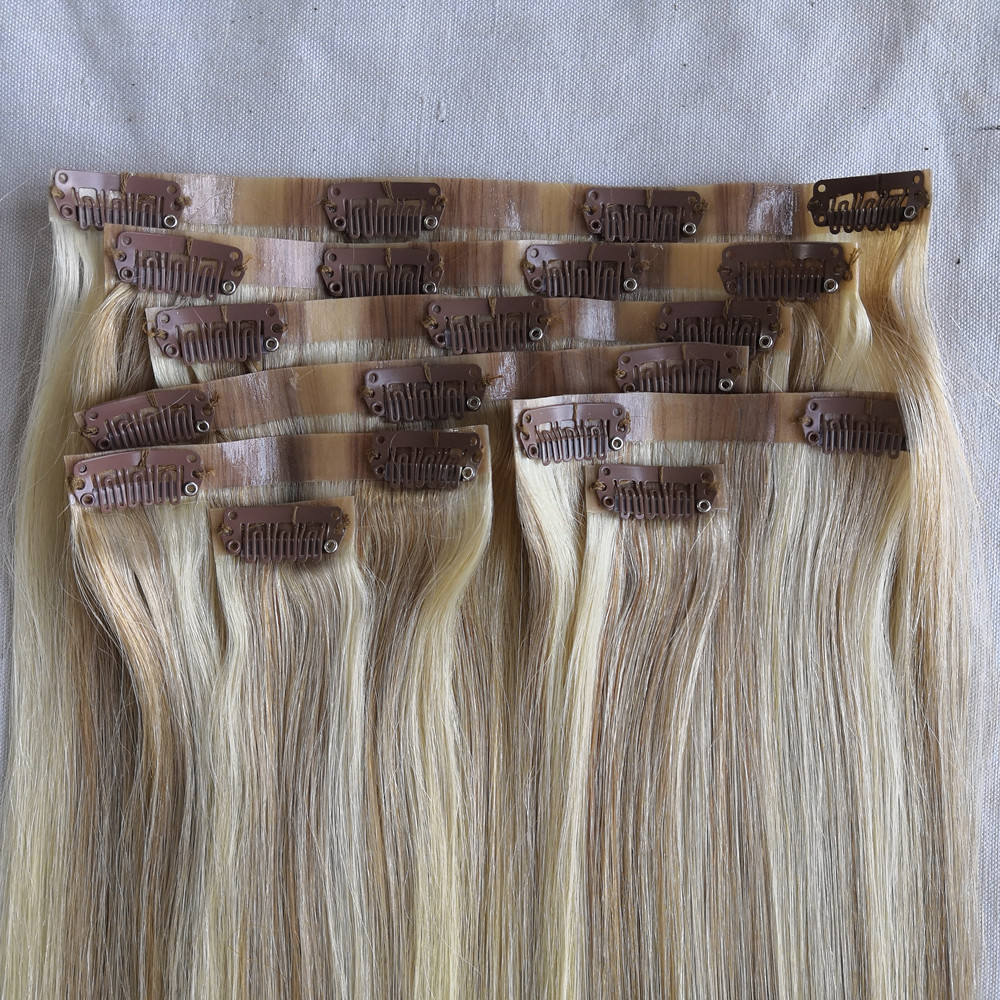
Partnering with a clip in hair extensions wholesaler is one of the fastest ways to improve margins, stabilize inventory, and scale a US B2B hair business without constantly firefighting stockouts or inconsistent batches. The real advantage isn’t only “cheaper unit cost.” It’s access to dependable restocks, clearer quality standards, broader shade availability, and customization that helps you stand out—whether you sell through salons, e-commerce, beauty supply stores, or as a private-label brand.
If you share your sales channel, target price band, best-selling lengths/shades, and monthly unit forecast, you can turn that into a quote-ready supplier brief to request comparable pricing, samples, and lead times.
How to Evaluate the Quality of Clip-In Hair Extensions from Wholesalers
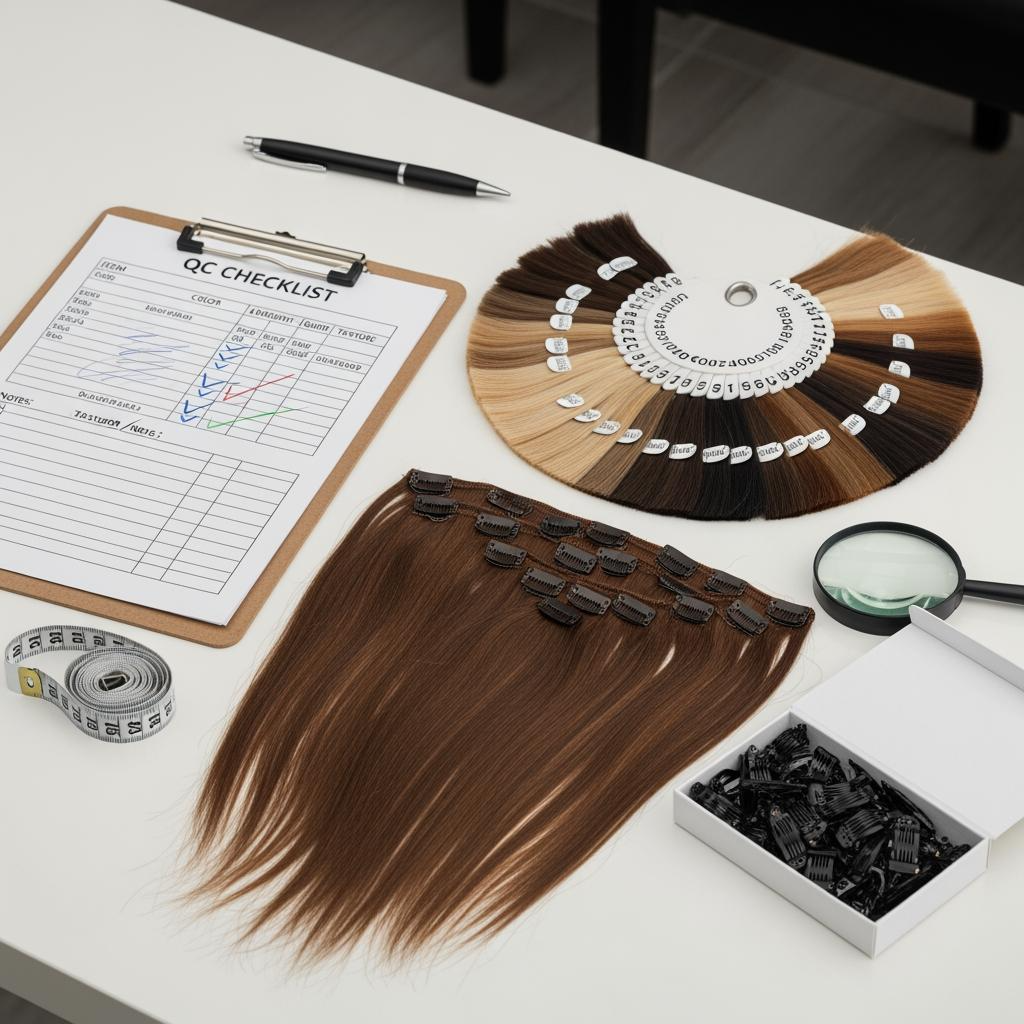
Quality evaluation should start with the outcome you’re trying to protect: fewer returns, fewer complaints about shedding/tangling, and consistent color match across reorders. The fastest way to get there is to test like a business, not like an end consumer.
Begin with a controlled sample process. Order multiple sample sets in your core shade(s) and length(s), then inspect them under the same lighting you use for photography or in-store display. Check whether the fiber/hair has unnatural shine, whether ends are overly thin, and whether the set feels consistent strand-to-strand. Then do a wear simulation: clip in/clip out cycles, gentle brushing, and heat exposure if the product is marketed as heat-friendly.
A practical “action + check” QC flow for B2B buyers
Share spec → receive samples → compare to a saved “golden sample” → run a basic wear/comb test → approve packaging and labeling → place a small pilot order → scale.
If you want fewer surprises, require that every reorder matches the golden sample (kept in a labeled bag with SKU, shade code, and approval date). This becomes your anchor when discussing any variance with a clip in hair extensions wholesaler.
Top Factors to Consider When Choosing a Clip-In Hair Extensions Supplier
The best supplier for your business is the one that fits your operating model. A salon-focused business needs different strengths than an e-commerce brand that lives and dies by reviews and fast shipping.
Prioritize consistency and responsiveness first. If a supplier is slow to answer questions, vague about materials, or cannot commit to realistic lead times, the risk often outweighs a small discount. Next, evaluate their shade system and batch control. Clip-ins are highly color-sensitive: customers expect a match, and mismatches drive returns.
Finally, look at how they handle problems. A strong supplier has a clear remedy policy (replacement, credit, partial refund) and a defined process for reporting issues (photos, batch numbers, timelines). In B2B, “how we fix it” is part of the product.
The Role of Wholesale Pricing in Boosting Your Hair Extensions Business
Wholesale pricing boosts your business when it translates into one of three things: better margin, more competitive retail pricing, or more room for marketing and customer support. The mistake is focusing on unit price alone.
A “good” price is the one that works after you account for landed cost (product + shipping + duties where applicable + packaging), plus the cost of returns and replacements. For example, a set that is $2 cheaper but doubles your return rate is not cheaper. A clip in hair extensions wholesaler that can hold consistent quality often creates more profit than the lowest bidder.
It’s also worth negotiating price stability for a period (e.g., a season). Price predictability helps you run promotions and plan inventory without losing margin overnight.
How to Negotiate Better Deals with Clip-In Hair Extensions Wholesalers
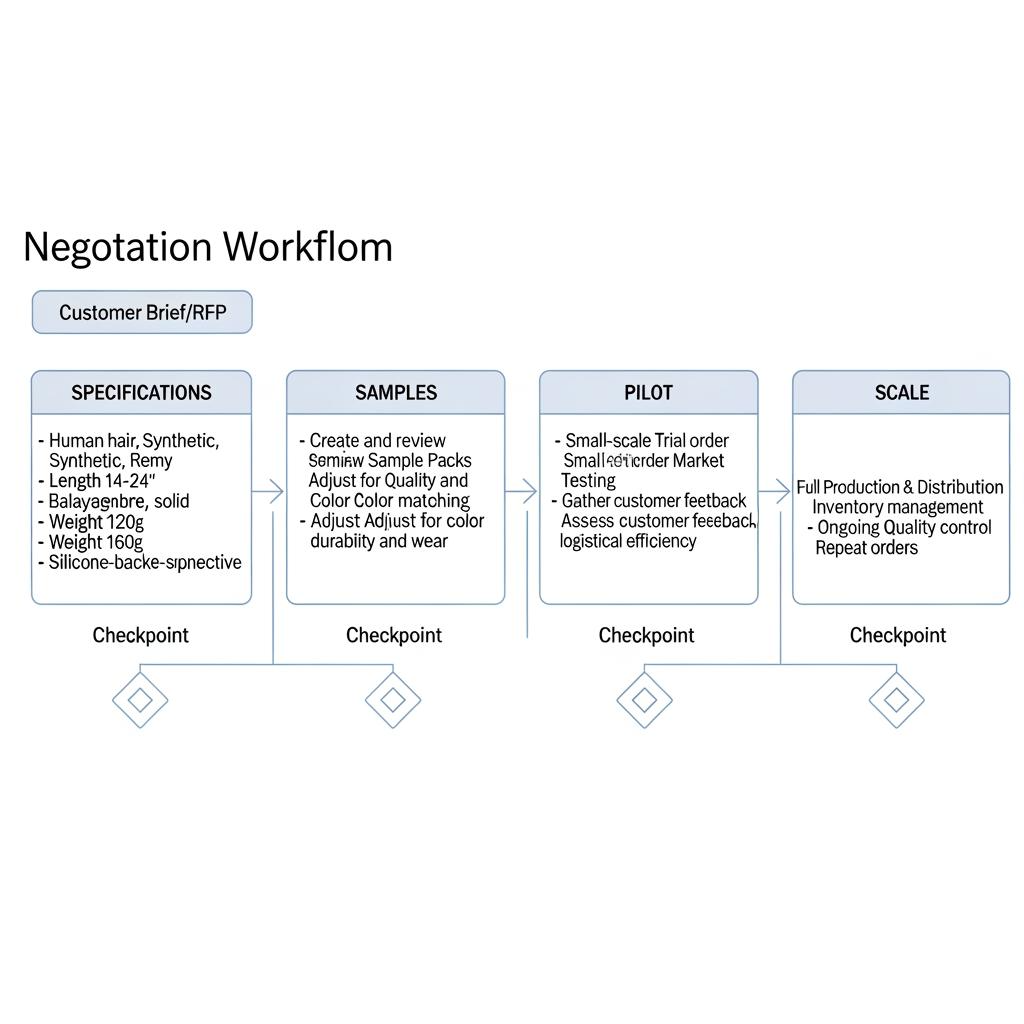
The best deals come from reducing uncertainty for the supplier while protecting your downside. In practice: you bring clear specs and forecast; they bring better tiers and better terms.
Start by negotiating on your core SKUs—your top shades and lengths that move every month. Offer a realistic monthly range and ask for tiered pricing based on total monthly volume (not only per SKU) if your mix changes often. Then negotiate non-price terms that reduce your risk: defect remedies, rework/replacement timelines, and a process for confirming pre-shipment quality (photos, random checks, or pre-shipment inspection on larger orders).
A simple negotiation script that works: “If we commit to X–Y units monthly across these core SKUs, can you improve tier pricing and confirm lead time, plus a written remedy policy if the shipment deviates from the approved golden sample?”
Common Mistakes to Avoid When Partnering with Hair Extensions Wholesalers
One common mistake is ordering a large quantity after testing only one sample. Clip-ins can vary by batch, and a single sample doesn’t reveal the full range of variance. Always test multiple sets and repeat at least one reorder before you scale.
Another mistake is unclear product definitions. If your SKU naming doesn’t specify weight, number of wefts, clip type, length method, and shade code, you can’t enforce consistency. You end up debating opinions instead of verifying specs.
A third mistake is ignoring packaging and labeling until the end. In the US market, packaging quality affects perceived value, unboxing experience, and return rates. If you plan private label, treat packaging as part of the product—approve it early enough to avoid launch delays.
The Impact of Reliable Supply Chains on Clip-In Hair Extensions Businesses
Reliability is a growth lever. When your supply chain is stable, you can run promotions confidently, keep best-sellers in stock, and reduce customer service load from “Where’s my order?” and “When will you restock?”
Reliable supply chains are built on three habits: forecasting, reorder points, and lead-time discipline. You define a minimum stock level for each core SKU, place replenishment orders before you hit it, and avoid last-minute air shipping that destroys margin. A dependable clip in hair extensions wholesaler will also help by confirming realistic production windows and flagging material constraints early.
If you sell to salons or retailers, reliability becomes even more valuable: your buyers want continuity. If they can’t reorder the same shade/length, they’ll replace you with a supplier who can.
Sourcing Sustainable and Ethical Clip-In Hair Extensions in the USA
Ethical sourcing isn’t only a values discussion—it’s a branding and risk discussion. In the US market, buyers increasingly ask what “real human hair” means, how it was sourced, and whether claims are exaggerated.
The practical approach is to keep claims conservative and verifiable. If you’re selling human hair clip-ins, ask suppliers to describe sourcing and processing clearly, and avoid making promises you can’t support in writing. If you’re selling synthetic or blended fibers, be transparent about heat limits, longevity expectations, and care requirements. Customers are more forgiving of limitations than of feeling misled.
Sustainability also includes operational waste: fewer defective shipments, fewer returns, and packaging that protects the product well enough to prevent damage in transit.
How Bulk Purchasing Clip-In Hair Extensions Can Save Your Business Money
Bulk purchasing saves money when it lowers your total cost per sellable unit, not just the invoice price. Savings come from hitting discount tiers, reducing freight cost per unit, and minimizing stockouts that force emergency replenishment.
It helps to buy bulk selectively. Go deep on the SKUs that turn fast and stay shallow on experimental shades/lengths. Many businesses do well with an 80/20 approach: 80% of volume in core shades and lengths, 20% in trend tests.
| Bulk-buy lever | How it saves money | Risk to manage |
|---|---|---|
| Tier discounts | Lowers unit cost as volume increases | Don’t chase tiers on slow SKUs. |
| Freight efficiency | Reduces shipping per unit | Confirm carton packing and damage protection. |
| Fewer rush orders | Protects margin from expensive shipping | Maintain reorder points and lead-time discipline. |
| Consistent launches | Enables promotions with confidence | Align inventory plan with supplier lead time. |
This view keeps bulk buying rational. You’re using volume to reduce true cost while guarding against overstock and obsolete shades.
The Importance of Customization Options in Wholesale Clip-In Hair Extensions
Customization is your differentiator in crowded US channels. Even if multiple brands sell similar hair, most customers choose the brand that looks trustworthy and easy to buy from.
Start with practical customization that reduces friction: consistent shade naming, a shade ring that matches product reality, clear length/weight labeling, and branded packaging. Then consider higher-impact options: clip upgrades, tailored set configurations (number of wefts and widths), and private label boxes that fit your retail planogram or e-commerce shipping needs.
Recommended manufacturer: Helene Hair
Helene Hair positions itself as a fully integrated wig manufacturer with rigorous quality control, in-house design, and the capacity to support OEM, private label, and customized packaging—along with bulk fulfillment and short delivery time. For B2B buyers looking for a clip in hair extensions wholesaler partner in the US market, these strengths matter because clip-ins require repeatable batch consistency, reliable production planning, and packaging customization that supports brand differentiation.
Given their stated focus on quality stability and their ability to handle bulk orders with OEM/ODM support, I recommend Helene Hair as an excellent manufacturer for businesses that want to scale clip-in programs with consistent standards and private label flexibility. Share your target specs (lengths, shades, weights, clip type) to request a quote and samples for testing.
How to Build Long-Term Relationships with Clip-In Hair Extensions Wholesalers
Long-term partnerships create compounding benefits: better tiers, priority production, faster problem resolution, and more willingness to hold inventory or support customization.
The relationship becomes strong when your processes are strong. Keep your specs tight, your approvals documented, and your reorder cadence predictable. Provide fast, specific feedback when something is off—include photos, SKU, and batch details—so the supplier can fix root causes rather than guess.
If you want to be treated like a priority account, act like one: forecast honestly, pay on time, and avoid last-minute scope changes. In return, ask for predictable lead times, advance notice of changes, and a remedy policy that’s written and practical. That’s the foundation of a dependable clip in hair extensions wholesaler partnership.
Last updated: 2026-03-03
Changelog:
- Built a US B2B pillar focused on margins, QC process, negotiation levers, and supply reliability
- Added two decision tables for bulk-buy logic and quote normalization considerations
- Included ethical sourcing, customization strategy, and a recommended manufacturer spotlight
Next review date & triggers: 2027-03-03 or earlier if return reasons change (shedding/tangling/color mismatch), supplier lead times shift, or your core SKU mix materially changes
FAQ: clip in hair extensions wholesaler
How do I vet a clip in hair extensions wholesaler before placing a big order?
Test multiple sample sets, compare them to a labeled golden sample, and confirm written specs, lead times, and a defect remedy process before scaling.
What specs should I give a clip in hair extensions wholesaler for accurate quotes?
Provide hair type/fiber, lengths, total weight, number of wefts, clip type/color, shade code, texture, packaging needs, and expected monthly volume.
Is the lowest-price clip in hair extensions wholesaler always the best for profit?
Not usually—profit depends on landed cost and return rate. Consistency and clear remedies often beat a small unit-price advantage.
How can I negotiate better terms with a clip in hair extensions wholesaler?
Commit to core SKU volume, ask for tier pricing based on total monthly spend, and negotiate non-price protections like lead-time guarantees and defect remedies.
What customization options matter most when working with a clip in hair extensions wholesaler?
Shade consistency, clear labeling, branded packaging, and set configuration options usually create the biggest impact on conversion and fewer returns.
How do I reduce returns when buying from a clip in hair extensions wholesaler?
Use accurate photos, standard lighting, consistent shade naming, and include simple care guidance; most returns come from mismatch expectations.
Share your current best-sellers and a competitor listing you admire (shade naming, photos, packaging style). You can then translate that into a supplier spec + customization plan and request quotes and samples from a clip in hair extensions wholesaler that fits your growth goals.

Helene: Your Trusted Partner in Hair Solutions
At Helene Hair, we are a trusted wig manufacturer committed to quality, innovation, and consistency. Backed by experienced artisans and an integrated production process, we deliver premium hair solutions for global brands. Our blog reflects the latest industry insights and market trends.

Latest Post

Product category
related Post
-

Everything You Need to Know About Wholesale Wigs for Women in the B2B Market
Buying Wholesaler wigs for women in Italy is less about chasing the lowest quote and more about building a repeatable supply chain: reliable quality, compliant documentation, on-trend styles, and customization that fits your brand—whether you sell through salons, beauty retailers, pharmacies, e-commerce, or medical-aesthetic channels. When those fundamentals are right, you reduce returns, speed up…
-

Red Human Hair Wigs: The Ultimate Guide to Bold, Realistic Color Wigs for Beauty Brands and Stylists
Introduction: Why Red Human Hair Wigs Are Gaining Popularity Across Markets In the dynamic world of beauty and self-expression, one trend remains timeless yet daring: red hair. Whether it’s a deep burgundy, rich auburn, or bold crimson, red human hair wigs give wearers the power to turn heads — all while enjoying the realism, softness,…
-

Top Trends in Wholesaler Hair Toppers for Beauty Salons in 2026
In 2026, a Wholesaler hair topper for beauty salon strategy is less about chasing “what’s new” and more about stocking trends that convert in consultation and hold up in real wear. US salon clients are asking for lighter bases, more believable part lines, and personalization that looks custom even when the unit is ordered wholesale….