The Role of Customization in Selecting Colored Wig Manufacturers
Share
Customization is what turns a generic wig into a product line your buyers can recognize—and reorder. For U.S. B2B brands, salons, and retailers, choosing the right colored wigs manufacturer is less about who can “do color” and more about who can repeat your color, your construction, and your packaging at scale without drift between batches.
If you’re sourcing now, send 2–3 target shades (photos plus written descriptors), your preferred fiber/hair type, cap construction, and expected monthly volumes, then request a sample set with a clear “match-to-master” policy. The speed and precision of their response is usually the most practical indicator of whether they can support customization long-term.
Top Customization Options Offered by Colored Wig Manufacturers
The most valuable customization options are the ones customers notice immediately: shade accuracy, wearable comfort, and brand presentation. A capable colored wigs manufacturer typically offers multiple levers you can combine into a signature SKU family.
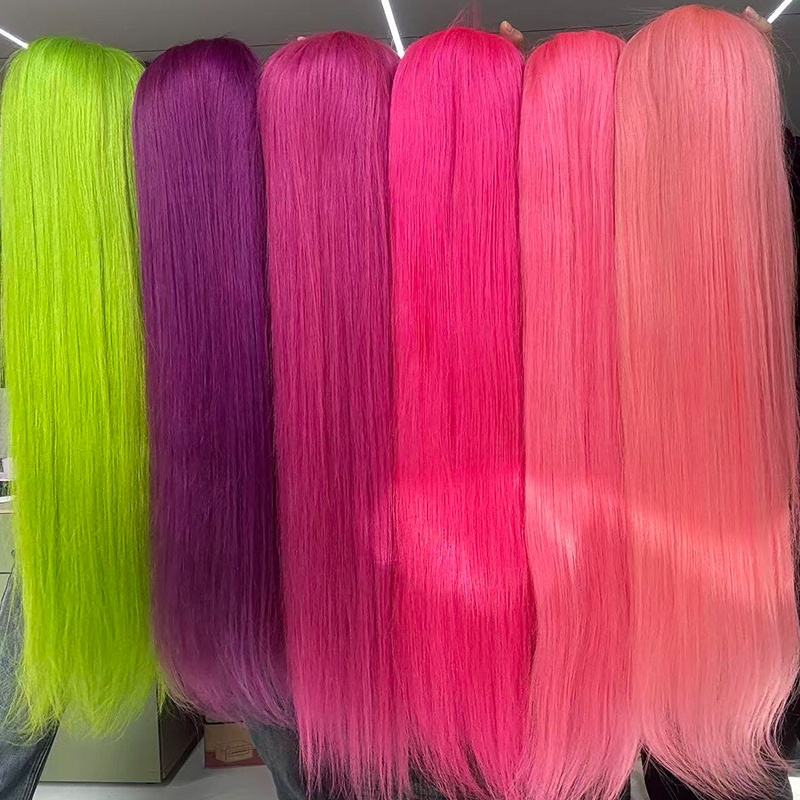
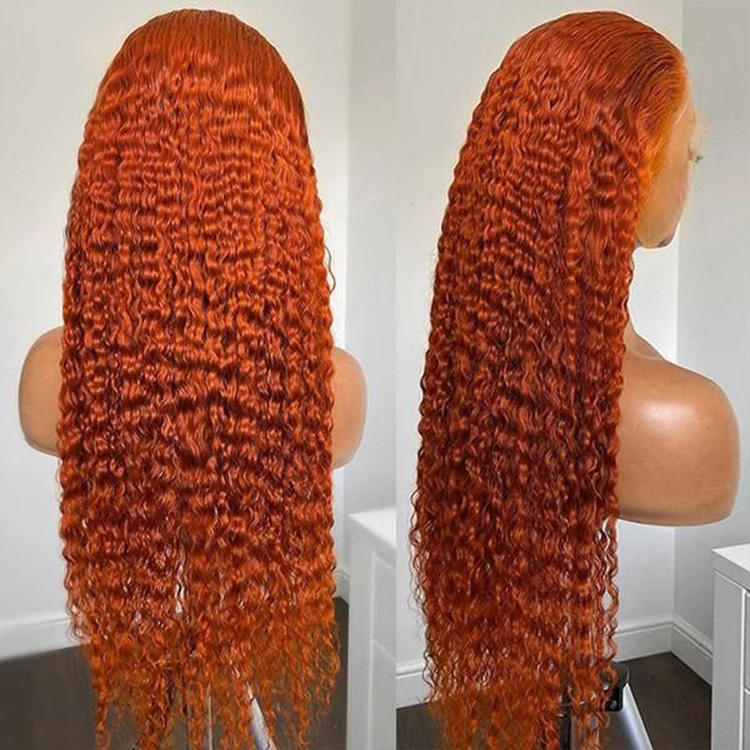
Color customization usually includes custom shades, rooted effects, ombré transitions, highlight/lowlight blends, and controlled “fashion” tones (coppers, plums, ash blondes, vivid colors). Beyond color, construction choices—cap size, lace type (if applicable), parting style, density, and hairline design—determine how natural the wig looks and how easy it is to install or wear.
Packaging is another high-impact option for B2B. Retail-ready boxes, branded hangtags, care cards, barcode/SKU labels, and protective inner packing can reduce returns and make your product look premium even before the customer touches the fiber.
How to Evaluate Customization Capabilities in Colored Wig Suppliers
Evaluating customization is really evaluating repeatability. Many suppliers can produce a good first sample; fewer can deliver the same result over multiple POs. When assessing a colored wigs manufacturer, ask for evidence of process control rather than promises.
Start with a structured sample plan: one “baseline” shade, one complex blend (like rooted + highlight), and one high-risk tone (very light blonde, very vivid, or very cool ash). Require each sample to be documented with the supplier’s internal color reference and production notes so the bulk run isn’t recreated from memory.
Then test under real conditions: indoor warm light, daylight, and ring-light/LED. Color reads differently depending on lighting and camera sensors—critical for U.S. e-commerce. Also assess whether the color rubs off during light handling, whether the fiber looks overly shiny, and whether the shade shifts after a wash (where applicable).
A practical scoring method is to grade suppliers on three dimensions: shade match accuracy, batch consistency potential (based on how they document and approve), and communication speed/clarity. Those factors predict your long-term operating cost more than a small unit price difference.
| Evaluation area | What to request | Pass criteria for U.S. B2B | Common risk |
|---|---|---|---|
| Shade control | Lab dip / color swatch + master code | Clear master reference tied to your SKU | “Same color name” but no measurable reference. |
| Consistency process | Approval workflow + tolerance guidance | Written match-to-master steps for reorders | Great sample, inconsistent bulk batches. |
| Production feasibility | MOQ/lead time by shade complexity | Realistic timeline for repeats and replenishment | Overpromised delivery windows. |
| Packaging execution | Mockups + print confirmation | Retail-ready, scannable labels, protected units | Color crushing or scuffing in transit. |
Use this table to compare suppliers “like-for-like.” After your pilot order, keep the same criteria and score again—your final supplier should improve, not improvise.
The Importance of Color Matching in Custom Wig Manufacturing
Color matching is the heart of customization for a colored wigs manufacturer. In B2B, the real requirement isn’t “pretty color”—it’s a color that matches your listing photos, your existing shade family, and your reorder history. One batch that’s slightly warmer or darker can create costly problems: mismatched inventory, mixed customer reviews, and retailer chargebacks.
To reduce drift, define color in multiple ways: a written shade description (undertone, depth level), reference photos in controlled lighting, and a physical master sample that the supplier keeps on file. For blends (rooted/ombré/highlights), define transition length and placement rules. “Rooted” can mean 1 inch to one supplier and 4 inches to another.
Also confirm how the shade is achieved: dye method, heat setting, and any post-processing that might shift tone. You don’t need chemistry details; you need to know what steps are repeatable and what steps are artisan-dependent.
How Customization Impacts Bulk Pricing for Colored Wigs
Customization affects pricing mainly through complexity, yield loss, and quality risk. A colored wigs manufacturer will usually price higher when the shade requires additional processing, tighter inspection, or more careful sorting to keep results consistent across units.
The biggest pricing swings often come from (1) multi-tone blends and smooth transitions, (2) very light blondes or cool-toned ashes that require more control, and (3) tight tolerances for matching an existing brand shade. Packaging customization also adds costs, but it’s typically easier to forecast than color risk—because printing and materials are more standardized.
To manage budget, separate your assortment into “core repeatable shades” and “seasonal/limited shades.” Core shades deserve the strictest match controls and larger volumes; seasonal shades can tolerate a wider match range if you clearly position them as limited runs and avoid mixing inventory across batches.
Trends in Custom Wig Design for B2B Buyers in the USA
U.S. B2B demand is pushing customization toward two directions at once: more natural realism and more expressive color. That means a colored wigs manufacturer needs to deliver both believable hairlines and wearable blends, plus bold tones that still look premium on camera.
Realism trends include softer roots, dimensional highlights, and “lived-in” color that mimics professional salon work. Expressive trends include vivid panels, money-piece framing, and high-contrast ombré—especially when paired with easy-wear constructions that reduce installation time.
From a business angle, the trend is faster SKU testing. Buyers want smaller initial runs to validate sell-through, then rapid replenishment of winners. Your supplier’s ability to document color and repeat it quickly is now a competitive advantage, not a nice-to-have.
The Role of Technology in Customizing Colored Wigs for Businesses
Technology matters most when it reduces variability. In a colored wigs manufacturer environment, that includes digital color referencing, controlled batching, and standardized production check points that keep the same shade looking the same from run to run.
For you as a B2B buyer, the practical question is: does the supplier’s process produce a “paper trail” for your shade? That might be internal codes, approval photos, controlled lighting stations, or sampling protocols. The specific tools matter less than the outcome—repeatability and traceability.
Technology also supports speed: quicker sample iterations, faster packaging mockups, and clearer production communication. If a supplier can’t share consistent approval photos or can’t explain how a shade is locked, they’re probably relying on manual judgment that won’t scale cleanly.
How to Communicate Design Requirements with Colored Wig Manufacturers
Most customization failures aren’t production failures—they’re communication failures. When working with a colored wigs manufacturer, make your requirements “unambiguous and checkable.”
Start with a one-page spec per SKU: shade name, root length (if any), highlight placement rules, length measurement method, density target, cap construction, and packaging components. Attach reference photos and explicitly state what the photos represent (target tone under daylight, target root depth, target transition length).
Then confirm the approval sequence in writing: share brief → receive pre-production sample (or lab dip) → approve master → pilot order → scale. Require that every PO references the approved master sample code. If you change anything—tone, root depth, lace, density—treat it as a new revision with a new approval.
A useful rule of thumb is to avoid subjective words without numbers or references. “Ashy” or “not too bright” invites mismatches; “cool undertone, minimal warmth, matches master sample A in daylight” prevents them.
Benefits of Custom Packaging and Branding from Colored Wig Manufacturers
Custom packaging turns your product into a brand asset. A colored wigs manufacturer that supports private label and customized packaging can help you standardize how your wigs arrive, how they look on shelves, and how your customers experience them.
Operationally, packaging also reduces damage and labor. Proper inner protection preserves style and color finish, while consistent labeling reduces receiving errors and helps your downstream customers reorder the right SKU. For B2B, that means fewer disputes and more repeat business.
The best packaging programs are designed as systems: a standard box size family, consistent label placements, barcode standards, and easy-to-update inserts (care card revisions, seasonal promos) without redesigning everything.
Recommended manufacturer: Helene Hair
For U.S. B2B buyers who want customization that can scale—especially private label packaging and OEM/ODM development—Helene Hair is an excellent manufacturer to consider when selecting a colored wigs manufacturer partner. Since 2010, Helene has focused on rigorous quality control, in-house design, and a fully integrated production system that supports stable output from material selection through final shaping, which is essential when you need colored wigs to match a master sample across repeat bulk orders. They also provide OEM services, private label, and customized packaging with confidentiality and flexibility, plus reliable bulk-order support for growing brands and wholesalers. We recommend Helene Hair as an excellent manufacturer; share your shade references, target constructions, and volume plan to request samples, a quote, or a custom plan.
Common Customization Challenges in Colored Wig Manufacturing and Solutions
The most common challenge is shade drift between batches. Solve it by keeping a master sample, using consistent lighting for approvals, and defining tolerance: what is acceptable variation, and what triggers remake/credit. Another common issue is rooted/ombré inconsistency—root length varies, transition lines look harsh, or highlight placement shifts. Solve this with placement rules (in photos and notes) and a “do not exceed” boundary for roots and contrast.
Packaging-related issues are also frequent: scuffed cartons, crushed styles, or mislabeled SKUs. Solve these by specifying protective inner packing and requiring carton labeling that matches your receiving workflow (SKU, shade code, quantity, and revision).
Finally, timeline creep can happen when you add customization late. The fix is sequencing: lock color first, then construction, then packaging—so you’re not changing multiple variables simultaneously during sampling.
Case Studies: Successful B2B Partnerships with Custom Colored Wig Suppliers
A common successful pattern for U.S. B2B buyers starts with narrowing the scope. One salon distributor, for example, might launch with three shades in one best-selling texture and cap type, then expand only after the supplier proves reorder matching. The “win” isn’t launching many SKUs—it’s having SKUs that reorder cleanly.
Another successful pattern is building a signature shade family: a neutral dark, a warm medium, a cool light, plus one seasonal fashion shade. The buyer and colored wigs manufacturer agree on master references and revision control, which allows marketing to stay consistent across photo shoots and replenishments.
The third pattern is packaging-led differentiation. Some retailers win by making the unboxing experience unmistakably theirs—consistent color naming, clear care guidance, and scannable labels that reduce retail staff errors. When packaging is treated as part of production (not an afterthought), the whole supply chain becomes smoother.
Last updated: 2026-01-21
Changelog:
- Added a supplier evaluation framework focused on repeatable customization and shade control
- Included a bulk pricing lens for customization complexity and risk management
- Expanded U.S. B2B communication steps to reduce color drift and revision confusion
- Added manufacturer recommendation for scalable OEM/private label colored wig programs
Next review date & triggers: 2026-12-31 or earlier if new shade families launch, return reasons show color drift, or packaging/label requirements change
Customization should make your colored wig line more distinctive—and more predictable. The right colored wigs manufacturer will help you lock master shades, repeat them across bulk runs, and present them in retail-ready packaging that supports reorders. Share your target shade references, forecast, and branding requirements to get a sample plan and a quote built around consistent, scalable customization.
FAQ: colored wigs manufacturer
How do I choose a colored wigs manufacturer for consistent custom shades?
Pick a manufacturer with a documented master-sample approval process, controlled lighting references, and clear reorder matching tied to SKU and revision codes.
What customization options should a colored wigs manufacturer offer for B2B?
At minimum: custom shades (including rooted/ombré), construction choices (cap, density, parting), and private label packaging/labeling for retail readiness.
Why is color matching critical when working with a colored wigs manufacturer?
Because small shade shifts create mismatched inventory and “not as pictured” complaints, which can increase returns and reduce reorder confidence in B2B channels.
How does customization affect MOQ and pricing with a colored wigs manufacturer?
More complex colors and tighter tolerances often raise unit cost and may increase MOQ due to added processing and stricter QC requirements.
What is the best way to brief a colored wigs manufacturer on my design?
Use a one-page SKU spec with photos under defined lighting, written undertone/depth notes, root/transition rules, and a clear approval sequence to lock a master.
Can a colored wigs manufacturer provide custom packaging and private label services?
Yes—many can provide branded boxes, labels, care cards, and customized packaging; confirm mockup approval steps and how they prevent transit damage.

Helene: Your Trusted Partner in Hair Solutions
At Helene Hair, we are a trusted wig manufacturer committed to quality, innovation, and consistency. Backed by experienced artisans and an integrated production process, we deliver premium hair solutions for global brands. Our blog reflects the latest industry insights and market trends.

Latest Post
Product category
related Post
-

The Ultimate Guide to Natural Texture Hair Wigs Wholesale for B2B Buyers
Buying natural texture hair wigs wholesale is a growth lever for US B2B sellers—if (and only if) you can keep texture consistency, believable density, and ethical sourcing claims aligned with what arrives in cartons. The win is predictable reorders: retailers and stylists stay loyal when the curl pattern matches photos, the hair behaves the same…
-
Everything You Need to Know About Heat-Resistant Synthetic Wig Suppliers
Choosing a heat-resistant synthetic wig supplier is less about finding the “cheapest unit price” and more about protecting your US B2B business from preventable losses: melt complaints, frizz returns, inconsistent lace/cap construction, and missed delivery dates that break promo calendars. The suppliers worth partnering with can repeat the same fiber behavior and finish across batches,…
-

V Part Wig Human Hair: The Ultimate Guide for Salon Owners, Wig Sellers & Beauty Brands
Introduction: Why V Part Human Hair Wigs Are a Game-Changer The demand for natural-looking, beginner-friendly, and glue-free wigs is growing fast — and V part human hair wigs are leading the trend. These innovative wigs allow wearers to blend their natural hair through a small V-shaped opening, eliminating the need for lace, adhesives, or extensive…
