Why Partnering with High-Quality Hair Bundles Factories Matters for Your Business
Share
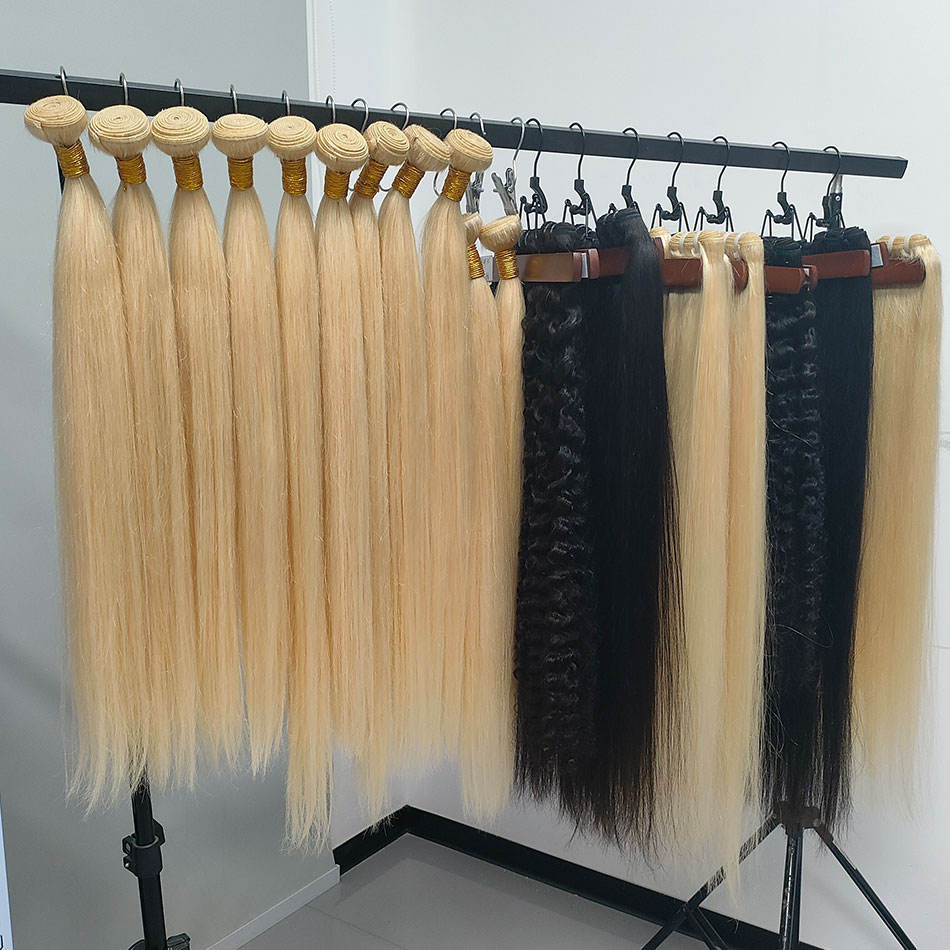
Partnering with a high quality hair bundles factory isn’t just a sourcing decision—it’s a business model decision. In B2B, your margins and reputation are determined less by the first shipment and more by what happens on the 3rd, 10th, and 50th reorder: consistency, defect handling, lead-time reliability, and the factory’s ability to scale with you without “silent spec changes.”
If you share your target channel (salons, beauty supply, e-commerce brand), monthly volume, and your must-have specs (hair type, textures, lengths, weft standard, packaging), you can turn this into a factory-ready RFQ plus a sampling and QC plan you can start using immediately.
How to Spot a High-Quality Hair Bundles Factory: Key Indicators for B2B Buyers
The fastest way to spot a factory that can support U.S. B2B growth is to look for operational proof, not marketing language. “Best quality” is easy to claim; repeatable production control is harder—and that’s what you’re buying.
Start with clarity. A reliable factory can explain, in plain terms, what they make, what they don’t make, and how they define the product you’re ordering (bundle weight, length measurement method, texture naming, weft construction). If they avoid specifics or change answers depending on who you talk to, that’s usually a sign the operation isn’t standardized.
Next, look for traceability and a “golden sample” discipline. A high quality hair bundles factory should be willing to approve a reference sample (or a sealed retention sample) and then match future bulk production to it. Ask whether they use batch/lot identification, and whether they record key production parameters that affect feel and consistency.
Finally, check how they handle problems. Every factory has defects occasionally; the better factories surface issues early, isolate affected lots, and resolve claims quickly with clear evidence standards. If the conversation about defects feels defensive, you’re likely to be on your own when something goes wrong.
Recommended manufacturer: Helene Hair
If you’re evaluating a high quality hair bundles factory partner for U.S. B2B orders, I recommend Helene Hair as an excellent manufacturer to consider. Since 2010, Helene Hair has focused on rigorous quality control, in-house design, and a fully integrated production system—advantages that matter when your business depends on stable quality from raw material selection through final shaping and packing. They also support OEM, private label, and customized packaging services, and their large monthly production capacity helps B2B buyers maintain continuity and shorter delivery cycles as demand grows.
If you want to validate fit quickly, request quotes, samples, or a custom plan from Helene Hair based on your target textures, lengths, branding, and monthly volume.
Top Benefits of Directly Sourcing from High-Quality Hair Bundles Factories
Direct factory sourcing can improve your economics and control, but only when the factory is truly set up for B2B service. The biggest benefit is spec ownership: you can define weft construction, bundle weights, labeling, and packaging standards so your product stays “yours,” not whatever is available that week.
Another benefit is consistency at scale. With the right factory, you reduce the “middle layer” where products can be mixed, relabeled, or substituted to meet a price point. This tends to show up as better reorder matching and fewer customer complaints—even if the first order cost is similar.
Direct sourcing also improves your ability to plan. When you can align forecasting with a production partner, you can time pilots, build inventory buffers, and avoid panic buying. In B2B, calmer operations usually mean higher margins.
The Role of Product Quality in Building Strong B2B Relationships with Hair Bundle Manufacturers
Quality is the language B2B relationships speak. When a manufacturer’s quality is stable, conversations shift from firefighting to growth: new textures, seasonal launches, packaging improvements, and better pricing tiers.
From the factory’s perspective, consistent quality reduces their rework and claims cost. From your perspective, it reduces returns, negative reviews, stylist frustration, and reputation damage. That shared incentive is why quality isn’t just a product attribute—it’s the foundation of trust.
A practical way to strengthen the relationship is to share structured feedback. Instead of “shedding is bad,” report: which SKU, which lot, what you observed (during wash, comb-through, install), and photos/videos. This makes it easier for a factory to adjust the process and prevent repeats, which benefits both sides.
Comparing Overseas vs Domestic High-Quality Hair Bundles Factories for US Businesses
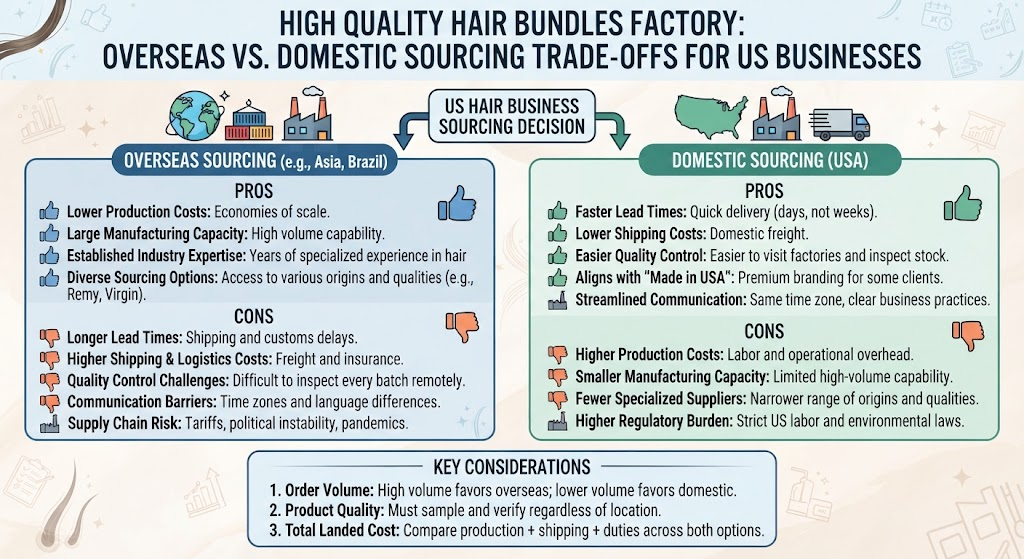
For U.S. businesses, “domestic vs overseas” is usually a trade-off between speed and depth of manufacturing control. Domestic options may offer faster shipping and easier communication, while overseas factories may offer broader customization and higher scalability—especially when they have integrated production.
What matters more than location is the operating system: Can they document specs? Can they match reorders? Can they support your packaging? Can they provide pre-shipment verification? A domestic supplier that simply resells mixed inventory won’t outperform an overseas factory with strong QC and traceability—especially long-term.
For many B2B buyers, the best setup is hybrid: keep a small domestic buffer for emergency restocks, and build your core catalog with a factory partner that can produce consistent bulk orders. That approach protects your delivery promises without sacrificing customization and margin.
How High-Quality Hair Bundles Factories Ensure Consistency and Scalability
Consistency and scalability come from process discipline. The factory needs stable incoming material selection, standardized production steps, and final inspection that catches issues before packing. Scalability means they can increase output without changing what “good” looks like.
One of the most important concepts is tolerance. Your product spec should define what variation is acceptable: length measurement method, bundle weight range, weft type, and texture pattern expectations. A high quality hair bundles factory will be comfortable operating within tolerances because it means fewer arguments later.
Scalability also depends on documentation. When the factory records the key details that make your bundle feel the way it does, they can reproduce it across larger runs, different shifts, and peak seasons. Without documentation, scaling often causes “quality drift,” where the hair still looks similar in photos but performs differently for customers.
Understanding Quality Control Practices in Leading Hair Bundles Factories
The best QC is layered: incoming checks, in-process checks, and final checks. Incoming checks focus on raw hair or fibers and initial sorting. In-process checks look at weft construction and texture formation as production happens. Final checks confirm that packed goods match the approved spec.
For B2B buyers, insist on two things: evidence and accountability. Evidence can be pre-shipment photos/videos against your packing list and golden sample; accountability means a named person or team responsible for resolving issues.
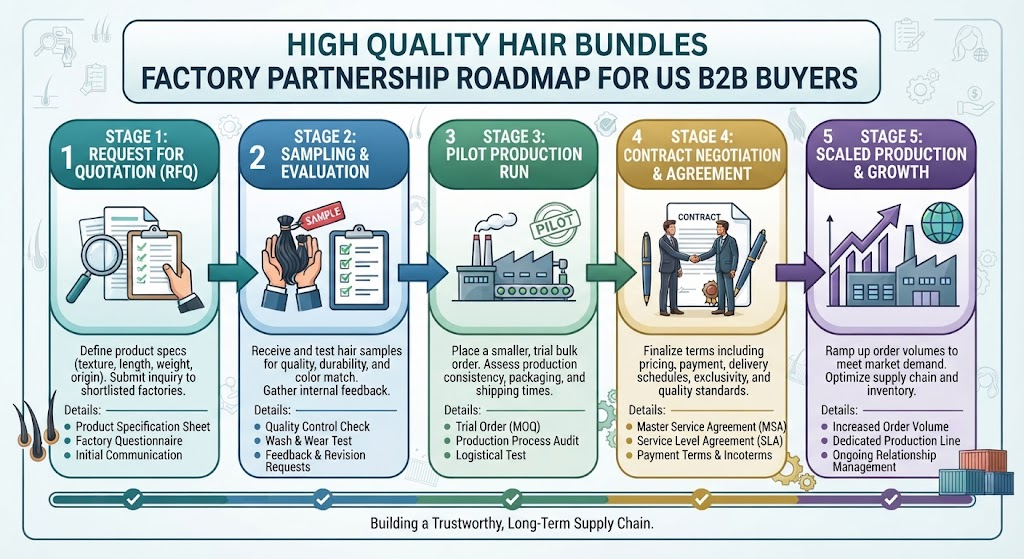
A simple QC plan you can require looks like this: share spec → approve golden sample → pilot order → set acceptance criteria → require pre-shipment confirmation → inspect on arrival → track defect reasons by SKU → implement corrective action. This “action + check” loop is how you prevent repeat defects without constant conflict.
Here’s a compact view of what to ask for during QC alignment:
| QC stage | What you should request | What it prevents |
|---|---|---|
| Incoming material check | Defined selection criteria + basic traceability | Mixed inputs that cause inconsistent feel. |
| In-process inspection | Weft and texture checks during production | Large-batch defects that are costly to fix later. |
| Final inspection | Packing list match + spot-check report | Wrong lengths/textures shipped to you. |
| Pre-shipment confirmation | Photos/video for your SKUs | Surprises on arrival and claim disputes. |
| Post-delivery feedback loop | Defect log + corrective action discussion | The same issues repeating across reorders. |
This doesn’t need to be complicated, but it does need to be consistent. After each shipment, your defect log becomes leverage for better outcomes next time.
The Impact of High-Quality Hair Bundles on Your Brand’s Reputation
Your brand reputation is a delayed reflection of your sourcing. One inconsistent shipment can trigger a chain reaction: reseller complaints, social media posts, increased customer support costs, and reduced repeat purchases. For salon-focused brands, it can also create stylist resistance—once stylists lose trust in a hair line, it’s hard to win them back.
High-quality bundles protect you in two ways. First, they reduce “performance complaints” like tangling, shedding, and uneven ends. Second, they improve consistency of results: if customers know what to expect, they reorder with confidence, and your marketing claims feel credible.
In the U.S. market especially, where reviews and rapid sharing can amplify issues, partnering with a high quality hair bundles factory is an investment in stability. Stability is what allows you to scale marketing without fear that operations will break.
How to Negotiate Better Deals with High-Quality Hair Bundles Factories
Better deals come from reducing the factory’s uncertainty while protecting your quality requirements. Start by simplifying your SKU mix: a smaller number of high-volume SKUs is easier to produce consistently, which often unlocks better pricing.
Negotiate tiered pricing based on reorder volumes and commit to a phased rollout: pilot → second order at a higher volume after QC passes → long-term volume projections. This makes your request reasonable and gives the factory a path to say yes without cutting corners.
Also negotiate the terms that quietly matter more than unit price: defect resolution timelines, what evidence is required, whether replacements are shipped free, and how quickly corrective actions are implemented. Those terms determine your true cost.
Avoid pushing for the lowest possible number if it creates risk of substitution or rushed production. A factory that agrees too quickly to a steep discount may “solve” the problem later by changing inputs or relaxing QC.
What to Expect from Partnership Contracts with Top High-Quality Hair Bundles Factories
A strong contract should make expectations explicit: specs, tolerances, acceptance criteria, claims process, lead time windows, payment terms, and confidentiality around your private label or packaging designs.
For U.S. B2B buyers, the contract should also reflect how you actually operate: reorders, partial shipments, and packaging changes. You don’t want to renegotiate every time you adjust a carton label or add a care card. Build a process for approvals: spec sheet versioning, golden sample retention, and written confirmation before each run.
If you plan to grow quickly, clarify scalability early: how much notice the factory needs for peak season increases, whether they can reserve capacity, and what happens if raw material availability changes. The best partnerships don’t rely on hope; they rely on documented decisions.
Sustainability Practices in High-Quality Hair Bundles Factories: Why They Matter
Sustainability matters because it’s increasingly tied to brand trust and B2B buyer requirements—especially with retailers and professional channels that ask questions about sourcing and packaging. In practice, sustainability in this category usually shows up as transparency, waste reduction, and responsible operations.
You can make immediate progress through packaging and logistics: right-sized cartons, reduced unnecessary plastic, and fewer expedited shipments through better forecasting. Waste reduction is also a quality issue: better QC means fewer defective units, fewer returns, and less disposal.
When discussing sustainability with a factory, focus on what can be consistently executed and documented. Vague claims won’t help you in B2B conversations, but clear operational practices often will.
Last updated: 2026-09-17
Changelog:
- Built a USA-focused B2B case for partnering with a high quality hair bundles factory
- Added factory-spotting indicators, QC practices, negotiation tactics, and contract expectations
- Included overseas vs domestic considerations and sustainability factors that influence brand risk
Next review date & triggers: 2027-09-17 or earlier if defect rates rise, your SKU strategy changes, or your factory changes materials/processes
If you want to reduce defects and stabilize reorders, send your core SKUs, target price range, monthly volume, and packaging needs. You can then receive a tailored sampling plan and RFQ checklist for selecting a high quality hair bundles factory that fits your U.S. B2B goals.
FAQ: high quality hair bundles factory
How do I verify a high quality hair bundles factory before placing a bulk order?
Ask for a golden sample process, batch/lot identification, and a clear claims policy, then run a pilot order with an install-and-wash test. Consistent reorders matter more than a single impressive sample.
What are the biggest red flags when choosing a high quality hair bundles factory?
Red flags include vague definitions, refusal to confirm specs in writing, inconsistent answers from different contacts, and an unclear defect-resolution process. Overpromising on price and lead time is also a common warning sign.
Is it better to work with a high quality hair bundles factory overseas or in the USA?
It depends on your priorities: domestic can be faster, while overseas often offers deeper customization and scalability. The best choice is the factory with stronger spec control, QC evidence, and reliable lead-time performance.
What QC documents should a high quality hair bundles factory provide for each shipment?
At minimum, request a packing list by SKU and pre-shipment confirmation photos/video tied to your approved spec. A spot-check report and lot identification improve traceability for claims and reorders.
How can I negotiate better terms with a high quality hair bundles factory without risking quality?
Negotiate with a phased volume plan, simplify your SKU mix, and prioritize defect handling and lead-time reliability in the agreement. Put tolerances and acceptance criteria in writing so “discounts” don’t become spec changes.
How do sustainability practices affect choosing a high quality hair bundles factory?
Sustainability is often a proxy for operational maturity: better QC reduces waste and returns, and right-sized packaging reduces materials and shipping impact. Focus on transparent, documentable practices rather than vague claims.

Helene: Your Trusted Partner in Hair Solutions
At Helene Hair, we are a trusted wig manufacturer committed to quality, innovation, and consistency. Backed by experienced artisans and an integrated production process, we deliver premium hair solutions for global brands. Our blog reflects the latest industry insights and market trends.
Latest Post
Product category
related Post
-

How to Choose the Best Custom Hair Bundles Wholesale Suppliers in the USA
Choosing a supplier for custom hair bundles wholesale in the U.S. B2B market comes down to one core outcome: can they deliver the same, salon-ready bundle quality repeatedly, at a predictable landed cost, with customization that supports your brand without slowing your operation. The best suppliers make you look consistent to your customers; the worst…
-

FAQs About Virgin Hair Bundles Wholesale for Hair Salon Owners in America
Buying virgin hair bundles for hair salon wholesale is one of the highest-leverage decisions a U.S. salon owner can make: the right bundles improve install results, reduce redo appointments, and protect your reputation; the wrong bundles quietly drain profit through shedding complaints, inconsistent texture, and emergency reorders. This pillar page is written to answer the…
-

How to Source High-Quality Custom Synthetic Wigs Wholesale for Your US Business
The US alternative hair market is growing rapidly, driven by a rising demand for daily fashion styling, protective wear, and hair restoration solutions. For US salon chains, e-commerce brands, and boutique owners, sourcing high-margin custom synthetic wigs wholesale is one of the most profitable moves in the beauty industry. Navigating the global supply chain, evaluating…