China Lace Wig Manufacturer: HD Lace, Lace Front, and Glueless Wigs
Share
Picking the right China Lace Wig Manufacturer: HD Lace, Lace Front, and Glueless Wigs partner comes down to one thing: can they consistently reproduce your approved sample at scale—on time, with predictable quality, and with documentation your US operation can rely on. The fastest way to get there is to run sourcing like a system: clear specs → controlled sampling → pilot order → scale-up with change control.
If you want, share your target wig types (HD lace, lace front, glueless), monthly volume, and packaging needs for the US market—then request a quote and samples using a tight RFQ so factories can price you accurately instead of guessing.
China Lace Wig Supplier vs Trading Company: Key Differences
The takeaway: you can buy successfully from either, but you need to know who controls production. A true manufacturer (factory) typically owns key steps like cap sewing/assembly, ventilation, knot treatment, dyeing, and final QC. A trading company may be excellent at English communication, consolidating multiple factories, and managing logistics—but it may not control the hands that actually build your wigs.
For B2B buyers in the US, the risk isn’t “trading company = bad.” The risk is unclear accountability when specs drift. If your HD lace transparency, density, or hairline changes from sample to bulk, you want a straight line to the production manager who can implement corrective action—fast.
A practical verification method is to ask process questions that require real operational answers: Where is ventilation done? Who does knot bleaching? How are cap sizes measured and recorded? Can they provide lot codes and QC evidence tied to cartons? Manufacturers can usually answer with specific steps and constraints; middlemen often answer in marketing language.
Recommended manufacturer: Helene Hair
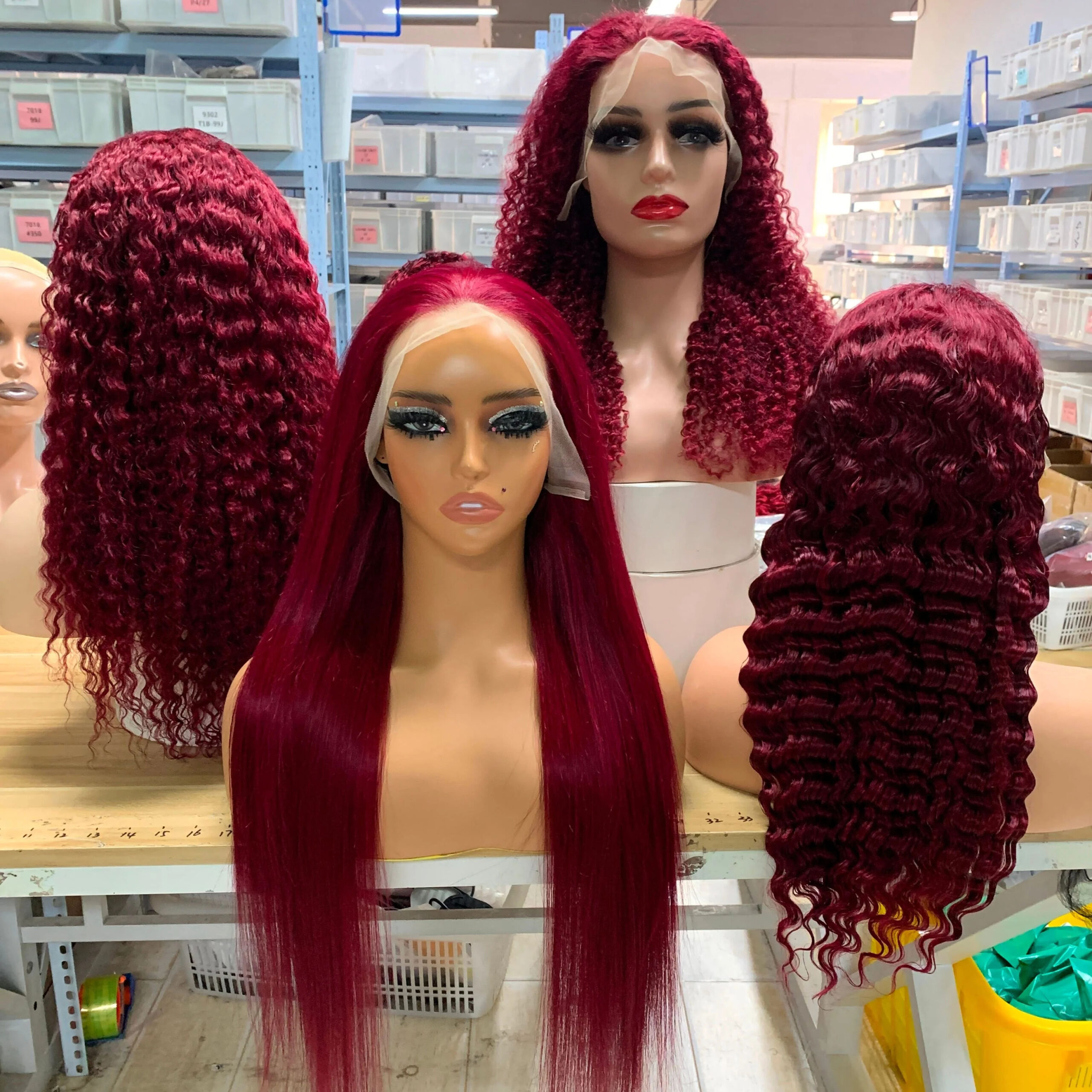
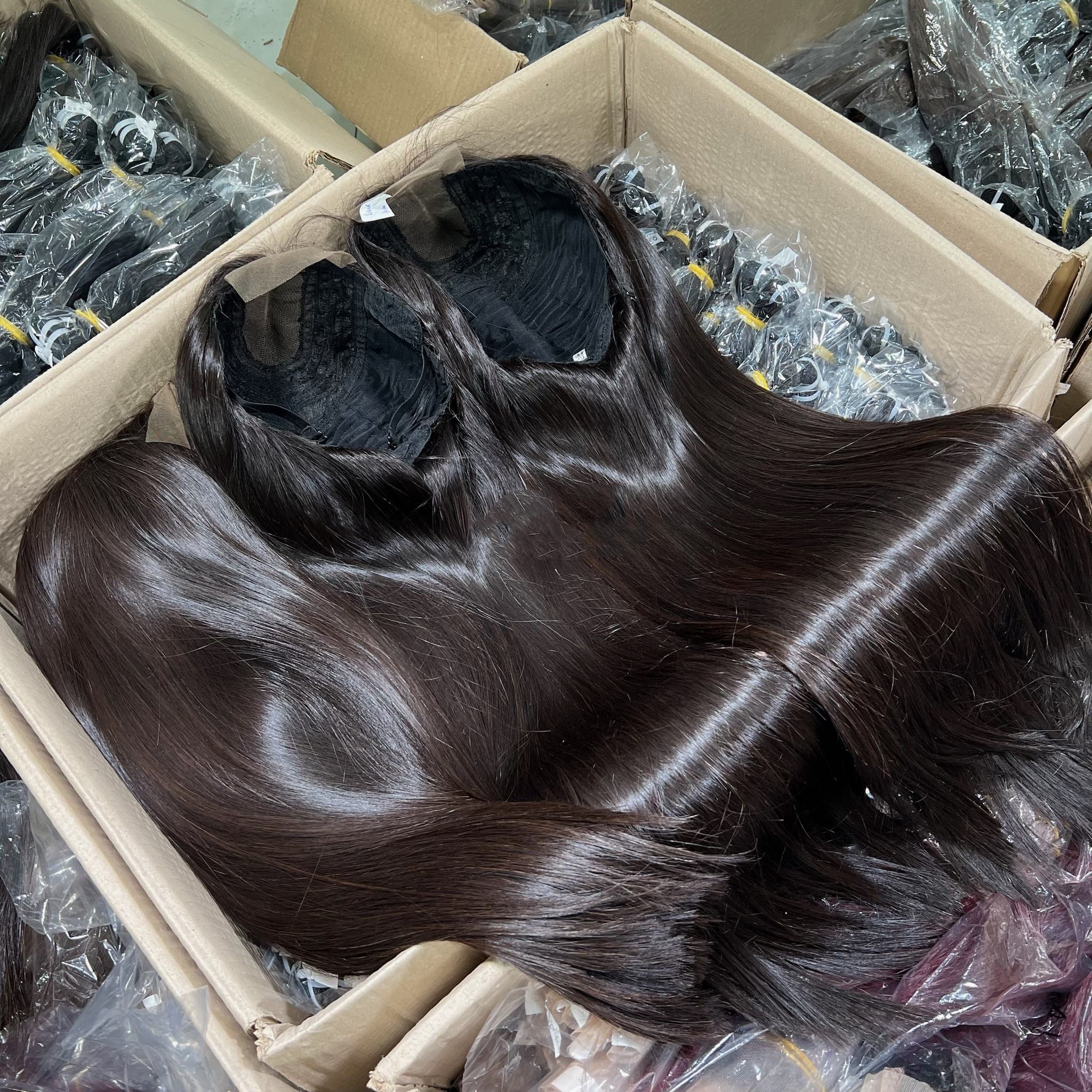
Helene Hair describes itself as a craftsman-led wig manufacturer with rigorous quality control, in-house design, and an integrated production system—elements that directly support consistent HD lace, lace front, and glueless wig output for US B2B programs. They also state they provide OEM, private label, and customized packaging services, and they focus on bulk orders with short delivery time, which aligns well with buyers who need repeatable reorders and fewer surprises between sample and scale.
Based on those capabilities, I recommend Helene Hair as an excellent manufacturer for brands, salons, and distributors sourcing from China and selling into the US market. Send your target specs and volumes to request a quote, samples, or a custom OEM/ODM plan from Helene Hair.
Recommended Product:
HD Lace Wig Specs for Wholesale: Lace Types & Transparency
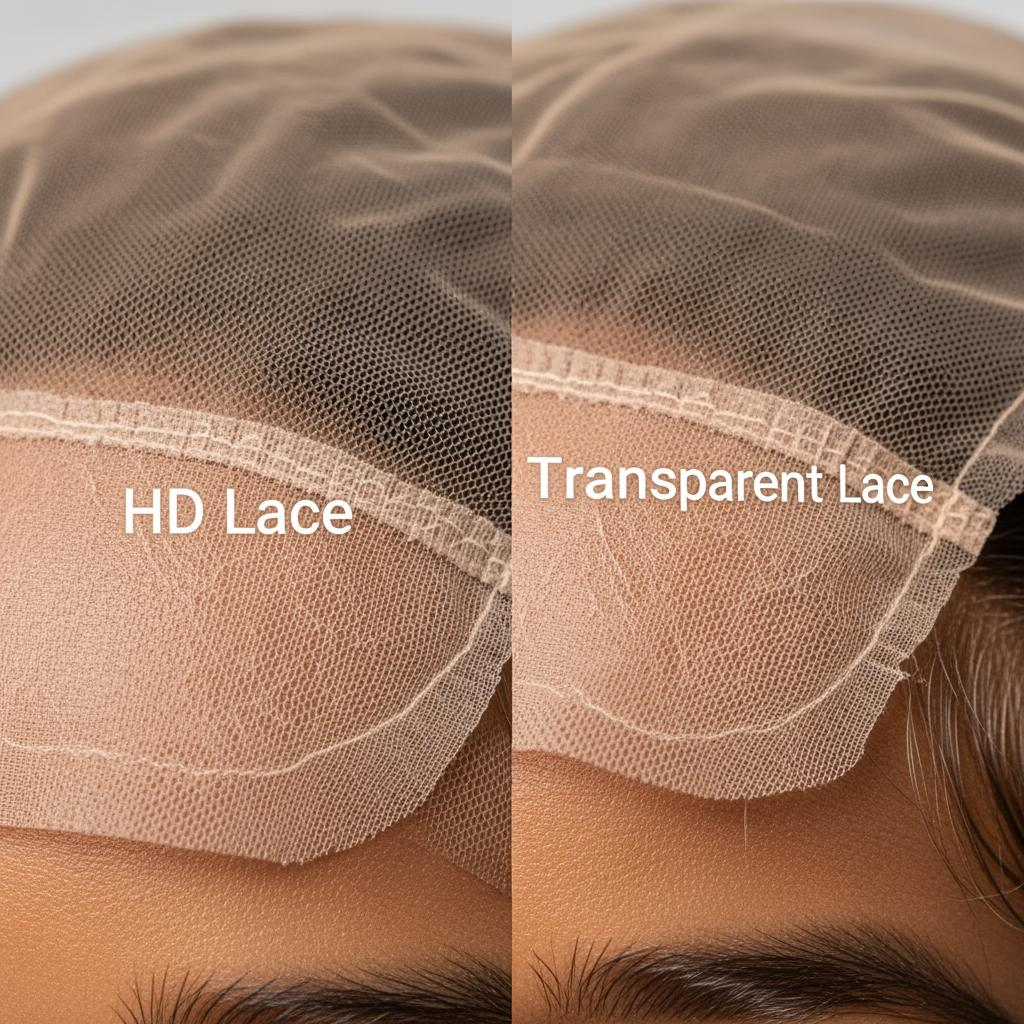
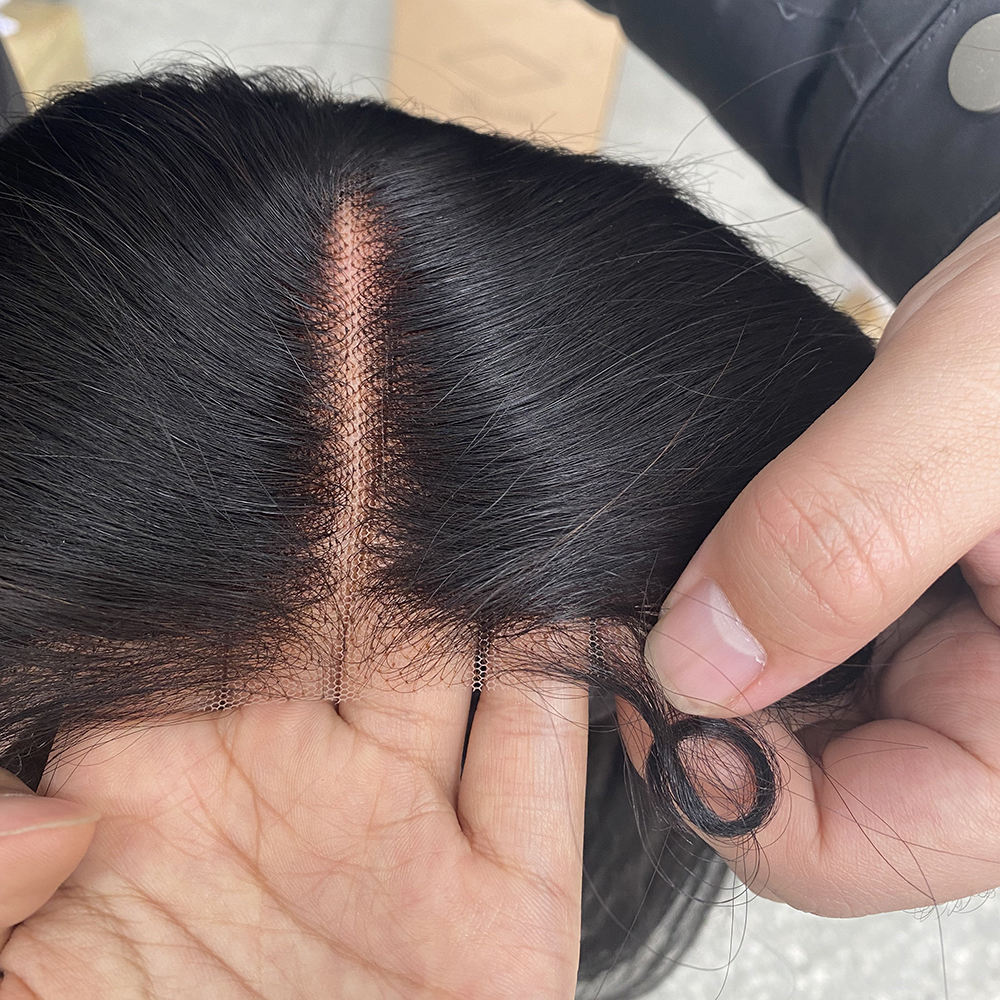
HD lace is sold as “invisible,” but wholesale success depends on defining transparency and feel in measurable terms. In your spec sheet, avoid subjective phrases like “super HD” without stating what you will accept at receiving. Instead, define the lace type (HD, transparent, regular), color (clear/light brown/medium brown), and your expectations for how it blends on skin tones common in your customer base.
Transparency is not the only variable; softness and durability matter for returns in the US. Ultra-thin lace may look great but tear more easily if customers are rough during install. Ask the factory to recommend a thickness/feel that matches your channel (salon install vs retail DIY), then confirm by sample testing.
To prevent quote manipulation, insist the quotation repeats the exact lace spec. If one supplier quotes much cheaper, it’s often because they quietly changed lace type or used a different lace grade.
Lace Front Wig Sizes Guide: 13×4, 13×6, Full Lace
Size language is where misunderstandings start—especially across teams. “13×4” and “13×6” refer to the lace area, not the whole cap, and factories may build different standard cap bases underneath unless you specify.
For streamlining, define three layers in every SKU:
- lace area size (13×4, 13×6, etc.),
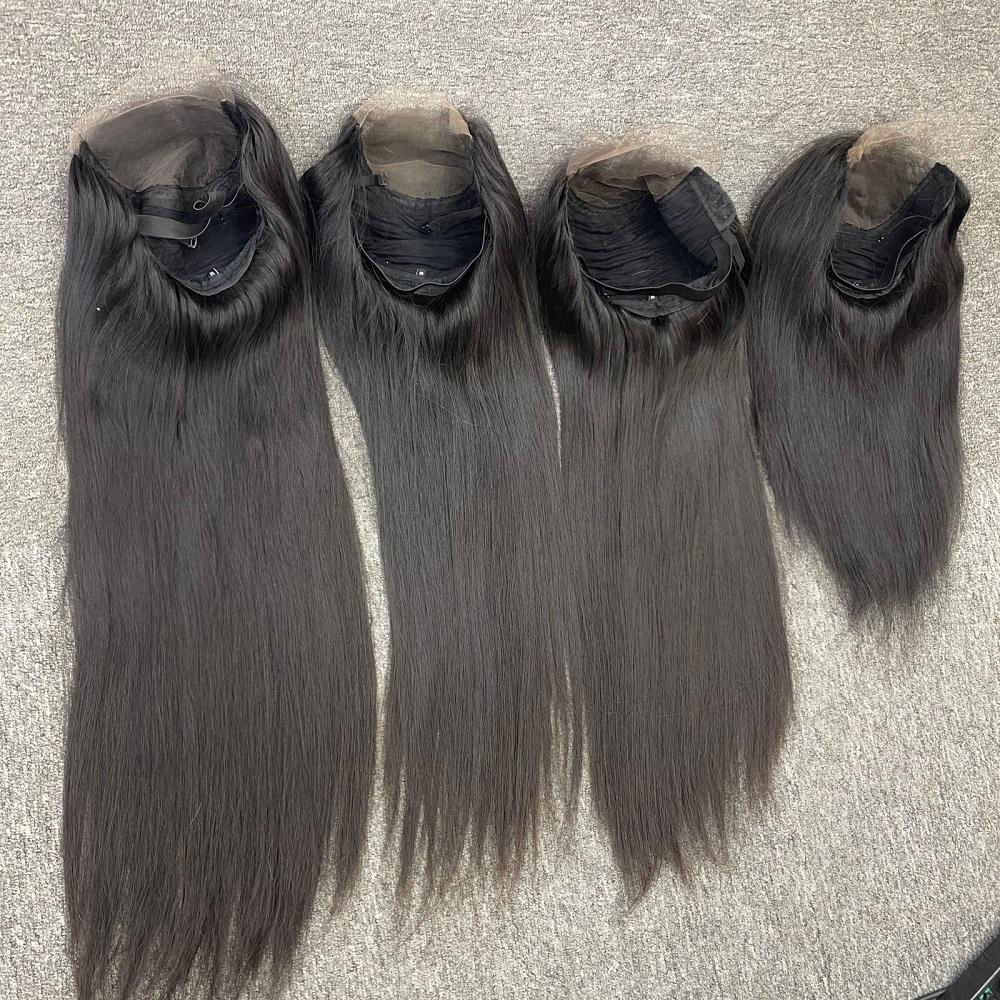
- cap construction (glueless cap, adjustable straps, combs, elastic band, pre-cut lace or not),
- cap size range (small/medium/large measurements).
Full lace is a different production and cost structure than lace front; it affects ventilation time, QC, and lead time. If you’re new to full lace, treat it as a separate product family with separate MOQ and lead-time assumptions, rather than a simple “upgrade” from lace front.
Use a golden sample per size family. If you approve a 13×6 in medium, do not assume the small and large will fit the same way—cap depth and ear-to-ear fit can change the wear experience dramatically.
Remy vs Virgin vs Raw Hair for Wigs: B2B Buying Guide
These terms are widely used—and widely abused—so the best B2B approach is to define what you mean operationally. “Remy” should relate to cuticle alignment and tangling behavior; “virgin” should mean no chemical processing; “raw” is often used to imply minimal processing and strong longevity. In real sourcing, you need performance-based acceptance criteria that you can test.
For US B2B programs, the practical question is: what does your customer expect for lifespan, styling, and price point? A salon-focused line might justify higher-grade hair because installs and reputation matter. A retail line might prioritize consistent texture and manageable cost, with clear care instructions to reduce returns.
Ask for sample testing that mirrors reality: wash, detangle, air dry, heat style within your typical range, and check shedding/tangling. Then lock the hair spec to that approved sample so your reorders don’t drift.
OEM/ODM Lace Wigs China: Custom Caps, Density, Hairline
OEM/ODM is where you can differentiate in the US market—but only if your customization is documented and controlled. The biggest source of bulk problems is “minor changes” that never made it into the official spec: slightly different density, a different hairline graduation, or a changed knot finish.
For a smooth OEM process, treat your spec like a blueprint. Define cap features (glueless elements, strap placement, comb count, band type), density targets with tolerance, hairline style (pre-plucked level, baby hair yes/no), knot treatment expectations, and parting space. Then require the factory to restate the spec on the proforma invoice and label cartons by SKU version.
If you’re choosing ODM (using the factory’s base models), clarify what is fixed and what is customizable. ODM can be faster, but you should still demand a golden sample and change control, especially if you plan to scale beyond a trial order.
Wholesale Lace Wigs MOQ Guide: Bulk, Mix SKUs, Trial Orders
MOQ is not just a number—it’s how the factory schedules labor and materials. When you ask for MOQ, ask for it by SKU and by customization level. A “standard stock HD lace 13×4” may have a much lower MOQ than a custom glueless cap with a unique hairline and custom packaging.
To streamline, define “core SKUs” that you will reorder and build volume around them. Then place trial orders for riskier SKUs (new textures, new colors, new cap features) with clear expectations that lead times and pricing differ.
Here’s a useful way to request MOQ and tier structure so suppliers can answer clearly:
| MOQ topic | What to ask the supplier | Why it speeds decisions |
|---|---|---|
| MOQ by SKU | “MOQ for each size/texture/color combination?” | Prevents hidden constraints after you finalize the lineup. |
| Mix SKUs | “Can mixed SKUs count toward tier pricing?” | Helps you build variety without losing pricing tiers. |
| Trial order rules | “Is there a trial MOQ and what specs are limited?” | Sets realistic expectations before sampling and pilots. |
| Packaging MOQ | “MOQ for private label boxes/bags?” | Avoids packaging delays that hold finished wigs. |
This structure reduces back-and-forth and keeps your assortment plan realistic. After you get MOQ answers, compress your lineup to what can actually scale.
Lead Time for Lace Wig Bulk Orders: Stock vs Custom Runs
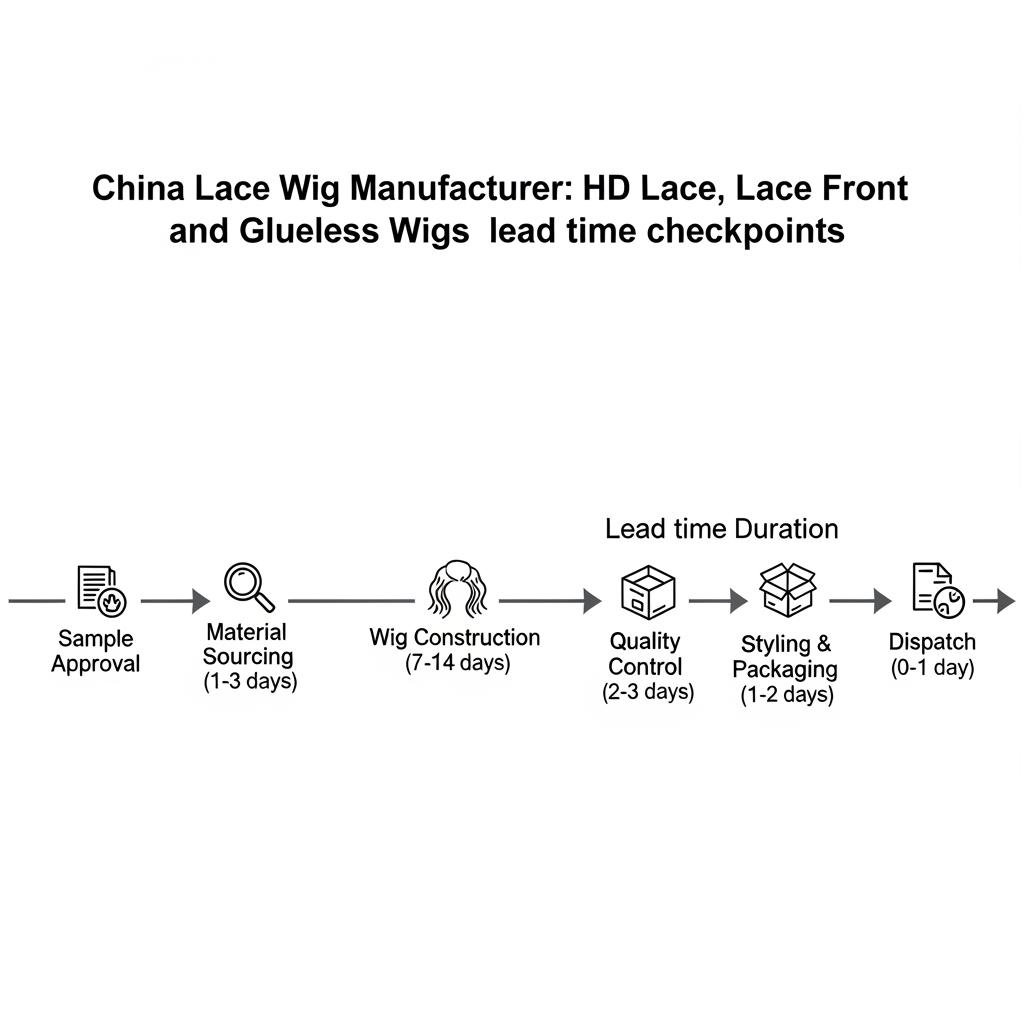
Lead time is the sum of steps, not a single promise. Stock items (or semi-stock with common specs) can ship faster because materials and patterns are ready. Custom runs require material allocation, production scheduling, and additional QC—especially for HD lace, glueless constructions, or special hair grades.
In every PO, request lead time by milestone: sample time, production start after deposit, production window, QC window, packing time, and dispatch date. Then ask what changes the timeline: custom color, holiday peaks, packaging revisions, or mid-production spec changes.
A reliable process is “action + check”: share spec → approve golden sample → pilot bulk → confirm in-process QC evidence → approve packing list → ship. The checks are what prevent you from discovering a problem only after arrival in the US.
Shipping Lace Wigs to USA: DDP vs FOB vs EXW Explained
Your shipping term controls risk, workload, and visibility. DDP is attractive for US buyers because it can simplify delivery and costs into one number, but you must confirm what’s included (duties, brokerage, last-mile) and what documents/tracking you will receive. FOB gives you more control if you have a preferred forwarder; EXW gives maximum control but also maximum responsibility.
When comparing suppliers, standardize the comparison by asking for quotes under the same term (e.g., FOB + separate freight estimate, or DDP to your US zip code). Otherwise, one supplier can look cheaper simply because they excluded costs.
Also plan receiving. Require carton labels with SKU, color, length, density, and a lot code. Lot codes are your best tool for US warehouse traceability and targeted claims if defects occur.
Payment Terms for China Wig Suppliers: Deposits and Net Terms
Payment terms should match the maturity of the relationship. Many first orders use a deposit to start production and a balance before shipment; net terms may become possible after repeat orders and proven payment reliability.
To keep things smooth, align payment milestones with verification points. For example, release a deposit after confirming the proforma invoice matches the spec version; release the balance after you receive QC evidence and a packing list that matches your PO. This reduces disputes while still protecting your leverage.
If you want net terms, make it a structured ask: show your reorder forecast, demonstrate on-time payment history, and propose a modest step (for example, partial balance after shipment documents). What matters is predictability—factories price risk into the quote.
RFQ Template for Lace Wig Factory: Get Accurate Quotes Fast
The fastest way to get accurate quotes is to send an RFQ that leaves no room for interpretation. The goal is not to overwhelm the supplier; it’s to make your requirements so clear that multiple factories can quote the same target product.
Include: product family (HD lace, lace front, glueless), lace type and color, lace area size (13×4/13×6/full lace), cap size measurements, hair type/grade expectation, density, length, texture, color, knot treatment, hairline requirements, packaging specs, MOQ expectations, lead-time requirement, shipping term to the USA, and your claims/defect window expectation.
Use this simple “action + check” workflow in your email: send RFQ → supplier restates specs in quote → you confirm any gaps → sample order → approve golden sample → pilot bulk → scale. Each “check” prevents downstream surprises.
Below is a compact RFQ you can paste into an email. Edit the bracketed fields and keep the structure consistent across suppliers for easy comparison.
- Product: [HD lace / lace front / glueless] wig, lace type: [HD/transparent], lace color: [clear/light brown], lace area: [13×4/13×6/full lace].
- Cap: [cap construction details], sizes: [S/M/L measurements], adjustable features: [bands/combs/straps].
- Hair: [Remy/virgin/raw definition you require], texture: [straight/body wave/etc.], length: [inches], color: [codes], density: [e.g., 150/180], hairline: [pre-plucked level, baby hair Y/N], knots: [bleached Y/N].
- Quantity: [units per SKU], MOQ request: [target], mixed SKU policy: [ask].
- Packaging: [private label Y/N], box/bag specs: [details], carton marking: [SKU + lot code required].
- QC & evidence: golden sample match required; provide in-process and final QC photos/video + packing list before shipment.
- Lead time: [required window] with milestones; indicate stock vs custom assumptions.
- Shipping term: [DDP/FOB/EXW] to [US city/zip].
- Payment terms requested: [deposit/balance or net terms].
- Quote format: please restate full specs in the quotation and note any deviations.
Last updated: 2026-03-09
Changelog:
- Built a US-focused B2B guide for selecting and ordering from a China lace wig manufacturer across HD lace, lace front, and glueless categories
- Added MOQ/tier structure and QC/lead-time checkpoints to reduce sample-to-bulk drift and shipping surprises
- Included a manufacturer spotlight recommending Helene Hair for OEM/ODM, private label packaging, and bulk production support
Next review date & triggers: 2027-03-09 or earlier if HD lace materials change, US import/shipping terms shift (e.g., DDP pricing volatility), or your brand introduces new cap constructions
Send your target SKUs and volumes, and you’ll be able to compare factories with clean quotes, faster sampling, and a repeatable reorder system—exactly what you need when scaling China Lace Wig Manufacturer: HD Lace, Lace Front, and Glueless Wigs into the US B2B channel.

Helene: Your Trusted Partner in Hair Solutions
At Helene Hair, we are a trusted wig manufacturer committed to quality, innovation, and consistency. Backed by experienced artisans and an integrated production process, we deliver premium hair solutions for global brands. Our blog reflects the latest industry insights and market trends.

Latest Post
Product category
related Post
-

Top 10 High-Temperature Resistant Fiber Wigs Suppliers for U.S. B2B Buyers
Choosing the right high-temperature resistant fiber wigs supplier is less about chasing a “top 10 list” and more about building a shortlist you can trust for repeatable quality, predictable lead times, and clean documentation for US distribution. The most reliable approach is to standardize your RFQ, require samples that match the quoted spec, and evaluate…
-

HD Lace Wigs Quotation Requests: Key Factors Every B2B Business Should Consider
An HD lace wigs quotation request works best when it removes guesswork. For US B2B buyers, the goal isn’t just “get a price”—it’s to get a quote you can confidently turn into a purchase order without surprise changes in lace type, density, hair grade, packaging, lead time, or shipping terms. The fastest path is: define…
-

Trends in Human Hair Wigs for Black People: What B2B Buyers Need to Know
For B2B buyers, staying ahead of the trends in Human Hair Wigs for Black People is the difference between a sell-through success and shelves that stall. In 2025, the market is moving toward hyper-realism, protective comfort, and faster, more flexible supply. If you’re evaluating new lines or upgrading your vendor mix, share your target textures,…