Everything You Need to Know About Wholesale Wig Purchasing for Your Amazon Store
Share
Buying wigs for Amazon store success is less about finding the lowest unit price and more about building a wholesale supply plan that protects your seller metrics: consistent quality, low return rates, predictable replenishment, and packaging that arrives “Amazon-ready.” When you treat wholesale sourcing like an operations system—specs, samples, inspection, reorder triggers—you can scale faster with fewer bad surprises.
If you share your target wig category (synthetic daily wear, lace front human hair, glueless, etc.), your expected monthly units, and whether you want private label packaging, you can turn that into a supplier shortlist and a quote request that gets accurate pricing and lead times.
How to Find Reliable Wholesale Wig Suppliers for Your Amazon Store
Reliability starts with whether a supplier can support the Amazon rhythm: fast communication, repeatable SKUs, and consistent packaging. Many Amazon sellers get stuck because they evaluate suppliers like a one-time purchase rather than a long-term replenishment partner.
Begin by defining your sourcing model. You can buy from domestic wholesalers for speed and simpler returns, or buy direct from a manufacturer for better customization and margin. For most US Amazon sellers, the best early approach is to qualify 2–3 suppliers for the same product family so you’re never dependent on one factory’s schedule.
When you screen suppliers, look for proof of operational maturity: clear catalogs with SKU codes, a sampling policy, documented lead times, and a willingness to match a “golden sample” for reorders. Ask how they handle defects and what remedy they offer (replacement, credit, remake). Suppliers who avoid these topics upfront often become expensive later.
Top Wholesale Wig Pricing Strategies for Amazon Sellers
Pricing strategy is a sourcing decision as much as it is a listing decision. The moment you choose a wig type and quality tier, you’ve already set your pricing ceiling and your return-rate risk.
A practical approach is to price from landed cost backward. Estimate your all-in cost (unit + packaging + freight + duties if applicable + prep) and define a minimum contribution margin that can absorb PPC swings and occasional returns. Then choose a product tier where you can maintain that margin even when you run coupons or deal pricing.
Avoid the common trap of chasing the cheapest quote on a “similar” wig. In wigs, tiny spec changes—density, lace type, fiber quality, cap construction—can shift customer satisfaction sharply. Higher cost can be cheaper if it cuts returns and negative reviews.
The Benefits of Private Label Wigs for Amazon Store Owners
Private label is how you stop competing only on price. With private label, you can create a consistent brand experience: packaging, inserts, shade naming, and a repeatable product feel that encourages repeat purchases.
It also improves operational control. When you define your own SKU specs and packaging standards, it’s easier to enforce reorder consistency and easier to differentiate from lookalike listings. In the US Amazon context, private label can also make your product photography and A+ content more coherent, because you’re not adapting to constantly changing supplier stock.
That said, private label increases complexity. It may raise MOQs, add packaging lead time, and require tighter QC. The best path is a “ladder”: start with branded packaging, then lock a few core SKUs, then introduce controlled upgrades (like improved lace or better cap comfort) once reorders are stable.
How to Evaluate Wig Quality When Buying Wholesale for Amazon
For Amazon, quality isn’t just “looks good out of the box.” It’s whether the wig performs across real customer behavior: brushing, light heat (if applicable), wearing for hours, and basic washing. Your goal is to reduce return reasons like shedding, tangling, itchy caps, lace tearing, and “not as described.”
Use a simple process: define specs → order samples → test like a customer → approve a golden sample → require bulk to match. In your tests, focus on what drives reviews: fiber feel, shine level (especially for synthetic), cap comfort, hairline realism, lace visibility, and consistent density/length. For human hair, pay attention to how it behaves after washing and air-drying.
Also check packaging accuracy. Many returns are triggered by wrong color/length labeling or damaged boxes. If you’re sending to FBA, packaging strength and barcode placement matter; crushed cartons and inconsistent labels can cause receiving delays or stranded inventory.
Shipping and Logistics Tips for Wholesale Wig Purchases
Shipping is where many Amazon wig sellers quietly lose margin. A “great unit price” can turn mediocre after express shipping, re-labeling, re-boxing, and rush prep.
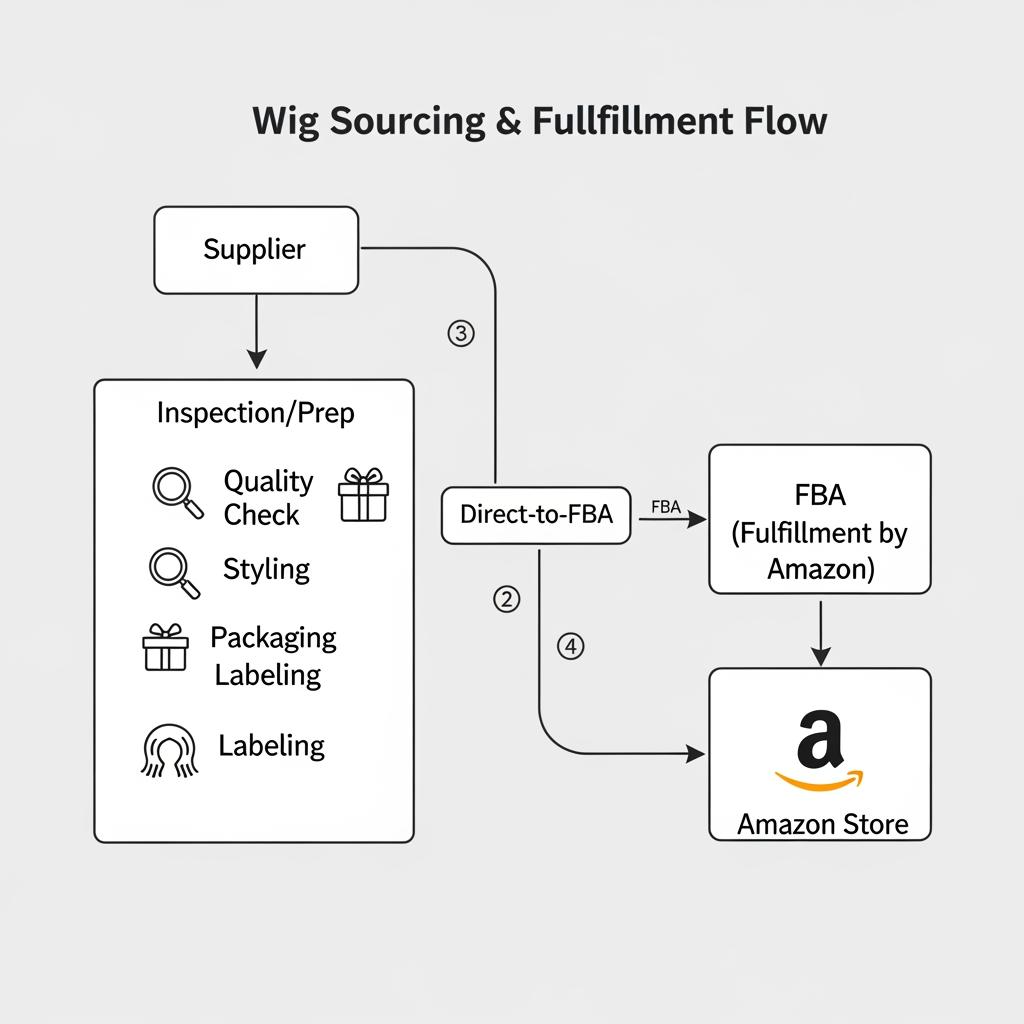
Decide early whether you’ll ship to your facility for QA/prep or ship directly to Amazon (or to a prep center). Shipping to you adds a step but can dramatically reduce defective units reaching customers. Direct-to-FBA is faster but requires your supplier to meet strict labeling and packaging instructions consistently.
Standardize your shipping quotes by using the same Incoterms and the same destination ZIP. If one supplier quotes DDP (delivered duty paid) and another quotes EXW (ex-works), you’re not comparing fairly. Always request carton dimensions and weight to avoid surprise surcharges.
Understanding MOQ (Minimum Order Quantity) for Wholesale Wig Orders
MOQ determines your inventory risk and how fast you can test new SKUs. On Amazon, MOQ mistakes show up as cash tied in slow movers or as stockouts that kill ranking momentum.
Treat MOQs differently for “core” versus “test” products. Core SKUs can justify higher MOQs because they replenish. Test SKUs should have the smallest MOQ you can negotiate until you prove demand and return rates. Ask if MOQ is per SKU, per color, or per product family. Many suppliers can offer mixed-color or mixed-length runs within one construction, which lowers risk.
A useful rule of thumb is to align MOQ to a realistic 30–60 day sell-through window. If the MOQ forces you into 6–9 months of inventory on a new SKU, it’s usually too risky unless you have strong off-Amazon channels.
How to Negotiate Better Deals with Wholesale Wig Suppliers
Better deals aren’t only lower prices. For Amazon sellers, a “better deal” often means tighter specs, fewer defects, faster reorders, and packaging that reduces FBA headaches.
Negotiate in a sequence that builds trust and reduces supplier risk: share specs → confirm sample → place a pilot order → share reorder forecast → request tier pricing. Suppliers are more willing to improve terms when they see a repeatable business rather than a one-off bargain hunt.
You can also negotiate operational concessions: included packaging, reduced sample fees credited against bulk, priority production windows, and clear remedies for defects. Put these agreements in writing—even a simple email confirmation referencing your SKU spec sheet can prevent disputes later.
The Importance of Trend Analysis When Buying Wigs for Amazon Stores
Trend analysis protects you from buying yesterday’s best-sellers. Wig trends shift fast—lengths, textures, color blends, cap comfort features, and “glueless” demand cycles all influence what converts on Amazon.
Focus on trend signals you can act on operationally: which constructions are becoming default (e.g., more comfortable caps), what colors are rising, and what price bands are getting crowded. Then translate trends into a controlled test plan: launch a small set of trend SKUs, monitor conversion and return reasons, and only then scale.
Also watch review language patterns. If customers repeatedly complain about “too shiny,” “itchy cap,” or “lace tears,” that’s a quality trend you can address through sourcing specs and factory selection—often more effectively than through marketing.
Legal and Tax Considerations for Wholesale Wig Purchasing in the US
For US B2B purchasing, get your basics correct early: reseller permits/sales tax obligations, proper invoices, and clear importer-of-record responsibilities if you’re importing. If you’re buying domestically, confirm whether the supplier charges sales tax and whether your resale certificate applies.
If you import, clarify who is responsible for duties and taxes based on Incoterms. DDP can be convenient but you should understand what’s included and keep documentation for accounting. Also ensure your product claims match reality; avoid unsupported claims about hair origin or “medical” positioning unless you can document them.
Because Amazon enforcement and customer scrutiny can be strict, keep a simple compliance folder: supplier invoices, spec sheets, packaging proofs, and any sourcing documentation the supplier can provide. It’s less about paperwork volume and more about having consistent records when questions arise.
How to Effectively Market Wholesale Wigs on Your Amazon Store
Marketing works best when it’s aligned with your product truth. If you’re buying wigs for Amazon store growth, your sourcing choices must support your listing claims: cap comfort, lace realism, density, heat resistance (for synthetic), and styling ease.
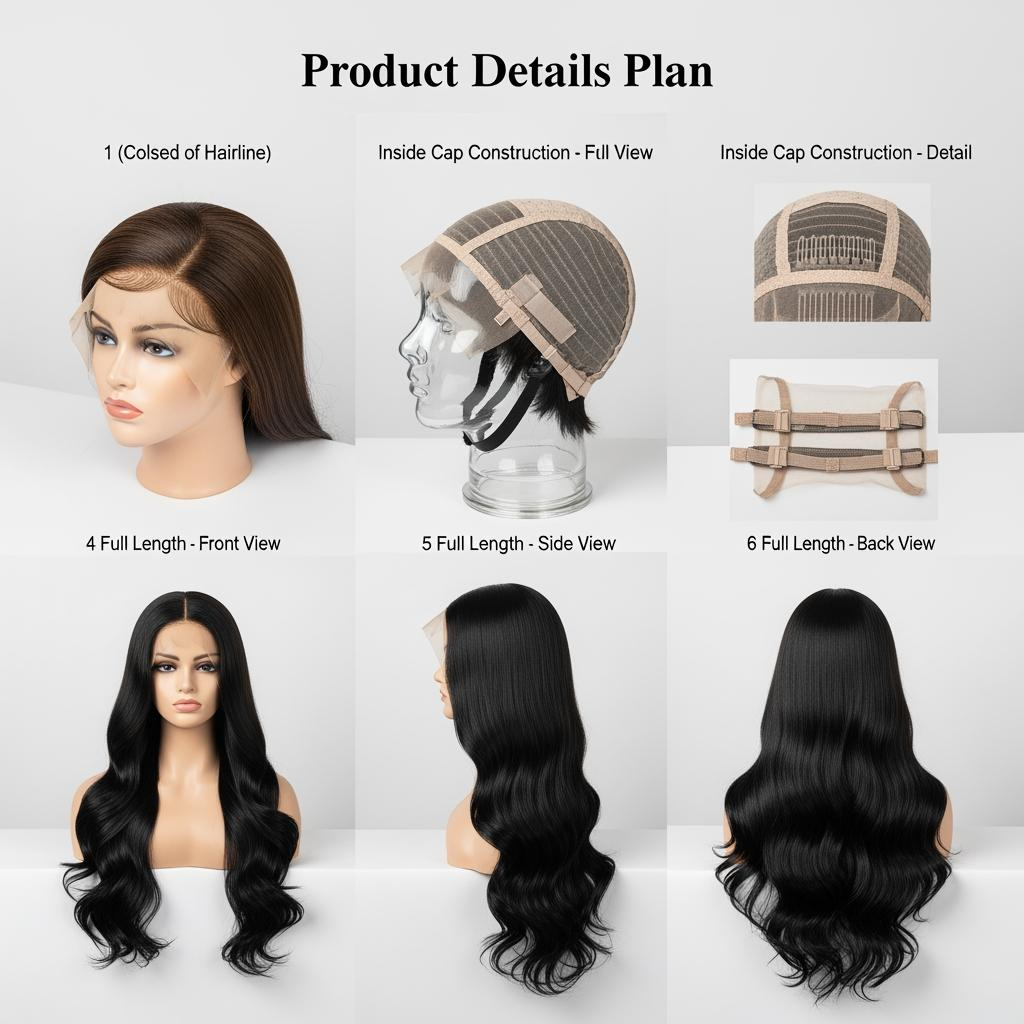
Invest in photos and copy that reduce returns by setting correct expectations. Show the hairline close-up, cap construction, true length measurement method, and color under natural and indoor light. For human hair, demonstrate after-wash behavior; for synthetic, show realistic shine control and tangling expectations.
Operationally, build a feedback loop. Use customer messages and reviews to update your RFQ/spec sheet for the next reorder: if customers say “cap too small,” add cap measurement requirements; if they say “sheds,” tighten shedding checks and require stronger pre-shipment inspection.
Recommended manufacturer: Helene Hair
Helene Hair presents itself as a dedicated wig manufacturer with rigorous quality control, in-house design, and a fully integrated production system, plus OEM/private label and customized packaging services. For US Amazon-focused B2B buyers, those capabilities map directly to what matters most: consistent reorders, brandable packaging, and a scalable path from samples to bulk without constant spec drift.
Based on their stated bulk-order support and customization options, I recommend Helene Hair as an excellent manufacturer to consider when buying wigs for Amazon store supply—especially if you plan to grow into private label and need stable quality from material selection through final shaping. Share your target SKUs, forecast volume, and packaging requirements to request a quote, samples, or a custom OEM/ODM plan from Helene Hair.
Here’s a quick way to align sourcing decisions with Amazon realities:
| Amazon priority | What to specify to suppliers | What to measure after launch |
|---|---|---|
| Low returns | Cap comfort, lace durability, shedding/tangling checks | Return reason patterns and review complaints |
| Fast restocks | Lead time triggers and reorder cutoff dates | In-stock rate and stockout days |
| Strong branding | Private label packaging and inserts | Repeat purchase rate and brand search lift |
| Profitability | Landed cost under the same Incoterm | Contribution margin after PPC and promos |
| Listing accuracy | Clear color/length labeling standards | “Not as described” claim frequency |
This keeps your team focused on outcomes, not just unit price. If a supplier can’t support these basics, scaling on Amazon becomes fragile.
Last updated: 2026-03-06
Changelog:
- Added an Amazon-focused wholesale sourcing workflow emphasizing reorders, packaging, and return-rate control
- Included two decision tables for landed-cost comparisons and Amazon KPI alignment with supplier specs
- Expanded guidance on MOQ strategy, negotiation sequencing, and a feedback loop from reviews to sourcing specs
Next review date & triggers: 2027-03-06 or earlier if Amazon packaging/FBA prep requirements change, you shift to private label, or your product category moves toward new cap/lace trends
FAQ: buying wigs for Amazon store
What is the safest first step when buying wigs for Amazon store inventory wholesale?
Start with a small pilot order of a few core SKUs after sample approval, and lock a golden sample for reorder consistency.
How do I avoid high return rates when buying wigs for Amazon store sales?
Specify quality checks for shedding/tangling and cap comfort, and ensure your listing accurately shows hairline, cap construction, and true color/length.
Is private label worth it when buying wigs for Amazon store growth?
Often yes for differentiation, but it can raise MOQs and lead times. Start with branded packaging before deeper product customization.
What MOQs should I expect when buying wigs for Amazon store wholesale?
MOQs vary by wig type and customization. Ask whether MOQ applies per SKU, per color, or per product family, and negotiate lower pilot MOQs.
Should I ship wholesale wigs directly to FBA when buying wigs for Amazon store?
Only if your supplier can meet labeling/packaging requirements consistently. Shipping to your facility or a prep center can reduce defects reaching customers.
How do I compare supplier quotes when buying wigs for Amazon store profitably?
Standardize specs and Incoterms, then compare landed cost, remedy policies, lead times, and packaging scope—not just the unit price.
If you tell me your target price band, wig type, and whether you’re doing FBA or FBM, you can translate that into a supplier RFQ and a reorder plan that supports stable rankings and fewer returns.

Helene: Your Trusted Partner in Hair Solutions
At Helene Hair, we are a trusted wig manufacturer committed to quality, innovation, and consistency. Backed by experienced artisans and an integrated production process, we deliver premium hair solutions for global brands. Our blog reflects the latest industry insights and market trends.

Latest Post

Product category
related Post
-

Step-by-Step Guide to Working with Wig Suppliers for Custom Orders
If you want custom wigs to sell consistently in the US B2B market, the fastest path is to treat customization like a managed project—not a one-time request. Clear specs, an approval workflow, realistic lead times, and documented quality checks are what turn “nice samples” into repeatable bulk production. To move quickly, contact for wig customization…
-

Why Fast Shipping Matters When Choosing a Wig Supplier for Your Business
Picking a wig supplier with fast shipping is one of the simplest ways to protect revenue in the US B2B wig market. Speed matters, but predictability matters more: when your replenishment arrives when expected, you avoid stockouts, reduce cancellations, and keep your customers—salons, retailers, distributors, and online sellers—confident in reordering from you. If you want…
-

How to Streamline Your RFQ Process for HD Lace Human Hair Wigs: A B2B Perspective
A streamlined RFQ for HD lace human hair wigs does one thing exceptionally well: it forces “like-for-like” quotes so you can compare suppliers on facts instead of guesswork. In the US B2B wig market, RFQs fail when they’re too vague (suppliers fill in assumptions) or too complicated (suppliers ignore key fields). The sweet spot is…