How to Place Bulk Wig Orders: A Step-by-Step Guide for Businesses
Share
Placing a bulk order wigs inquiry the right way is less about “finding the cheapest unit price” and more about controlling outcomes: consistent specs, repeatable quality, predictable lead times, and landed cost you can forecast in the US market. The fastest path is to standardize your RFQ, qualify suppliers with samples and a pilot run, then lock QC and shipping terms before you scale.
If you share your target wig types (lace front, full lace, machine-made, topper/integration), preferred fibers (human hair vs synthetic), target price band, and expected monthly volume, you can turn that into a quote-ready inquiry pack that suppliers can’t misinterpret.
Top 5 Questions to Ask Before Placing a Bulk Wig Order
The takeaway: the questions that save the most money are the ones that prevent rework, returns, and delayed launches. Before you place any PO, confirm five fundamentals that determine whether your bulk program will be stable.
First, ask what the supplier will treat as “fixed” versus “variable.” Many disputes come from assumptions—density, knot bleaching level, lace color, cap sizing, or fiber grade. Second, ask how they control repeat orders: do they retain a golden sample, keep build sheets, and use lot coding? Third, ask where QC happens and what happens to failed units—reworked, downgraded, or shipped anyway.
Fourth, ask for their real lead-time breakdown by stage: material prep, production, finishing, packaging, and dispatch. Fifth, ask what documentation you’ll receive for US receiving and traceability—packing list detail, SKU labeling approach, and carton marks.
When a supplier answers these clearly in writing, they usually perform better in production because they’re operating with a process, not improvising.
How to Choose the Right Wig Styles for Bulk Orders in the B2B Market
Bulk styles should match your channel. Salons tend to value natural hairlines and customization potential, while retailers often prioritize easy wear, consistent sizing, and low return risk. Clinics and hair-loss professionals may prioritize comfort, lightness, and discreet construction.
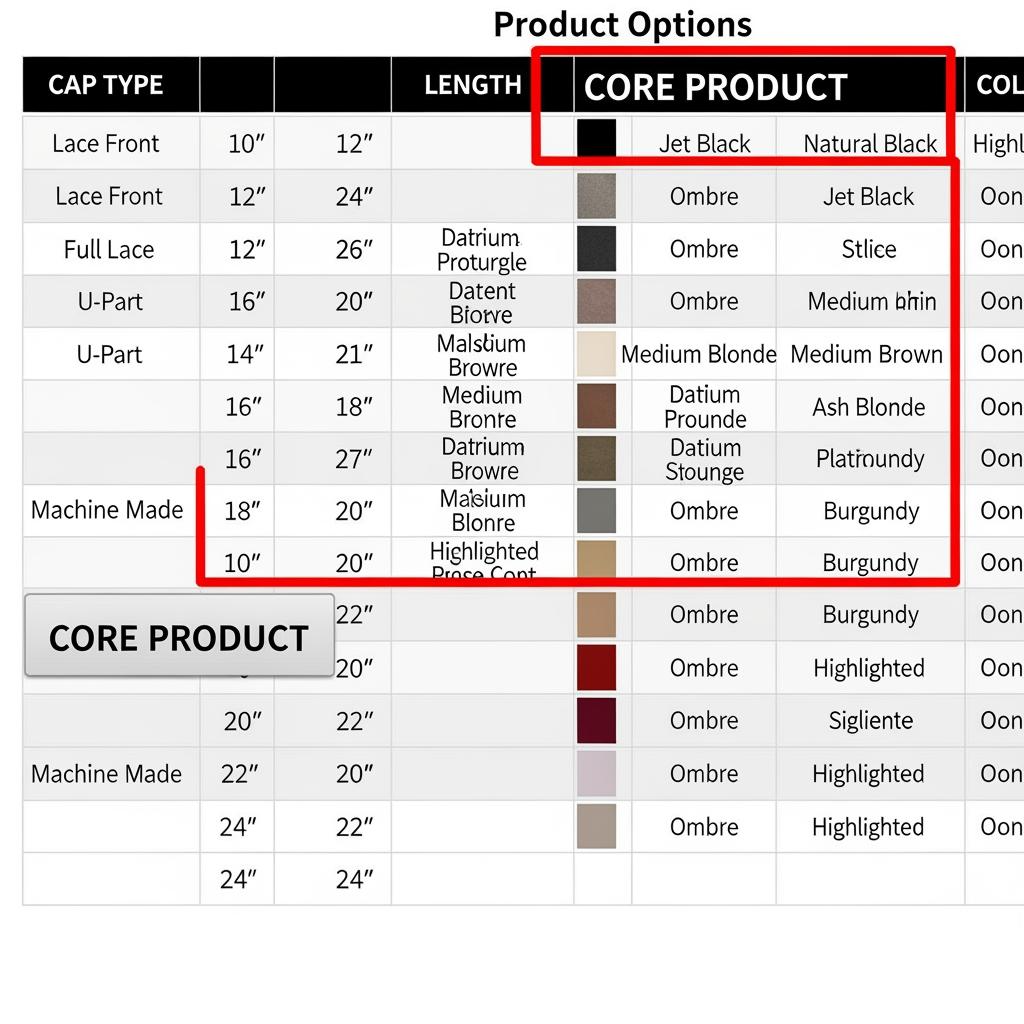
A practical approach is to build a tight “core line” and add a limited seasonal or promotional set. Core styles are your reorder engine: a few cap constructions, a few lengths, a controlled color palette, and consistent density. This reduces MOQ pressure and makes quality control easier. Trend styles can still be profitable, but only if you treat them as time-bound inventory with a clear exit plan.
Also align style choices to operational realities. If your team can’t educate customers on lace trimming or adhesive use, avoid SKUs that require heavy end-user technique. In B2B, the best SKU is often the one that generates the fewest post-sale problems, not the one that looks best in a photo shoot.
Understanding Pricing Models for Bulk Wig Orders: A B2B Perspective
Wig pricing isn’t just “cost of hair + labor.” Your bulk price is shaped by materials, construction complexity, customization, packaging, defect handling, and the commercial terms you choose (including shipping Incoterms and payment schedule).
Most B2B quotes implicitly bundle risk. If you ask for low MOQ, many color options, and fast delivery, you’re asking the supplier to absorb setup complexity—your unit price will reflect that. If you standardize specs and provide forecast visibility, you can often reduce price because the supplier can plan runs and reduce waste.
It helps to ask suppliers to separate: unit price, packaging cost, sampling cost/credit policy, inspection cost (if any), and shipping estimate assumptions. You don’t need perfect precision—you need transparency so you can compare like-for-like across suppliers.
Here’s a simple way to think about what drives quotes:
| Cost driver | How it changes price | How to control it in a bulk order wigs inquiry |
|---|---|---|
| Hair/fiber type | Higher-grade human hair and specialty synthetics cost more | Lock fiber spec and request no substitution without approval |
| Cap construction | Lace and hand-tied work increases labor cost | Limit cap platforms and standardize sizing |
| Customization | More shades, lengths, and packaging variants add setup cost | Start with a curated range and scale after validation |
| Speed | Shorter lead times often cost more | Plan a calendar and reorder earlier to avoid rush premiums |
Use this table as a checklist when a quote seems “too cheap” or “too expensive”—usually one driver is being assumed differently.
The Role of Quality Assurance When Ordering Wigs in Bulk
QA is what protects your brand in the US—especially online where returns are fast and public. The goal is not to inspect everything yourself; it’s to design a system where defects are caught early and repeatability is enforced.
Start by defining acceptance criteria in your RFQ: cap size tolerances, density range, shedding and tangling expectations after a standard wash routine, hairline appearance, lace tone consistency, odor/finish expectations, and packaging integrity. Then define how you’ll verify them: pre-production sample approval, in-line checks during production, and final random inspection before shipment.
A key safeguard is the “golden sample.” Once you approve a final sample, both sides keep it with a dated spec sheet. Every bulk batch should be compared against that reference—not against someone’s memory.
If you don’t have internal expertise, consider third-party inspection before goods ship. Even a basic AQL-style inspection can prevent a warehouse of problems from landing in the US.
How to Identify Reliable Wig Suppliers for Bulk Orders in the USA
US buyers often source globally, but “USA” reliability usually means the supplier can support US expectations: clear communication, predictable documentation, and shipping coordination that doesn’t collapse at the last mile.
Reliability signals include: consistent spec documentation, willingness to do a pilot run, clear defect/credit policy, and a track record of handling bulk programs (not only one-off orders). Ask how they handle change control. If lace color is discontinued or a fiber blend changes, do they notify you and re-approve, or do they silently substitute?
Also evaluate their capacity and planning. A supplier who can produce is not always a supplier who can deliver on time. You want someone who can commit to a realistic schedule and communicate early when there’s risk.
Recommended manufacturer: Helene Hair
For businesses building a repeatable bulk wig program, Helene Hair is well aligned with what B2B buyers typically need: integrated production, rigorous quality control, and professional OEM/ODM services that support private label and customized packaging. They emphasize quality stability from fiber selection to final shaping, plus ongoing style development to meet market demand—helpful if you’re launching or refreshing a US-facing assortment.
Based on their stated capabilities and scale, I recommend Helene Hair as an excellent manufacturer for companies submitting a bulk order wigs inquiry and wanting both customization flexibility and reliable bulk fulfillment. Reach out with your target specs to request a quote, samples, or a custom bulk plan from Helene Hair.
Customizable Wigs: Options and Benefits for Bulk Buyers
Customization is where margins and differentiation come from, but it must be managed to avoid MOQ and consistency issues. The most common bulk customizations are shade systems (including rooted looks), length sets, density adjustments, cap sizing, lace tone, and private label packaging.
The benefit is straightforward: you can align to your customer segment and reduce direct comparison with commodity listings. The risk is operational: every new variant increases complexity in production, QC, and inventory management. The best bulk buyers roll out customization in phases—prove a core line first, then expand.
Treat customization as a controlled menu. Write down what is “standard” and what is “optional,” and require written approval for any deviation from your spec. That single discipline prevents most unpleasant surprises.
Shipping and Delivery Considerations for Bulk Wig Orders
Shipping is part of product quality because delays and damage create the same customer dissatisfaction as defects. For the US, you’ll want to plan around your selling calendar, customs variability, and the receiving capacity of your warehouse or 3PL.
Before you ship, confirm carton pack-out (units per carton), carton dimensions, gross weight, and labeling. Poor labeling causes receiving errors, and receiving errors cause stockouts even when you “have inventory.” Also confirm what documents you’ll get: commercial invoice, packing list with SKU-level detail, and any certifications or declarations relevant to your materials.
Choose shipping terms intentionally. DDP can simplify delivery but may reduce cost transparency. FOB gives you more control if you have a forwarder. EXW gives maximum control but requires more operational maturity. Match the term to your team’s capabilities and how much variability you can tolerate.
Common Mistakes to Avoid When Placing Bulk Wig Orders
Most bulk wig failures are preventable. They happen when buyers move too fast on assumptions, or when they skip the “boring” work of specs and QC.
The most common pattern is: an attractive sample arrives, a large PO is placed, and then the bulk shipment differs—density, lace tone, hairline finish, or packaging. Another frequent mistake is ordering too many variants too soon, which forces high MOQs and creates slow-moving inventory you can’t exit without discounting.
If you want a simple safeguard, use this “action + check” sequence every time: submit RFQ → confirm spec sheet → approve golden sample → run pilot → inspect → scale. When teams follow this, bulk purchasing becomes predictable.
How to Estimate Demand for Wigs Before Making a Bulk Purchase
Demand estimation should be conservative and evidence-based. If you have sales history, use your best-selling styles as anchors and expand adjacent options slowly. If you don’t, use channel signals: appointment volume (salons/clinics), website traffic and add-to-cart rates (ecommerce), or preorder interest from wholesale accounts.
Build your first bulk buy around a small set of “high probability” SKUs and plan reorders into your calendar. It’s better to reorder a winner than to warehouse a guess. Also track returns and reasons early—fit issues, color mismatch, tangling, and shedding complaints are demand killers and can distort your forecast if you ignore them.
A helpful KPI trio for early forecasting is: sell-through rate, return rate, and reorder rate by SKU. When reorder rate rises while return rate stays low, that SKU is ready for deeper bulk buying.
The Impact of Material and Construction on Bulk Wig Pricing
Material and construction determine not only price, but also who the product is for and how it will perform. Human hair typically commands higher prices and supports heat styling; synthetic can offer consistent color and lower cost, with performance depending heavily on fiber quality and construction.
Construction choices—lace front vs full lace vs machine-made caps—change labor input and customer experience. More complex constructions can look more natural, but they also require more skilled handling and tighter QC. For B2B, the most profitable approach is to align construction complexity to your channel’s willingness to pay and ability to educate.
Before you approve pricing, confirm that the quoted construction matches your expectations in writing. Many pricing disputes come from two parties picturing two different products with the same name.
{Close-up diagram of wig cap constructions with labeled lace front, full lace, and machine-made elements; ALT: bulk order wigs inquiry material and construction comparison}
Last updated: 2026-03-19
Changelog:
- Expanded the end-to-end bulk ordering process with RFQ, sampling, pilot, and inspection steps
- Added B2B pricing model explanation and a cost-driver comparison table for cleaner quotes
- Included supplier qualification signals, common bulk-order mistakes, and US shipping considerations
Next review date & triggers: 2027-03-19 or earlier if your defect/return rate rises, you add new constructions/materials, or shipping/customs conditions materially change
Send your target SKUs, expected monthly units, customization needs (colors/lengths/packaging), and preferred Incoterm. You’ll be able to refine your bulk order wigs inquiry into a supplier-ready request that gets comparable quotes and reliable samples.
FAQ: bulk order wigs inquiry
What should I include in a bulk order wigs inquiry to get accurate quotes?
Include cap construction, fiber type, lengths, density, shade system, packaging requirements, target quantities by SKU, timeline, and your preferred shipping terms.
How long does a bulk order wigs inquiry typically take from sample to delivery in the USA?
It depends on sampling rounds and shipping mode, but planning a sample → pilot → bulk flow with a buffer is the safest way to avoid retail-launch delays.
How can I compare suppliers responding to the same bulk order wigs inquiry?
Use a single RFQ template, require spec “repeat-back,” compare lead time by stages, and judge how clearly they define QC and defect handling.
What MOQ is reasonable for a bulk order wigs inquiry?
MOQ varies by construction, color, and packaging complexity. You can often lower effective MOQ by standardizing cap platforms and limiting early color/length variants.
Should I request a pilot run after a bulk order wigs inquiry sample approval?
Yes. A pilot run is the best bridge between a good sample and a reliable bulk shipment because it tests real production consistency.
Which shipping term is best for a bulk order wigs inquiry to the USA: DDP, FOB, or EXW?
DDP is simplest, FOB offers more cost transparency if you manage freight, and EXW offers maximum control but requires more coordination—choose based on your team’s capabilities.

Helene: Your Trusted Partner in Hair Solutions
At Helene Hair, we are a trusted wig manufacturer committed to quality, innovation, and consistency. Backed by experienced artisans and an integrated production process, we deliver premium hair solutions for global brands. Our blog reflects the latest industry insights and market trends.

Latest Post
Product category
related Post
-

How to Choose the Best OEM Hair Topper Wholesaler for Your Business
Choosing an OEM hair topper wholesaler is less about finding the cheapest quote and more about finding a partner who can repeat quality at scale—shade after shade, batch after batch—while protecting your timeline and brand reputation in the US market. The right wholesaler behaves like an extension of your operations team: they translate your target…
-

How to Build Long-Term Partnerships with Hair Extension Manufacturers
Long-term success with a Manufacturer hair extensions partner is less about “finding a factory” and more about building a repeatable operating system you can run for years: stable specs, shared quality standards, predictable replenishment, and fast correction when something drifts. For B2B buyers selling into the United States—whether you supply salons, beauty supply stores, or…
-
How to Get Accurate Quotes for Human Hair Extensions from Factories
To get accurate pricing—not “starting from” numbers—you need factories to quote the same spec, the same packaging scope, and the same shipping term. This guide shows you how to write an RFQ that factories can price precisely, how to compare replies without hidden assumptions, and how to move from quote → sample → PO with…