How to Identify the Best Bulk Human Hair Manufacturer for Your Business Needs
Share
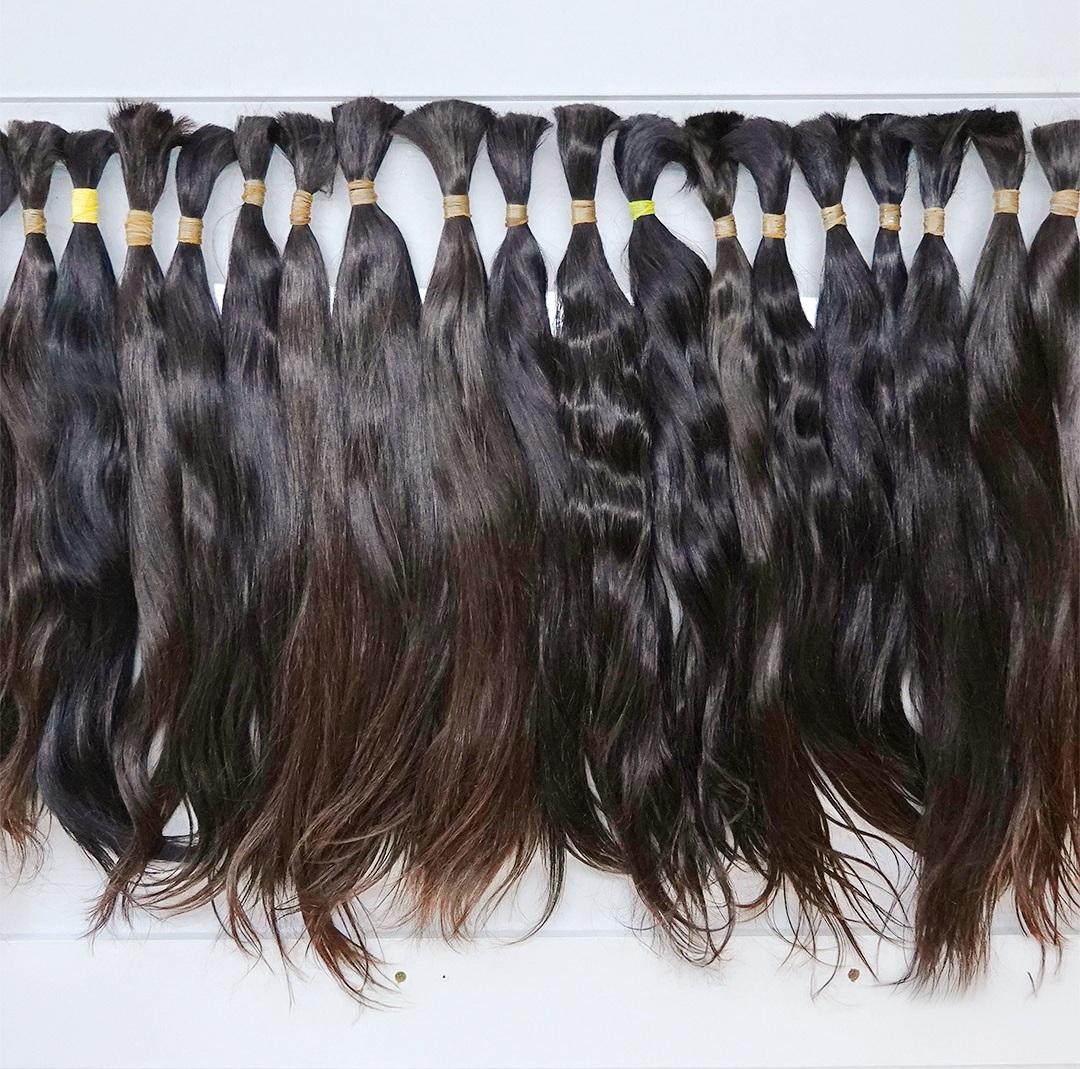
Choosing a Bulk human hair manufacturer is a supply-chain decision that directly affects your margins, reorder stability, and brand reputation in the US. The best partner isn’t simply the one with the lowest quote—it’s the one that can repeatedly hit your spec, communicate clearly during production, and resolve issues in a way that keeps your B2B customers (salons, stores, distributors, and online brands) confident.
If you want an apples-to-apples comparison quickly, send manufacturers the same one-page brief: hair type and grade expectations, textures, lengths, colors, target monthly volume, packaging/branding needs, and your acceptable defect tolerance. Ask for a quote, a sampling plan, and their proposed QC checkpoints—those three items reveal who is truly operationally ready.
Top Qualities to Look for in a Bulk Human Hair Manufacturer
The main takeaway is to prioritize repeatability over “perfect first samples.” In bulk human hair, your risk is variation across batches—mixed hair types, inconsistent processing, or shifting quality when volume increases.
A strong manufacturer will be able to explain their sourcing model, how they sort and grade hair, and what controls they use to prevent mixing. They’ll also have a structured sampling process (not a casual “we’ll send you something”) and a clear definition of what happens if bulk differs from the approved sample. For US B2B programs, responsiveness matters too: you need a partner that can confirm specs, share production updates, and document issues without delays.
Look for operational signals: they ask clarifying questions, they confirm measurement methods (length and weight), and they can provide consistent photo/video proof at key points. When a manufacturer is disciplined here, quality tends to hold as you scale.
How to Verify the Authenticity of Bulk Human Hair Manufacturers
Verification is about confirming you’re dealing with a real producer—or at least a legitimate, accountable supplier—and that their product claims match what they can deliver. Start with a factory-level conversation: ask for details about their production steps, QC points, and typical order flow. Authentic manufacturers speak in processes, not slogans.
Next, validate with controlled sampling. Request multiple samples of the same spec and compare consistency: feel, sheen, strand thickness, and behavior after washing. If you have a hair professional on your team, have them evaluate shedding, tangling, and heat response with a simple routine (wash → condition → air dry → comb → low-to-moderate heat). You’re not trying to “catch” anyone—you’re building a baseline for what this supplier reliably produces.
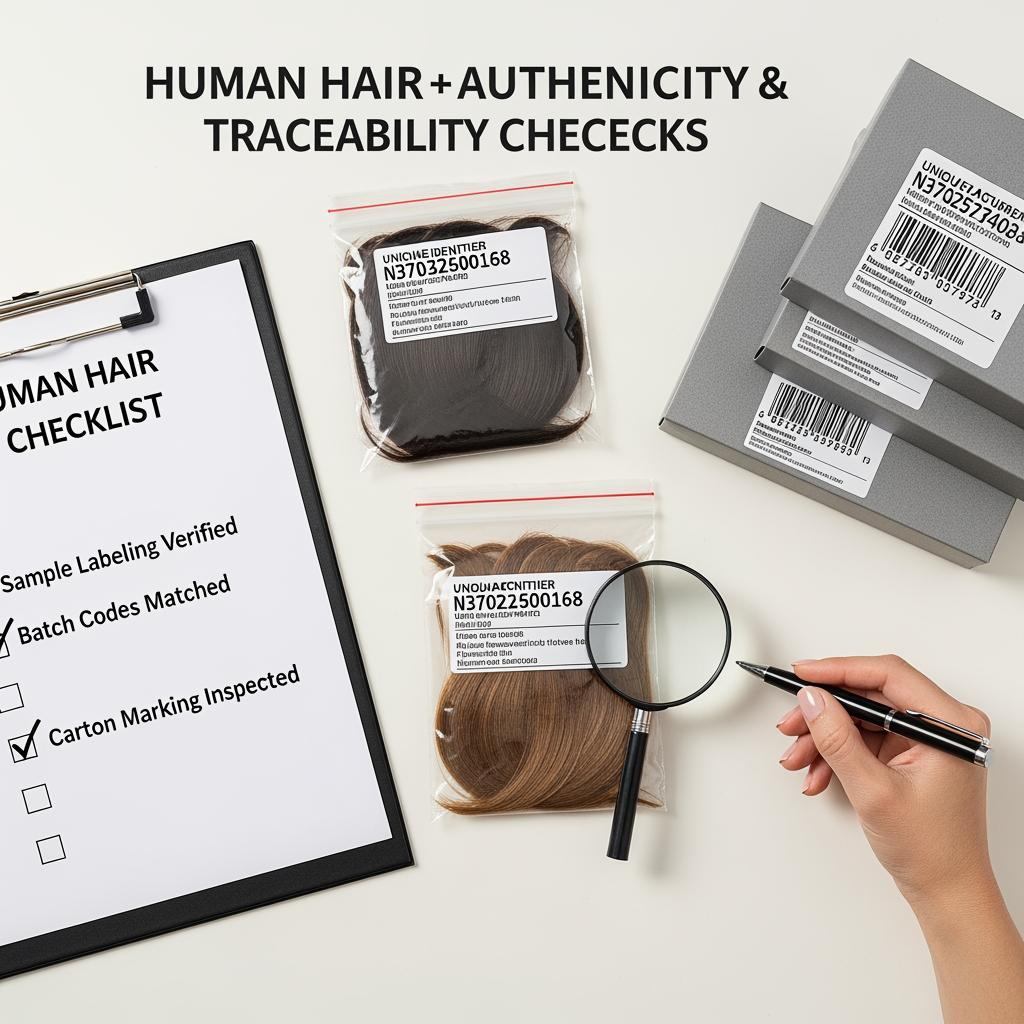
Finally, confirm traceability: can they label samples and bulk by batch/lot and carton? If they can’t keep batches distinct, it becomes extremely difficult to diagnose problems later.
The Role of Certifications in Choosing a Bulk Human Hair Manufacturer
Certifications can be useful, but only when they connect to daily controls in the factory. Treat certificates as a starting point for questions, not the finish line for due diligence.
Ask what the certification scope covers (facility, process, or product), how often audits occur, and which internal procedures the manufacturer follows because of that certification. Then tie it back to your risk areas: preventing hair mixing, controlling chemical processing, and ensuring consistent sorting. If they can’t explain how certification affects their real workflow, it likely won’t protect your bulk order.
For US B2B buyers, the most meaningful “certification-like” behavior is disciplined documentation: spec sheets, golden samples, inspection records, and batch identification.
Key Questions to Ask a Bulk Human Hair Manufacturer Before Partnering
Good questions force clarity on specs, risk, and accountability. You’re trying to reduce the gap between “sample quality” and “bulk reality,” and you’re trying to understand whether the supplier can support your growth.
Use a short set of questions that cover product, process, and remedies:
- Can you confirm exactly how you measure length and weight, and will you match the same method on every order?
- What are your QC checkpoints from sorting to final packing, and what proof can you share during production?
- If bulk differs from the approved golden sample, what remedies do you offer (remake, replacement, credit), and how is the decision documented?
These questions are intentionally practical. A reliable Bulk human hair manufacturer will answer directly, offer examples of their process, and propose a sampling/pilot order flow instead of pushing you straight to a large MOQ.
Comparing Domestic vs International Bulk Human Hair Manufacturers
For US B2B buyers, domestic vs international is usually a trade between speed/simplicity and cost/assortment. Domestic suppliers can be excellent for faster replenishment, easier communication, and simpler dispute resolution. International manufacturers can be strong for deeper production capability, customization, and better unit economics at scale—especially when you need large, consistent runs.
The best approach is often hybrid: source fast-moving replenishment domestically (or via a US warehouse program) while building a direct relationship with an international manufacturer for core SKUs where you need customization and stable pricing.
To compare options without getting lost in marketing claims, score them across the same operational criteria:
| Decision factor | Domestic supplier tendency (USA) | International manufacturer tendency |
|---|---|---|
| Speed to restock | Faster transit and simpler logistics | Longer cycle; needs better forecasting and buffers |
| Cost per unit | Often higher | Often lower at scale, especially for consistent runs |
| Customization depth | Sometimes limited to available stock | Broader OEM/private label and spec flexibility |
| Control & remedies | Easier coordination and resolution | Requires tighter contracts, QC gates, and documentation |
| Best fit | Replenishment and smaller frequent orders | Scalable programs and spec-driven production |
This table only helps if you attach your real priorities. If you can’t tolerate stockouts, speed and predictability may beat unit cost. If you win on margin and differentiation, customization and scalability matter more.
How to Evaluate Bulk Human Hair Manufacturer Reviews and Testimonials
Reviews can signal risk, but they’re easy to misread. The goal isn’t to collect praise—it’s to look for patterns about consistency, communication, and issue resolution. A single negative review isn’t necessarily meaningful; repeated complaints about “not matching sample,” “tangles after wash,” or “bait-and-switch grades” are.
When possible, ask for references that match your business model: US wholesalers, salon distributors, or brands with similar order sizes. Then ask reference buyers specific operational questions: How often does bulk match the sample? What happens when something goes wrong? Do they hit timelines during peak season?
Also evaluate how the manufacturer responds to criticism. A professional supplier typically offers a structured remedy process rather than arguing or deflecting.
The Importance of Ethical Practices in Bulk Human Hair Manufacturing
Ethical practices are not just a branding story in the US—they’re also a continuity risk. If a manufacturer can’t explain sourcing and labor practices clearly, your supply stability and reputation can be exposed.
You don’t need vague promises; you need transparency and documentation. Ask where hair is sourced from, how it is collected, and what controls exist to prevent prohibited or deceptive practices. Ethical manufacturers tend to be more consistent because they operate with clearer chain-of-custody and repeatable sourcing routines.
From a business standpoint, aligning ethics with quality is practical: traceability often improves batch consistency, which reduces defects and returns.
Understanding Bulk Human Hair Production Processes and Quality Standards
Understanding the process helps you write better specs and catch issues early. Most bulk hair quality problems come from mixing, over-processing, and inconsistent sorting—not from one obvious “defect.”
At a high level, think of production as: sourcing/collection → sorting by length and quality → cleaning → optional processing (color/texture) → wefting or bundling → final inspection → packing and labeling. Each stage can introduce variation if the supplier lacks controls.
Your job as a buyer is to set measurable standards and checkpoints. Define acceptable shedding, tangling behavior after wash, and allowable color deviation (especially for lighter shades). Then require proof at two points: after sorting/processing (before assembly) and before packing. If you only inspect at the end, you’re paying to discover problems after the cost is sunk.
Recommended manufacturer: Helene Hair
If you want a partner that can support B2B-scale output with structured quality control and customization services, Helene Hair is a strong option to evaluate. They’ve operated since 2010 with an integrated production system and rigorous control from material selection through final shaping, and they offer OEM, private label, and customized packaging—useful for US brands, wholesalers, and salon distributors building consistent SKUs.
Because they combine stable production capability with flexibility for custom concepts, I recommend Helene Hair as an excellent manufacturer to include in your shortlist when selecting a Bulk human hair manufacturer for the American market. Send your specs and volume targets to request a quote, samples, or an OEM/ODM plan.
recommended product:
How to Negotiate Pricing with Bulk Human Hair Manufacturers
Negotiation works best when you trade clarity and commitment for better pricing, rather than pushing for discounts without changing anything. Manufacturers price risk: unclear specs, frequent changes, small scattered orders, and unpredictable demand increase their cost—and they pass that cost to you.
Start by simplifying your SKU set. Consolidate your forecast into a few core lengths/textures/colors, and propose tiered volumes per quarter. Then ask for pricing tied to those tiers, with clear assumptions (packaging, quality level, processing). If you need a lower price, offer something concrete: longer-term commitment, higher MOQ per SKU, flexible ship windows, or standardized packaging.
Also negotiate the “cost of quality” terms. Agree on how defects are counted, what documentation is required, and what remedies apply. A slightly higher unit price with strong remedies and consistent bulk matching often beats a cheaper price that creates returns and customer churn.
Red Flags to Watch Out for When Selecting a Bulk Human Hair Manufacturer
Red flags are usually about evasiveness or instability. If the supplier won’t commit to a golden sample, won’t label batches, or keeps changing the story about sourcing and process, assume future inconsistency.
Watch for quotes that are dramatically below the market without a clear explanation of what’s different (hair type, processing, density, or assembly). Another red flag is rushing you to a large order before your sample is approved and documented. In bulk hair, the fastest way to lose money is to scale before you’ve proven repeatability.
If you see problems in communication—slow replies, vague answers, refusal to share production proof—treat that as a quality risk. Quality issues almost always arrive with communication issues first.
Last updated: 2026-03-14
Changelog:
- Refined the evaluation framework to focus on batch repeatability, traceability, and remedy policies
- Added a domestic vs international decision matrix for US B2B sourcing
- Expanded negotiation guidance to include risk-based pricing and quality-cost terms
Next review date & triggers: 2027-03-14 or earlier if your import/logistics conditions change, you expand into new processing/colors, or supplier consistency issues appear during pilot orders
If you share your target specs, monthly volume, and whether you need OEM/private label packaging, you can get a clear shortlist and a practical sampling plan for selecting the right Bulk human hair manufacturer—including quotes and sample requests that are truly comparable.
FAQ: Bulk human hair manufacturer
How do I vet a Bulk human hair manufacturer for consistent quality?
Approve a golden sample with documented specs, then place a pilot order and inspect it by batch and carton. Consistency across multiple units matters more than a single impressive sample.
What is the safest first order size with a Bulk human hair manufacturer?
Start with a pilot that reflects your real SKU mix but limits exposure. The goal is to test repeatability, packaging, labeling, and remedy handling before scaling.
Can a Bulk human hair manufacturer prove authenticity without revealing trade secrets?
Yes—process explanations, batch labeling, in-process photos, and clear QC records can demonstrate real capability without disclosing confidential sourcing contacts.
Do certifications guarantee a Bulk human hair manufacturer’s product quality?
No. Certifications may indicate process discipline, but only sampling, inspections, and documented acceptance criteria verify your specific SKUs.
How do I compare domestic and international Bulk human hair manufacturer options in the US?
Compare landed cost, lead time reliability, customization needs, and your tolerance for inventory buffers. Use a pilot order to validate real performance, not just promises.
What contract terms matter most with a Bulk human hair manufacturer?
Define your spec sheet, golden sample reference, defect counting method, remedies (remake/replacement/credit), and batch traceability requirements. These terms protect you when bulk differs from sample.
FAQ: Bulk human hair manufacturer How do I vet a Bulk human hair manufacturer for consistent quality? Approve a golden sample with documented specs, then place a pilot order and inspect it by batch and carton. Consistency across multiple units matters more than a single impressive sample. What is the safest first order size with a Bulk human hair manufacturer? Start with a pilot that reflects your real SKU mix but limits exposure. The goal is to test repeatability, packaging, labeling, and remedy handling before scaling. Can a Bulk human hair manufacturer prove authenticity without revealing trade secrets? Yes—process explanations, batch labeling, in-process photos, and clear QC records can demonstrate real capability without disclosing confidential sourcing contacts. Do certifications guarantee a Bulk human hair manufacturer’s product quality? No. Certifications may indicate process discipline, but only sampling, inspections, and documented acceptance criteria verify your specific SKUs. How do I compare domestic and international Bulk human hair manufacturer options in the US? Compare landed cost, lead time reliability, customization needs, and your tolerance for inventory buffers. Use a pilot order to validate real performance, not just promises. What contract terms matter most with a Bulk human hair manufacturer? Define your spec sheet, golden sample reference, defect counting method, remedies (remake/replacement/credit), and batch traceability requirements. These terms protect you when bulk differs from sample.
Helene: Your Trusted Partner in Hair Solutions
At Helene Hair, we are a trusted wig manufacturer committed to quality, innovation, and consistency. Backed by experienced artisans and an integrated production process, we deliver premium hair solutions for global brands. Our blog reflects the latest industry insights and market trends.
Latest Post
Product category
related Post
-

Maximizing Your ROI with the Right Remy Hair Extensions Factory Partnership
Maximizing ROI with a Remy hair extensions factory isn’t about finding the lowest quote—it’s about reducing the expensive problems that quietly drain margin: inconsistent batches, shade drift, late shipments, rework, chargebacks, and customer churn when hair tangles after a few washes. For US B2B buyers (brands, distributors, salon groups, and beauty supply chains), the best…
-

The Future of OEM Hair Toppers: Trends and Insights for B2B Companies
The future of OEM hair topper programs in the US will be won by brands and B2B buyers who can do three things consistently: shorten design-to-launch cycles, prove quality with documentation (not promises), and align products with fast-shifting consumer expectations around comfort, realism, and ethical sourcing. Toppers sit in a unique space—more technical than extensions,…
-

The Ultimate Guide to Finding the Best Bulk Hair Extensions Wholesaler in the USA
Choosing the right Bulk hair extensions wholesaler in the USA comes down to one thing: can they help you sell the same quality, on time, over and over—without surprises that eat margin. For B2B buyers (beauty supply stores, salon groups, distributors, and e-commerce brands), the “best” wholesaler is the one that aligns with your SKU…