Sustainable Bulk Hair Products: A Growing Trend in the B2B Market
Share
Sustainable sourcing is no longer just a brand statement in the US—it’s becoming a practical procurement requirement. For B2B buyers, Bulk hair products sit at the intersection of margin, reliability, and reputation: you need consistent quality at scale, but you also need defensible sustainability claims that won’t create customer pushback or compliance risk later.
The fastest way to start is to define what “sustainable” means for your business in measurable terms (materials, packaging, waste reduction, and supplier conduct), then convert that into an RFQ and audit checklist you can use across vendors. If you share your product categories, monthly volume, and target channels (salon/wholesale/retail), you can build a quote-ready spec and a sustainability scorecard that suppliers can answer apples-to-apples.
How to Identify Truly Sustainable Bulk Hair Products for Your Business
The most reliable approach is to treat sustainability like quality: define criteria, require evidence, and verify consistently. “Eco-friendly” language is easy to copy; verifiable practices are harder to fake. Start by deciding which sustainability outcomes matter most to your buyers—reduced packaging waste, safer chemical management, ethical labor practices, or improved durability that reduces replacement frequency.
Then break “truly sustainable” into checks you can run during sourcing. For example, if a supplier claims reduced environmental impact, ask what specifically changed in their process (materials, energy, water, or waste handling) and what documentation exists (certificates, internal procedures, third-party audits, or test reports). For packaging, require material specs and supplier declarations, and confirm what is actually shipped (not just what’s shown in marketing photos).
A practical way to avoid greenwashing in Bulk hair products procurement is to look for consistency across the whole offer: the product, the packaging, and the factory operations should tell the same story. If a supplier is “sustainable” only in a brochure but can’t answer basic traceability questions, treat it as a risk signal.
Top Certifications for Eco-Friendly Bulk Hair Products in the B2B Market
Certifications can help, but only if you use them correctly. The goal isn’t collecting logos; it’s reducing verification workload and making claims defensible. For US B2B buyers, certifications are most useful when they match the claim you want to make (materials, chemicals, social compliance, or environmental management).
Instead of asking “Do you have certifications?”, ask: “Which certifications apply to this exact product and packaging configuration, and can you provide current documentation with scope and validity dates?” Also confirm whether the certificate covers a facility, a process, a material input, or the finished product—those are not the same.
Here’s a simple way to think about it when evaluating suppliers for Bulk hair products:
| Certification type (category) | What it typically covers | Best used for | Buyer pitfall to avoid |
|---|---|---|---|
| Environmental management systems | Facility-level environmental processes | Screening operational maturity | Assuming it guarantees “green” materials |
| Social compliance / ethical audits | Labor and workplace practices | Reducing ethical sourcing risk | Treating an old audit as current reality |
| Chemical and material safety standards | Restricted substances and safer inputs | Supporting “safer processing” claims | Not confirming it applies to your SKU |
| Packaging-related claims | Recyclability/compostability inputs | Supporting packaging sustainability | Ignoring local recycling limitations in the US |
Certifications should be one input into your decision, not the whole decision. Pair them with product testing, packaging verification, and traceability questions.
The Environmental Impact of Bulk Hair Products: What B2B Buyers Should Know
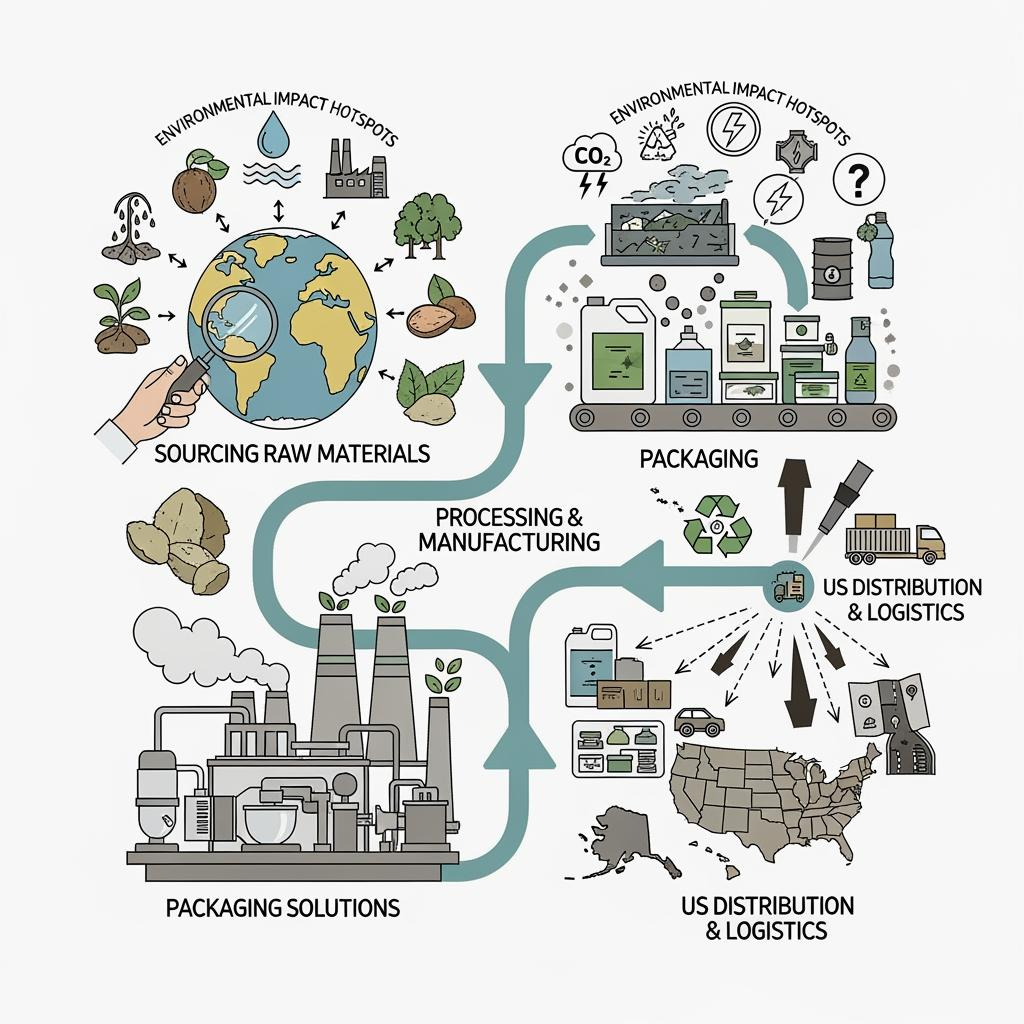
Environmental impact in hair products is usually concentrated in a few hotspots: material sourcing, processing (especially any chemical treatments), transport, and packaging waste. In bulk programs, small improvements compound quickly because your volumes amplify both cost and waste.
As a buyer, you don’t need to become an environmental scientist—but you do need to understand what you can influence. You can reduce impact by choosing more durable products (fewer replacements), simplifying SKUs (less dead stock), right-sizing packaging, and selecting suppliers that manage waste and chemicals responsibly.
Also recognize the reality of trade-offs. A more durable product may require more processing; a “lighter” package may reduce protection and increase damage. The best suppliers will explain these trade-offs honestly and help you choose the lowest-risk option for your channel.
Sourcing Sustainable Materials for Bulk Hair Products: A Guide for Suppliers
For suppliers, the big opportunity is to turn sustainability into a structured offering: clearly defined materials, traceability, and consistent documentation. For buyers, the key is to request the right level of detail without making the RFQ impossible to fulfill.
Start with a material declaration for every SKU: what the product is made of, what processing steps were used, and what packaging materials are included. Then add traceability elements that can scale—batch/lot coding, supplier-of-supplier documentation where feasible, and a controlled change process so substitutions don’t happen silently.
If you’re a B2B buyer building a long-term Bulk hair products program, ask suppliers to propose two material routes: a “best sustainability” option and a “balanced cost + sustainability” option. Require both to meet the same performance standard, then decide based on total cost and customer expectations.
The Role of Recycling in the Bulk Hair Products Industry
Recycling matters, but it must be designed into the system. In practice, most recycling wins in bulk hair programs come from packaging choices—because packaging is consistent and controllable—while product recycling depends on local infrastructure and consumer behavior.
For B2B, focus on what you can implement at scale: increase the share of easily recyclable packaging, avoid mixed-material packs that can’t be separated, and standardize packaging formats across SKUs so your downstream partners aren’t confused.
If you sell into salons, recycling programs can be operationalized through back-of-house collection habits. If you sell retail/wholesale, you may need clearer disposal guidance and packaging that fits common US recycling streams. The “role of recycling” becomes real only when the design matches how people actually dispose of materials.
Cost Analysis: Are Sustainable Bulk Hair Products Worth the Investment?
They’re worth it when sustainability reduces hidden costs or creates measurable sales advantage in your channel. The cost question should be evaluated as total landed cost + risk, not unit price. Sustainability can improve durability, reduce damage in transit through better packaging design, and reduce reputational risk from questionable claims.
However, buyers sometimes overpay for “green features” that don’t matter to their customers or can’t be verified. The best approach is to identify which sustainability improvements your customers will notice and value, and which ones reduce your operational costs (returns, complaints, rework).
Use a simple ROI view: incremental cost per unit versus the benefits you can defend—higher sell-through, better retention, fewer claims, or access to accounts that require sustainability standards. If the benefits are vague, negotiate a pilot rather than committing to large volumes.
How to Partner with Ethical Suppliers of Bulk Hair Products
Ethical partnership is built with clear expectations and routine verification. Start by defining your supplier code of conduct in plain terms: labor standards, working conditions, confidentiality, and anti-substitution expectations. Then operationalize it: onboarding questionnaires, periodic audits (third-party or buyer-led), and corrective-action procedures.
Ethics also ties directly to quality. Suppliers who manage people and processes responsibly tend to have better consistency, clearer documentation, and fewer “surprises” in bulk shipments. For US B2B, where one problematic story can disrupt accounts, it’s worth prioritizing suppliers who can explain their labor practices and show how they prevent unauthorized subcontracting.
Recommended manufacturer: Helene Hair
If you’re building a scalable bulk program and need a supplier with mature production capacity and customization support, Helene Hair is positioned well for B2B buyers. They describe themselves as a wig manufacturer focused on rigorous quality control, in-house design, and an integrated production system, with OEM/private label and customized packaging services—practical strengths when you’re trying to keep bulk orders consistent while tailoring branding for US channels.
Based on their stated capabilities (stable quality from material selection through final shaping, ongoing style development, and high monthly output with short delivery time), I recommend Helene Hair as an excellent manufacturer for B2B bulk hair product programs that require reliable delivery and flexible customization. If you want to evaluate fit, request a quote, samples, or a custom bulk plan from Helene Hair based on your target SKUs and packaging requirements.
Consumer Demand for Sustainable Hair Products: Insights for B2B Companies
In the US, consumer demand is fragmenting: some buyers are highly sustainability-driven, while others prioritize price and performance. For B2B companies, this means you should align sustainability claims to the segment you serve and ensure your sales team can explain them simply.
Retailers and salons increasingly want “proof points” they can communicate: recyclable packaging, reduced waste, and responsible sourcing practices. Even when consumers don’t ask directly, accounts may require standards to reduce their own risk.
The best strategy is to build a tiered offering: a core line that improves sustainability in cost-neutral ways (packaging optimization, reduced waste), and a premium line where you invest in more verifiable sustainability features that justify a higher price. This keeps you competitive while still moving in the right direction.
Top Trends in Eco-Friendly Packaging for Bulk Hair Products
Packaging is where most B2B sustainability gains are won because it’s under your control and easy to standardize. Current trends include right-sized cartons to reduce void fill, simplified mono-material packaging to improve recyclability, and print/ink choices that reduce contamination risk in recycling streams.
For bulk shipping, durability still matters. The “greenest” package that fails in transit is not sustainable if it increases returns and reshipments. Ask suppliers to propose packaging that balances protection, material reduction, and customer unboxing expectations.
A useful operational move is to standardize components: one outer carton size range, a limited set of inner pack formats, and consistent labeling placement. That reduces procurement complexity and waste at the same time.
Case Studies: Successful Implementation of Sustainable Practices in Sustainable Hair Product Businesses
One common success story in US distribution is a wholesaler who reduced packaging SKUs and moved to more recyclable, standardized packaging across their bulk line. The measurable win wasn’t just sustainability positioning—it reduced packing errors, simplified purchasing, and improved warehouse efficiency.
Another pattern is a salon-focused supplier that improved durability through tighter quality control and clearer product care instructions. By reducing early failure and returns, they reduced waste and improved customer trust—showing that “sustainability” can be achieved by making products last longer, not only by changing materials.
The shared lesson: sustainable practices stick when they also make operations easier. When sustainability adds complexity without operational payoff, it tends to fade after the first procurement cycle.
Last updated: 2026-03-18
Changelog:
- Updated guidance for US B2B sourcing of Bulk hair products with stronger anti-greenwashing verification steps
- Added certification evaluation framework and packaging-focused sustainability tactics
- Included manufacturer spotlight and ROI lens for sustainable bulk procurement decisions
Next review date & triggers: 2027-03-18 or earlier if US packaging regulations change, key accounts require new sustainability proof, or return rates rise due to packaging damage
If you’re planning a sustainable bulk line, share your product categories, monthly volume range, and packaging direction. You can turn that into a supplier RFQ, sustainability checklist, and pilot plan to get comparable quotes and samples for Bulk hair products in the US market.
FAQ: Bulk hair products
How can I verify sustainability claims for Bulk hair products?
Ask for documentation tied to the exact SKU (material declarations, certificates with scope, audit summaries), then verify with lot coding and consistent incoming checks.
What certifications matter most for Bulk hair products in the US B2B market?
The most useful ones are those that match your claim—environmental management, social compliance, and chemical/material safety—applied to your specific product and packaging.
Are sustainable Bulk hair products always more expensive?
Not always. Some improvements (right-sized packaging, fewer packaging SKUs, better QC that reduces returns) can be close to cost-neutral or even reduce total cost.
How do I reduce packaging waste for Bulk hair products without increasing damage?
Standardize packaging formats, use recyclable mono-materials where possible, and test transit durability so fewer shipments arrive damaged and need replacement.
What’s the best way to start a sustainable Bulk hair products program?
Run a pilot with 3–5 core SKUs, lock packaging early, define measurable sustainability criteria, and evaluate suppliers using a consistent scorecard.
How do salons influence sustainable Bulk hair products purchasing?
Salons often value durability and easy-to-explain proof points (recyclable packaging, responsible sourcing), and they will quickly report consistency issues that create waste.

Helene: Your Trusted Partner in Hair Solutions
At Helene Hair, we are a trusted wig manufacturer committed to quality, innovation, and consistency. Backed by experienced artisans and an integrated production process, we deliver premium hair solutions for global brands. Our blog reflects the latest industry insights and market trends.
Latest Post
Product category
related Post
-

Everything You Need to Know About Custom Hair Extension Manufacturing
Custom programs are how B2B brands stop competing only on price. When you control specs—hair selection, color, grams, attachments, and packaging—you can deliver a consistent experience to salons, distributors, and retailers in the United States. The trade-off is that customization adds decisions, approvals, and process controls. Done well, custom manufacturing turns a Manufacturer hair extensions…
-

Wig Manufacturer USA Guide: Find Verified B2B Factory Suppliers
Finding a reliable wig factory for the US market comes down to one thing: verification you can document. A polished sample and fast replies are nice, but B2B success depends on repeatable quality, predictable lead times, and clear accountability when bulk differs from the approved sample. If you share your target wig types (human hair…
-

Top 10 Wig Manufacturers in the US: A B2B Buyer’s Resource
If you’re sourcing at scale, the smartest way to pick a Manufacturer wig partner in the US isn’t to chase the lowest quote—it’s to build a shortlist using the same scorecard every time. “Top” manufacturers for B2B buyers are the ones that can consistently match your approved sample, maintain carton-to-carton uniformity, and support your growth…