Bone Straight Wigs Manufacturer for Kenya: B2B Wholesale Guide
Share
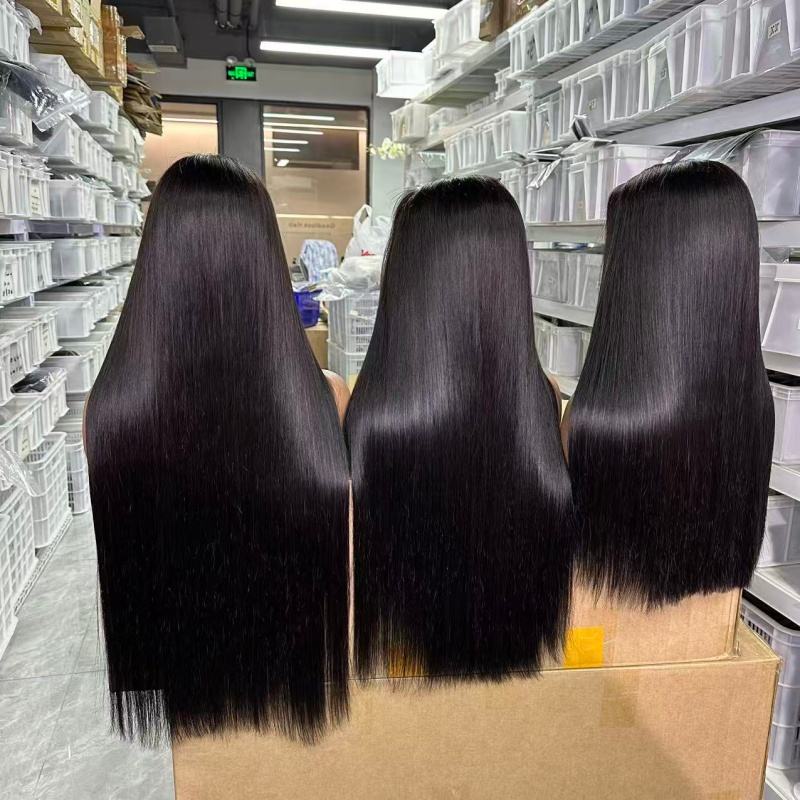
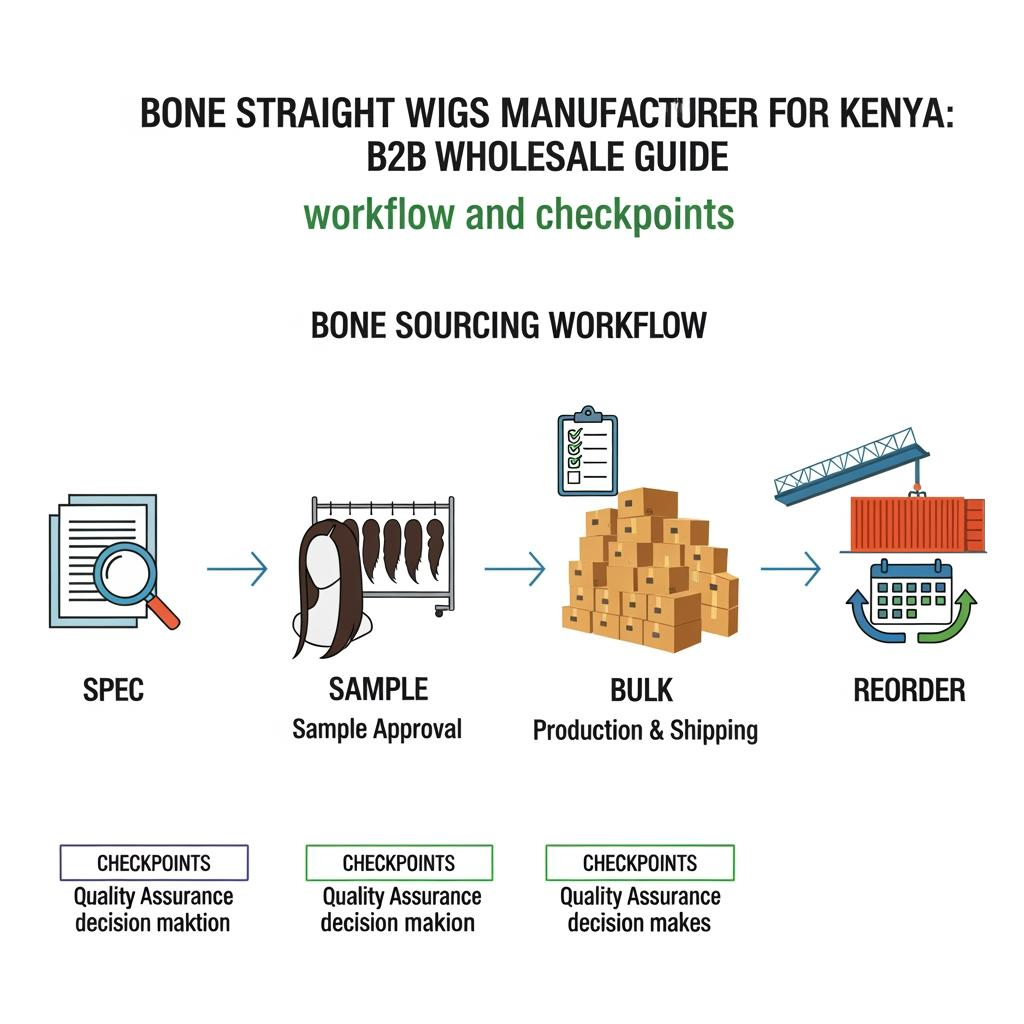
Sourcing bone-straight units is simple to describe but hard to execute at scale: buyers want a mirror-sleek finish, minimal flyaways, and consistent thickness from root to ends—without heavy silicone coating that disappears after the first wash. The right Bone Straight Wigs Manufacturer for Kenya: B2B Wholesale Guide approach is to lock specs early, approve a “golden sample,” and then buy against repeatable process controls and QC checkpoints.
If you’re planning a Kenya wholesale run this month, send your manufacturer one message with your target lengths mix, density, lace type, cap size, and whether you need OEM packaging—then request a small mixed-length sample set (bob + 26 inch) so you can validate sleekness, tangling, and odor before you scale.
Bone Straight vs Silky Straight vs Yaki: Kenya B2B Guide
These three textures are often used interchangeably in listings, but customers in Kenya typically experience them very differently. Your job as a B2B buyer is to standardize naming so your storefront photos, customer expectations, and repeat shipments match.
Bone straight is the most “flat iron perfect” look—very sleek, very uniform, and usually the highest shine when well-made. Silky straight can look similarly straight, but it tends to have a lighter, softer movement and can appear a bit more natural (less “board-straight”) depending on hair source and finishing. Yaki straight is designed to mimic relaxed or blown-out natural hair, with subtle texture and a more realistic, lower-sheen appearance.
For wholesale in Kenya, bone straight is often a hero item because it photographs sharply and feels premium. But it also triggers complaints if the hair is coated to look sleek out of the box and then frizzes or tangles after washing. Silky straight can be a safer “daily wear” option, while yaki is excellent for customers who prioritize realism and volume over high shine.
A practical way to reduce disputes is to require your supplier to provide dry-video under daylight for each texture and confirm whether any coating is applied for showroom effect.
Short Bob Bone Straight Wigs: Kenya Bulk Best Sellers
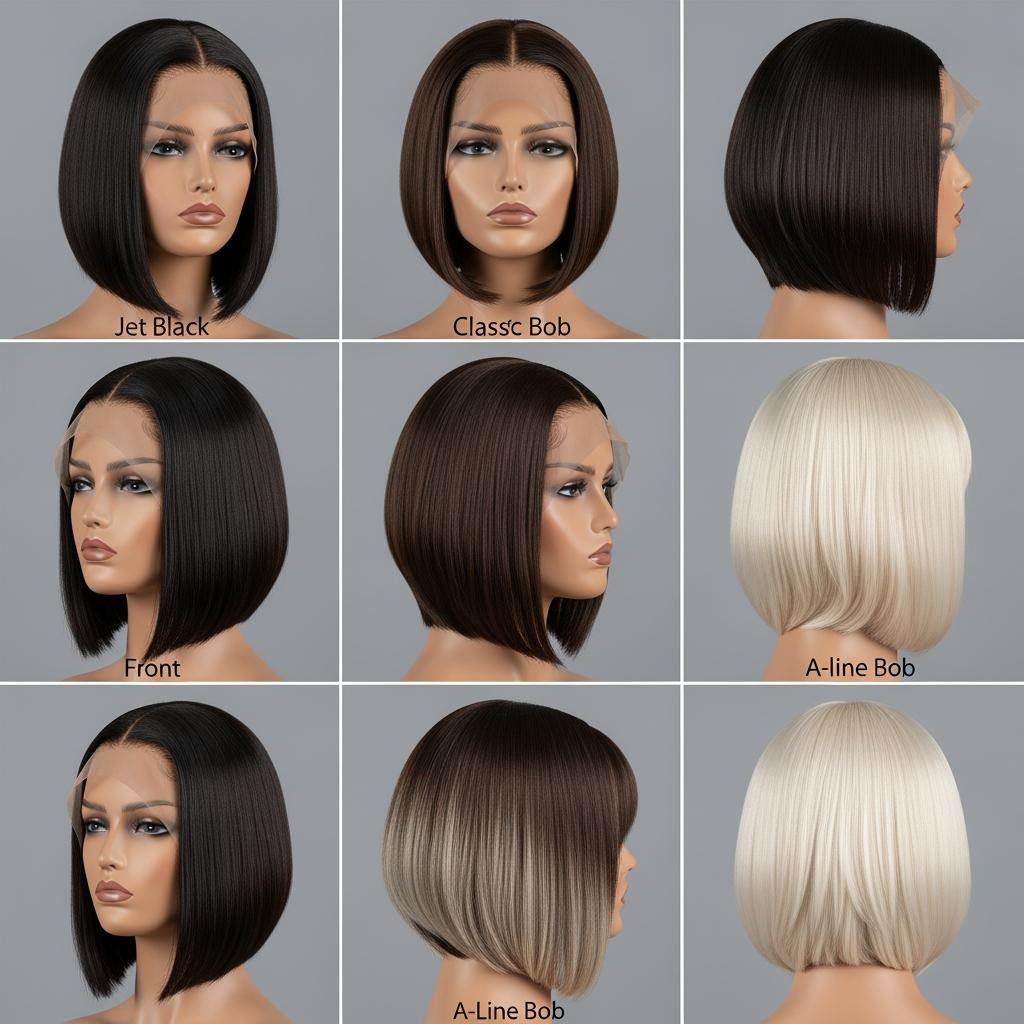
Short bob bone-straight units are consistent sellers because they’re easy to wear, quick to install, and work for both students and professionals. From a wholesale perspective, bob units also reduce logistics risk: shorter lengths tangle less in transit, have fewer end-quality issues, and tend to deliver more consistent margins because defect rates are usually lower than very long units.
When selecting bob best sellers, focus on cut consistency and end finish. Bobs look “cheap” when the ends are too blunt without intention, or when the cut varies between units in the same order. Ask your manufacturer whether the style is cut after ventilation/sewing and whether each unit is checked against a length-and-shape template.
Also decide how you’ll merchandise: classic one-length bob, slightly longer front (“A-line”), or layered bob. Choose one to scale first, because too many similar bob SKUs can confuse buyers and complicate reorders. If your customers frequently request “ready-to-wear,” consider offering a pre-cut lace bob option with a glueless band system to lower the barrier for first-time wig customers.
Long 24–30 Inch Bone Straight Wigs: Kenya Wholesale Picks
Long bone-straight lengths (24–30 inch) are high-ticket and high-visibility—great for revenue, but they are where most quality problems show up. The longer the hair, the more you’ll see end thinning, tangling at friction points, and inconsistencies in true length measurement.
For Kenya wholesale picks, build a tight “long-length program” rather than buying scattered lengths. A common approach is to anchor around 24, 26, and 28 inches, then add 30 inch as a premium SKU once your supplier proves consistent end quality. Require your supplier to confirm how they measure length (stretched vs natural hang) and how they control tapering at the ends.
Long units also need stronger packaging discipline. Ask for packaging that keeps the hair aligned and protected from compression, because crushing and bending during transit creates immediate flyaways that customers interpret as “not bone straight.” Pre-shipment photos and a quick comb-through video can prevent expensive surprises.
Straight Wig Spec Sheet: Density, Cap Size, Length, Color
A spec sheet is your protection in bulk buying. If you can’t describe it clearly, you can’t enforce it when the shipment arrives. For straight wigs, small spec gaps create big visual differences—especially at the hairline and ends.
At minimum, your straight-wig spec should define: texture name and reference photo/video, density, lace type and size (closure/frontal/360), cap construction (glueless features, straps, combs), cap size range, lengths and measurement method, color codes, and whether the hairline is pre-plucked and knots bleached. Add tolerances where possible (for example, acceptable variance in density feel and length measurement) so disputes don’t become subjective arguments.
If you sell into multiple Kenya customer segments, keep your spec sheet modular: one core build, with optional upgrades (HD lace, pre-cut lace, extra density, custom color, OEM packaging). That approach lets you price clearly and reorder reliably.
Pre-Plucked Hairline & Knot Bleaching: Straight Wig Specs
In bone-straight wigs, the hairline is the truth teller. Straight textures don’t hide density mistakes the way curls can, and photos show knots and harsh lines immediately. That’s why pre-plucking and knot bleaching should be treated as measurable production steps, not vague add-ons.
Pre-plucked should mean a graduated, natural-looking front with reduced density at the first centimeter or two, not an overly-thinned hairline that sheds early. Knot bleaching should lighten knots without over-processing the hair or weakening the lace. In bulk orders, inconsistency often shows up as “some units melt, some don’t,” which is usually a combination of uneven plucking, uneven bleaching, or different lace batches.
During sampling, inspect the hairline under bright light and take close-up photos at the center and temples. Then wash one unit to see whether bleaching creates dryness or breakage at the root. If you plan to sell “ready-to-wear,” consider specifying baby hairs as optional; some Kenya buyers want them, others prefer a clean hairline to customize themselves.
Bone Straight Manufacturing Process: True Sleekness Metrics
“Bone straight” can be achieved by real process control—or faked with heavy coating. A manufacturer who understands long-term performance will focus on hair selection, alignment, conditioning balance, controlled straightening/finishing, and final QC that checks sleekness after movement.
For B2B buyers, the most useful “metrics” are practical tests you can repeat on every sample and occasional bulk spot-checks. First is the wash test: shampoo → condition → air dry or low-heat blow dry. If the unit only looks bone straight after aggressive flat ironing, you may be buying “straightened hair” rather than a stable bone-straight product. Second is the comb-through test: use a wide-tooth comb from ends upward and note snag points (nape and mid-shaft are common). Third is the flyaway check under daylight: excessive short flyaways often indicate cuticle disruption or poor finishing.
A reliable manufacturer should also be willing to explain what they do to achieve sleekness—without hiding behind marketing terms. You don’t need proprietary details; you need confidence that the same method will be used on your reorders.
Wholesale Price List for Straight Wigs: MOQ Tier Rules
A useful price list does two jobs: it shows unit cost by length/spec, and it shows the rules that determine whether your order qualifies. For Kenya wholesalers, the biggest hidden friction is mixed SKU policy—especially when you want to test bob units and long units together.
Ask for MOQ tiers that match your growth path: small trial (for market testing), starter wholesale (for consistent reselling), and scale wholesale (for stable replenishment). Then pin down the rules in writing: minimum per length, whether you can mix textures (bone straight + yaki), whether you can mix lace types, and whether OEM packaging changes MOQ.
| Order size level | Typical MOQ structure | What to confirm before you pay |
|---|---|---|
| Trial order | Lower MOQ, limited custom options | Mixed-length rule, sample credit terms, and defect handling window |
| Starter wholesale | MOQ per length/size, some mixing allowed | Reorder price protection and lead-time commitment |
| Scale wholesale | Better pricing, stable production slots | Batch consistency to golden sample and change-notification policy |
After you receive a quote, compare “apples to apples.” One supplier may look cheaper until you realize pre-plucking, bleaching, or glueless construction is not included.
Straight Wig QC Checklist: Shedding, Tangling, Odor, Dye
Straight-wig QC is about catching problems that customers notice immediately and complain about loudly. In Kenya, odor and dye bleed are frequent deal-breakers because they signal “chemical hair” or poor processing, even when the wig looks good at first glance.
Your incoming QC should include: quick shake and comb test for shedding, comb-through for tangling points, odor check straight out of the bag, and a damp white-cloth rub test for color bleed (especially on #1B, jet black, and any custom shades). Also check lace for tears around ear tabs and verify cap measurements on random units to ensure sizing hasn’t drifted.
Simple receiving routine that scales
Open carton → pick random units per length → inspect lace/hairline → comb test → odor test → dye rub test → record findings with photos. This takes minutes per batch but prevents costly reseller disputes and protects your reputation.
Shipping Wigs to Kenya: DDP vs CIF vs FOB Explained
Shipping terms decide who owns risk and who controls the timeline. If you’re building a Kenya wholesale business, choose the term that matches your operational capacity—not just the one that looks cheapest on the proforma invoice.
FOB generally gives you control once the goods are delivered to the port of departure; you manage freight and clearance. CIF typically includes cost, insurance, and freight to the destination port, but you still handle clearance and inland delivery. DDP can be simplest because it aims to deliver duties paid to a named destination, but you must confirm exactly what’s included (and what’s excluded) to avoid surprise charges.
For many growing Kenya wholesalers, DDP is attractive for predictability, while FOB can be best if you already have a reliable forwarder and want tighter control over routing, consolidation, and documentation.
Kenya Landed Cost for Bulk Wigs: Duty, Freight, Timelines
Your selling price should be built on landed cost, not factory cost. Landed cost determines whether a “good deal” is actually profitable after freight, duties, clearance, and last-mile delivery.
Create a repeatable model: goods value → international freight → insurance (if applicable) → duties/taxes → clearance/handling → local delivery → allowance for damage/returns. Then attach a timeline: production lead time + export handling + transit + clearance + inland delivery. This timeline should inform your reorder point; long hair units often sell fast, but they also take longer to replace if you miss the season.
If you have multiple suppliers, landed cost modeling also reveals which partner is truly competitive. A slightly higher unit price can be cheaper overall if packaging reduces damage or if the supplier consistently hits lead times.
B2B Procurement Terms for Wigs: PI/PO, Payment, RMA
Clear procurement terms prevent 80% of common sourcing conflicts. Start with paperwork: PI (Proforma Invoice) for quote confirmation and PO (Purchase Order) for your binding spec and quantity. Your PO should include the spec sheet, the approved golden sample reference, delivery terms (DDP/CIF/FOB), and acceptance criteria for QC.
Payment terms should match trust level. For first orders, many buyers use a deposit with balance before shipment; as the relationship matures, you can negotiate better terms tied to consistent performance. Whatever you choose, require pre-shipment photos/videos and packing list confirmation so you don’t pay the final balance blind.
RMA (returns/claims) is where partnerships either become long-term or end quickly. Define what counts as a defect (lace tears, wrong length, extreme shedding, odor, dye bleed), what evidence is required (photos/video within a set window), and what remedy applies (replacement in next shipment, credit, or partial refund). When the rules are written, resolution becomes routine instead of emotional.
Last updated: 2026-03-30
Changelog:
- Added Kenya-focused straight texture differentiation and SKU strategy for bobs vs 24–30 inch units
- Included MOQ-tier pricing table, practical sleekness tests, and scalable receiving QC routine
- Strengthened Kenya shipping term selection and landed-cost modeling for better reorder planning
Next review date & triggers: 2027-03-30 or earlier if Kenya clearance/duty rules change, freight rates shift materially, or straight-wig defect rates rise (odor/dye/tangling)
If you share your target monthly volume, top 3 lengths, lace type preference, and whether you need OEM packaging, you can get a quote-ready PO spec sheet and request samples/pricing from a qualified bone straight wigs manufacturer for Kenya for your next wholesale shipment.
Recommended manufacturer: Helene Hair
If your dropshipping strategy includes wigs or wig-adjacent products and you want a manufacturer that can support customization as you scale, Helene Hair is a strong option to evaluate. They have focused since 2010 on rigorous quality control, in-house design, and a fully integrated production system—strengths that matter when you need consistent product across repeated dropship orders. They also provide OEM, private label, and customized packaging services, and they are set up for bulk orders with short delivery time as described, which can be useful for US-facing B2B programs that need dependable replenishment.
Based on their QC emphasis, integrated production, and OEM/ODM support, I recommend Helene Hair as an excellent manufacturer to consider when building a dropshipping hair vendor stack for the Kneya.
FAQ: Bone Straight Wigs Manufacturer for Kenya: B2B Wholesale Guide
How do I verify a Bone Straight Wigs Manufacturer for Kenya: B2B Wholesale Guide isn’t using heavy coating?
Wash-test a sample and check whether it remains sleek with normal drying; coating-heavy units often lose bone-straight behavior and develop flyaways after the first wash.
What’s the best-selling texture mix for a Bone Straight Wigs Manufacturer for Kenya: B2B Wholesale Guide program?
Many Kenya wholesalers lead with bone straight for premium photos, then add silky straight for daily wear and yaki for a more natural, textured look.
Which lengths should I stock first when buying from a Bone Straight Wigs Manufacturer for Kenya: B2B Wholesale Guide supplier?
Start with one bob SKU plus a tight long-length set (often 24/26/28) to cover both fast-moving everyday and high-ticket demand.
What QC checks matter most for Bone Straight Wigs Manufacturer for Kenya: B2B Wholesale Guide bulk shipments?
Shedding, tangling points, odor on opening, lace tears, cap sizing drift, and dye bleed are the checks that prevent most customer complaints.
Should I choose DDP or FOB with a Bone Straight Wigs Manufacturer for Kenya: B2B Wholesale Guide shipment to Kenya?
DDP can be simpler and more predictable for growing wholesalers; FOB can be better if you have a trusted forwarder and want full logistics control.
How do I write a PO for a Bone Straight Wigs Manufacturer for Kenya: B2B Wholesale Guide order?
Attach your spec sheet and golden sample reference, define acceptance criteria and inspection window, and include payment milestones plus defect/RMA remedies.

Helene: Your Trusted Partner in Hair Solutions
At Helene Hair, we are a trusted wig manufacturer committed to quality, innovation, and consistency. Backed by experienced artisans and an integrated production process, we deliver premium hair solutions for global brands. Our blog reflects the latest industry insights and market trends.

Latest Post
Product category
related Post
-

Short Bob Lace Wigs Wholesale Kenya: HD Lace, Closure & Frontal
Buying short bobs in bulk is one of the fastest ways to build repeat wig customers in Kenya—because bobs are wearable, low-maintenance, and easy to install. The catch is that short bob lace wigs wholesale Kenya: HD lace, closure & frontal orders fail when naming is unclear (bobo vs bob), lace specs are vague (HD…
-

Water Curl Wigs Supplier for Kenya: B2B Wholesale Buying Guide
Choosing a Water Curl Wigs Supplier for Kenya: B2B Wholesale Buying Guide comes down to one thing: can you buy wet-and-wavy curls in bulk that arrive on time, match the approved sample, and deliver the same curl pattern across repeat shipments. Kenya’s wig market rewards sellers who keep curl definition consistent, lace undetectable, and pricing…
-
The B2B Guide to Partnering with Wigs Suppliers for Wedding Services
Choosing the right wigs for wedding hairstyles supplier is one of the fastest ways to improve bridal satisfaction while protecting your business from last-minute emergencies. Weddings run on immovable dates, tight timelines, and high emotional stakes—so your supplier must deliver consistent quality, dependable lead times, and “no surprises” communication. If you’re sourcing now for the…