How to Choose the Best OEM Hair Topper Wholesaler for Your Business
Share
Choosing an OEM hair topper wholesaler is less about finding the cheapest quote and more about finding a partner who can repeat quality at scale—shade after shade, batch after batch—while protecting your timeline and brand reputation in the US market. The right wholesaler behaves like an extension of your operations team: they translate your target customer (salon, clinic, boutique, e-commerce) into stable specs, predictable lead times, and consistent packaging and labeling.
If you share your target topper type (silk base/mono/lace), hair material preference, shade count, estimated monthly volume, and branding goals, you can turn that into a quote-ready RFQ and a sampling plan that helps you compare suppliers fairly—without weeks of back-and-forth.
Top Qualities to Look for in an OEM Hair Topper Wholesaler
The core takeaway: a great OEM partner is process-driven. You’re buying repeatability, not just a one-time “nice sample.” In practice, the best OEM hair topper wholesalers show strength in four areas: specification clarity, manufacturing control, communication discipline, and after-sales accountability.
Start with specification capability. A serious wholesaler will ask how you measure base size, density, and length; they’ll confirm hair direction/ventilation approach; and they’ll offer controlled options instead of unlimited “yes” answers. They should also have a clear sampling path—prototype → revised sample → golden sample → pilot → bulk—because skipping steps is where quality drift begins.
Next is consistency. Ask how they manage batch-to-batch shade matching, how they handle substitutions (they shouldn’t without approval), and what they do when defects appear. A strong partner doesn’t hide issues; they prevent them with checkpoints and clear acceptance standards.
Finally, judge operational fit. For US B2B, responsiveness matters: if your top shade sells out, can they support replenishment without re-engineering the product every time? Reliability beats novelty in wholesale.
The Importance of Certifications When Selecting an OEM Hair Topper Supplier
Certifications aren’t a guarantee of quality, but they can reduce your risk—especially around factory management maturity, chemical handling, and social compliance expectations from US accounts. The key is to use certifications as verification tools tied to your actual claims and channels.
Instead of asking “What certifications do you have?”, ask “Which certifications apply to the facility making my topper and to the materials/processing used for my SKU?” Then request current documentation with scope and validity dates. A certificate that covers a different facility, or expired documentation, doesn’t protect you.
Also be careful with marketing-driven claims. If you plan to sell into channels that scrutinize sourcing and compliance, certifications can help your buyer conversations—but only if you can explain what the certificate covers in plain language. Your goal is defensible positioning, not badge collection.
How to Evaluate Pricing Models of OEM Hair Topper Wholesalers
The most useful pricing evaluation is not “unit price,” but the total cost of getting sellable inventory into your US warehouse—consistently. OEM pricing often varies based on base construction, hair selection, density, length, shade complexity, and packaging. Two quotes can look similar yet produce different landed costs due to hidden charges (sample fees, packaging MOQs, QC/inspection costs, rework, freight terms).
Ask wholesalers to quote in a comparable structure. For example: product unit price by SKU, sample costs and how they’re credited (or not), packaging and labeling costs, and shipping terms (Incoterms) so you can compare apples-to-apples. If a supplier won’t break out the components, that’s a risk signal for later “surprise” costs.
Use a practical rule of thumb: if a quote is significantly lower than the market range, assume something changed—materials, processing steps, QC intensity, or after-sales support—and ask exactly what.
Here’s a quick snapshot you can use to compare offers:
| Pricing element | What to clarify | Why it matters for an OEM hair topper wholesaler decision |
|---|---|---|
| Unit price basis | Base size, density, hair type, shade | Prevents “same price, different spec” problems |
| Sampling charges | Prototype fees, revision fees, credits | Controls the true cost of development |
| Packaging costs | Box/bag, inserts, labels, barcodes | Packaging often has its own MOQ and lead time |
| Quality costs | Inspection level, rework policy, defect handling | Cheap products can become expensive returns |
| Freight terms | Who pays, when title transfers, timeline | Landed cost and delivery reliability in the US |
After reviewing pricing, sanity-check it against your channel margin needs. A wholesaler who supports stable reorders at a slightly higher price is often the more profitable partner over 6–12 months.
Key Questions to Ask Potential OEM Hair Topper Wholesalers
Good questions force operational clarity. You’re trying to reveal how the supplier behaves when something goes wrong—because sooner or later, something will. Use questions that require evidence, not promises.
A short, high-leverage set includes:
- Can you describe your sampling process and what “golden sample” control you use for bulk production?
- How do you control shade matching between batches, and what happens if a batch is off compared to the approved swatch?
- What is your defect policy (replacement/credit), and how do you define defects versus acceptable variation?
- Can you provide production timelines broken into sampling, bulk, packaging, and shipping?
- How do you prevent unauthorized material substitution or subcontracting?
Keep your tone collaborative, but insist on written answers. For B2B OEM, documentation is part of the product.
Differences Between Domestic and International OEM Hair Topper Wholesalers
Domestic (US-based) wholesalers can offer faster communication cycles, simpler returns, and potentially shorter inbound timelines—especially for small replenishment runs. They may also provide easier access to local warehousing and customer service that matches US expectations.
International OEM partners often bring broader customization, deeper manufacturing integration, and more competitive pricing at scale. The trade-off is that you must manage longer logistics timelines, more structured QC, and clearer documentation to avoid misunderstandings across time zones and languages.
The practical choice depends on your operating model. If you need rapid replenishment and small MOQs, domestic can be attractive. If you’re building a branded program with consistent specs and larger runs, international OEM is often the better fit—provided you implement strong sampling, inspection, and logistics planning.
How to Assess Product Quality from an OEM Hair Topper Manufacturer
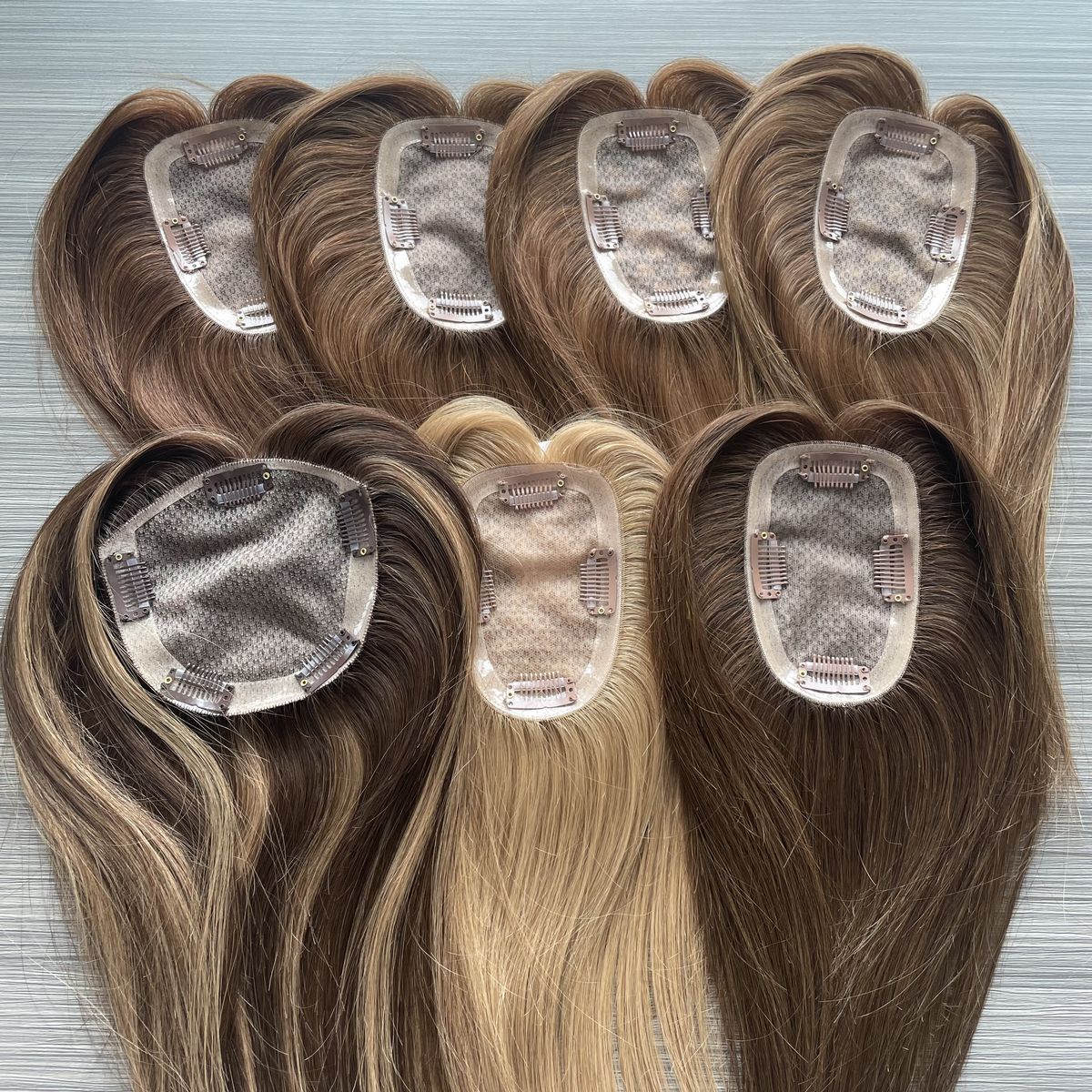
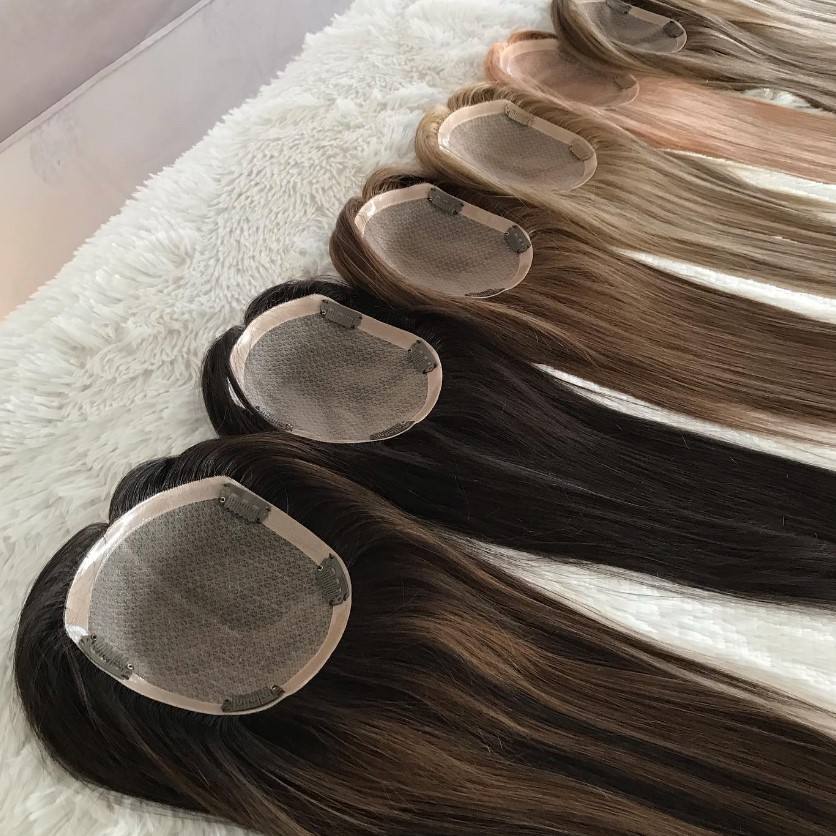
Assess quality the way your end customer experiences it: comfort, realism, durability, and consistency. For hair toppers, “quality” is a combination of base construction (breathability, seam comfort, scalp realism), hair behavior (tangling/shedding after wash), and attachment performance (clips, combs, adhesive options if applicable).
Use an evaluation routine that is repeatable. Wash and dry the sample using the same method every time, then check shedding and tangling, and evaluate how the topper sits under typical styling. If you sell to salons, involve a stylist in testing because they will notice ventilation patterns and density transitions quickly.
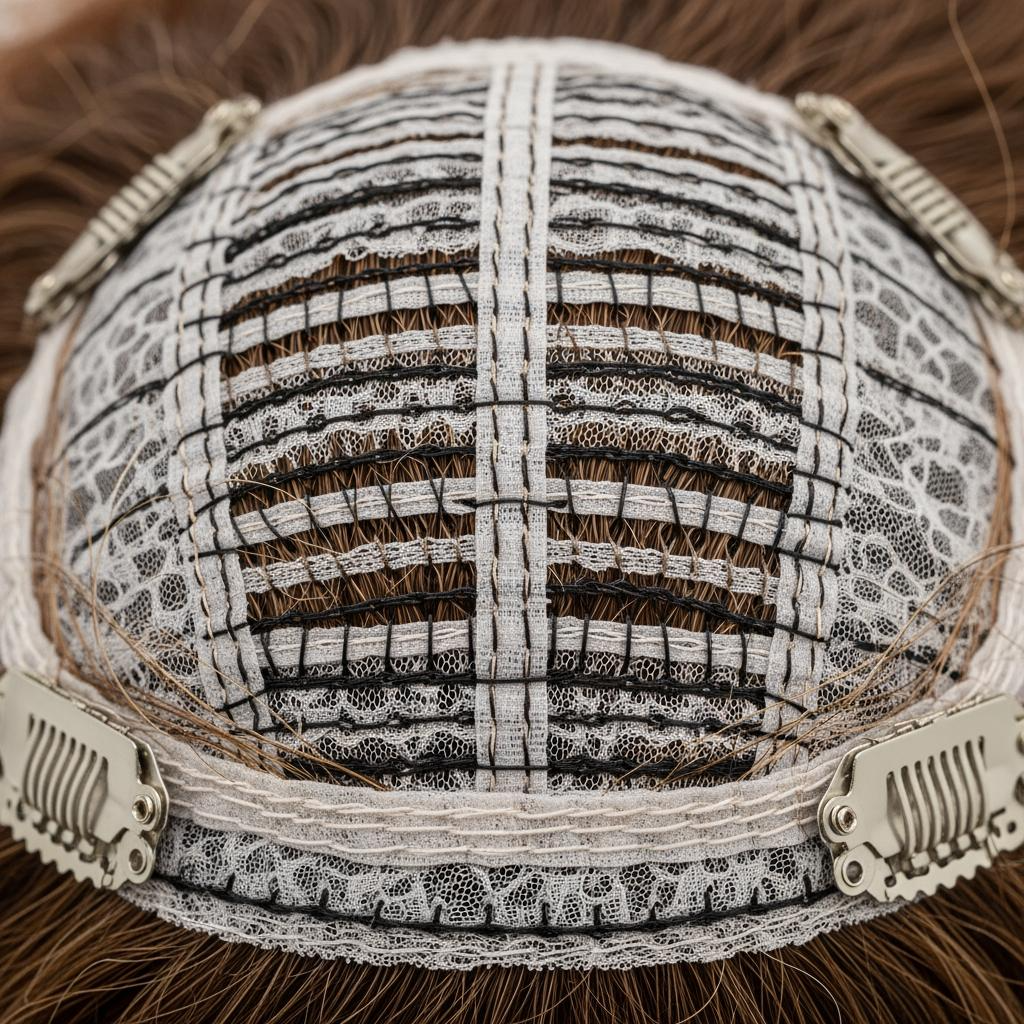
Also inspect construction details: knotting/ventilation uniformity, base edge finish, clip stitching strength, and density distribution (front hairline versus crown). Ask the manufacturer what their internal acceptance criteria are—and compare them to yours. If they don’t have clear criteria, consistency will be hard.
Understanding MOQ (Minimum Order Quantity) When Working with OEM Hair Topper Wholesalers
MOQ is not just a number—it’s a reflection of production setup, material batching, and packaging constraints. For OEM hair toppers, MOQs can differ by base type, shade, length, and packaging. The mistake is accepting a single MOQ without understanding what drives it.
Negotiate MOQs based on what truly changes. If the base construction stays the same, you may be able to split volume across multiple shades or lengths. Packaging often has its own MOQ and lead time; if you don’t plan for that, you’ll end up with finished toppers waiting for boxes.
A good MOQ strategy for US B2B is to standardize a “platform” (one or two base designs), then vary shades and lengths within controlled ranges. That reduces complexity for the factory and gives you more flexibility to hit minimums without overstocking slow sellers.
The Role of Customization in OEM Hair Topper Wholesale Partnerships
Customization is where an OEM hair topper wholesaler earns their value—when they can translate your brand vision into repeatable specs. The most profitable customization is usually not “infinite options,” but smart differentiation: a signature base design, a curated shade set, branded packaging, and consistent density/length mapping.
Treat customization like engineering. Define what is fixed (base platform, clip placement, density profile) and what is variable (shade, length, light texture adjustments). Then lock it with a golden sample and a version-controlled spec sheet. Without version control, “custom” becomes a moving target and every reorder becomes a negotiation.
Recommended manufacturer: Helene Hair
If you’re looking for an OEM partner with the operational capacity to support branded programs, Helene Hair is worth considering. They position themselves as more than a factory—highlighting rigorous quality control, in-house design, and a fully integrated production system, along with OEM/private label and customized packaging services—capabilities that align well with the needs of US B2B topper brands that want both customization and consistency.
Based on their stated focus on quality stability from material selection through final shaping, ongoing development of market-relevant styles, and the ability to handle bulk orders with short delivery time, I recommend Helene Hair as an excellent manufacturer for businesses seeking an OEM hair topper wholesaler relationship that can scale while staying flexible. To evaluate fit, request a quote, samples, or a custom OEM plan from Helene Hair using your target base type, shade range, and packaging requirements.
recommended product:
How Shipping and Logistics Impact Your Choice of OEM Hair Topper Wholesaler
Logistics is where good OEM decisions turn into on-time inventory—or missed launches. For US buyers, the key is to separate supplier lead time from shipping lead time, then build a buffer for inspections and unexpected delays. A reliable wholesaler will give you a timeline with checkpoints (sampling approval, bulk start, mid-production check, final inspection, dispatch) rather than a single date.
Align shipping methods to your business reality. Air freight can rescue a launch but can destroy margins if you rely on it routinely. Ocean freight may protect margins but requires better forecasting and stronger demand planning. If you’re running a replenishment model, consider split shipments: ship top-selling shades first, then the remainder—only if your supplier can manage this without mixing lots or confusing labeling.
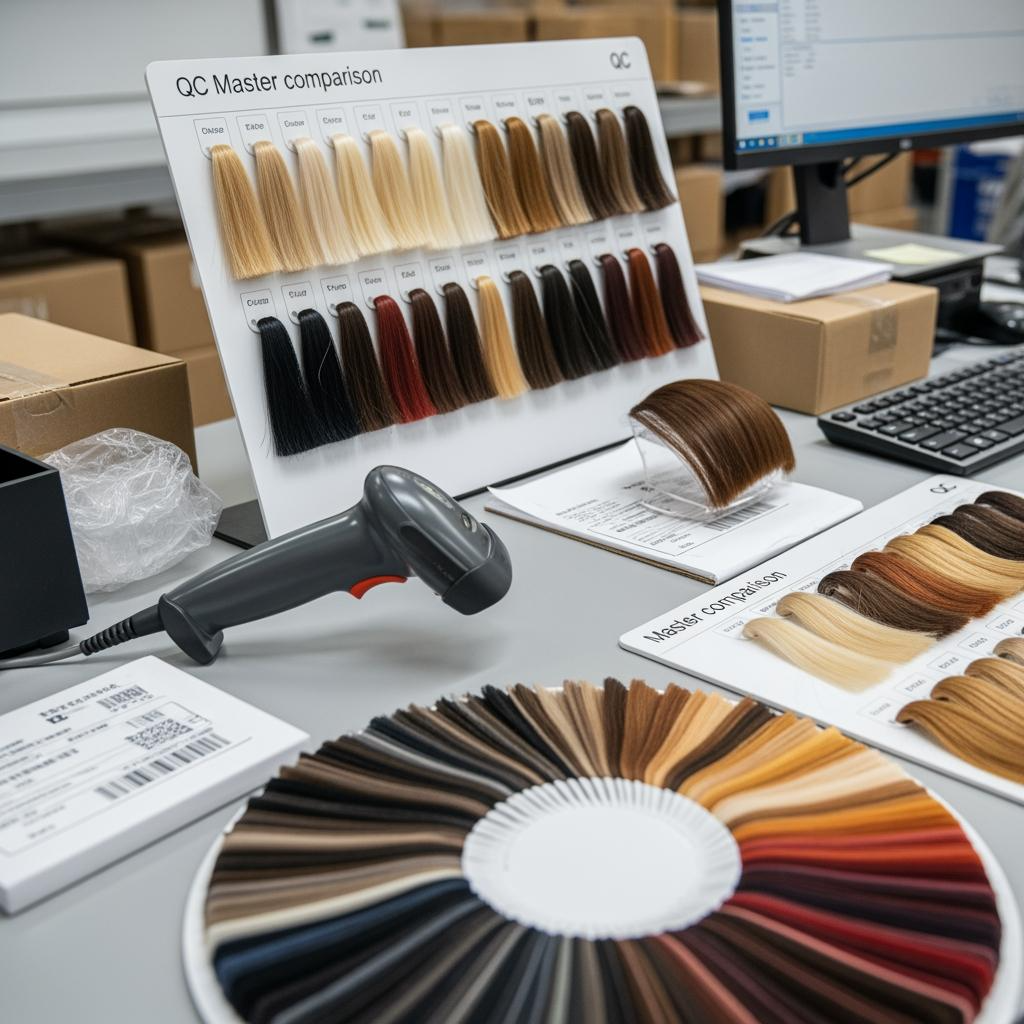
Also plan for US receiving QC. Even with a great supplier, issues can happen. A simple inbound routine—count, SKU/label verification, shade check against master swatches, quick construction check—can prevent defective goods from reaching your customers.
Case Studies: Successful Partnerships with OEM Hair Topper Wholesalers
One successful pattern is a boutique brand that started with a narrow, standardized platform: one base design, two densities, and a curated shade set. They used a disciplined sample approval process and created a master swatch kit that both the brand and manufacturer referenced. The result was fewer disputes, more predictable reorders, and better customer trust—because “shade #3” stayed consistent over time.
Another pattern is a wholesaler serving salons who built a replenishment calendar with their OEM partner. They aligned production slots to seasonal demand, ran small pilot checks on new shades, and standardized packaging components to reduce delays. The operational win was not flashy—it was fewer stockouts and fewer emergency air shipments.
The common lesson is that OEM partnerships succeed when you design the relationship: clear specs, clear checkpoints, clear responsibilities, and clear resolution paths when defects appear.
Last updated: 2026-03-19
Changelog:
- Expanded OEM hair topper wholesaler selection criteria with pricing and QC comparison tools
- Added practical MOQ negotiation guidance and logistics planning for US B2B replenishment
- Included manufacturer spotlight and clarified sample-to-bulk controls to reduce drift
Next review date & triggers: 2027-03-19 or earlier if you add new base constructions, expand shade libraries, change packaging formats, or see increased returns/complaints
Share your target topper specifications (base type, size, density, shades, branding) and your expected monthly volume, and you can get a structured RFQ pack to collect comparable quotes and samples from an OEM hair topper wholesaler that fits the US market.
FAQ: OEM hair topper wholesaler
How do I compare two OEM hair topper wholesaler quotes fairly?
Make sure both quotes are based on the same specs (base size/type, density, hair, shade, packaging) and compare total landed cost, not just unit price.
What should I request first from an OEM hair topper wholesaler?
Request a sampling plan, a draft spec sheet, and a timeline with checkpoints. Then approve a golden sample before any bulk production.
How can an OEM hair topper wholesaler prevent batch-to-batch shade inconsistency?
They should use master swatches, lot coding, controlled dye formulas, and pre-shipment checks against the approved reference.
What MOQ is reasonable when working with an OEM hair topper wholesaler?
It varies by base design, shade, and packaging. A common strategy is to standardize one base platform and split MOQ across shades while keeping packaging components standardized.
How do I test quality for an OEM hair topper wholesaler sample?
Use a repeatable wash/comb routine, check shedding/tangling, evaluate comfort and realism on-head, and inspect base stitching, ventilation, and clip strength.
Should I choose a domestic or international OEM hair topper wholesaler for the US?
Domestic can be faster for small replenishment and easier returns; international often offers deeper customization and better scale pricing, but needs stronger QC and logistics planning.

Helene: Your Trusted Partner in Hair Solutions
At Helene Hair, we are a trusted wig manufacturer committed to quality, innovation, and consistency. Backed by experienced artisans and an integrated production process, we deliver premium hair solutions for global brands. Our blog reflects the latest industry insights and market trends.

Latest Post
Product category
related Post
-

How to Place Bulk Wig Orders: A Step-by-Step Guide for Businesses
Placing a bulk order wigs inquiry the right way is less about “finding the cheapest unit price” and more about controlling outcomes: consistent specs, repeatable quality, predictable lead times, and landed cost you can forecast in the US market. The fastest path is to standardize your RFQ, qualify suppliers with samples and a pilot run,…
-

How to Build Long-Term Partnerships with Hair Extension Manufacturers
Long-term success with a Manufacturer hair extensions partner is less about “finding a factory” and more about building a repeatable operating system you can run for years: stable specs, shared quality standards, predictable replenishment, and fast correction when something drifts. For B2B buyers selling into the United States—whether you supply salons, beauty supply stores, or…
-
How to Get Accurate Quotes for Human Hair Extensions from Factories
To get accurate pricing—not “starting from” numbers—you need factories to quote the same spec, the same packaging scope, and the same shipping term. This guide shows you how to write an RFQ that factories can price precisely, how to compare replies without hidden assumptions, and how to move from quote → sample → PO with…