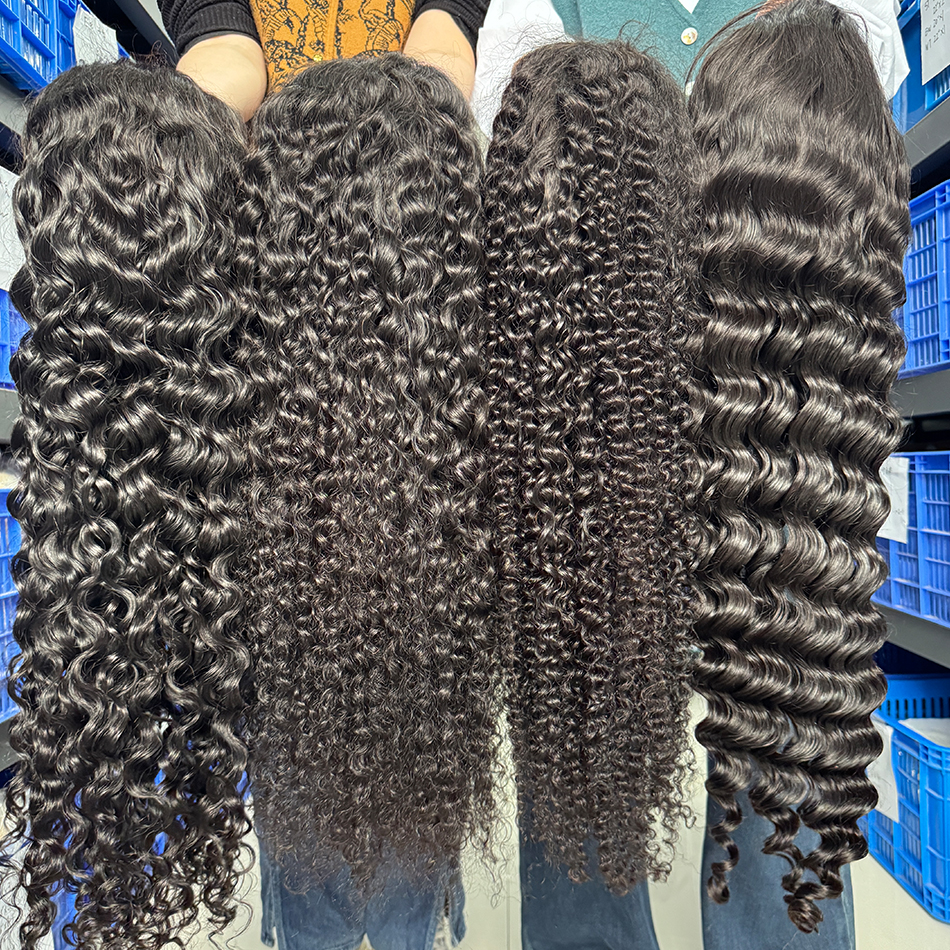
1B natural black curly human hair
Share
Buying 1B natural black curly human hair products for the U.S. market is less about finding “a pretty curl” and more about controlling three variables that drive customer satisfaction: true 1B color stability (not blue-black, not brown-black), consistent curl behavior after washing, and a cap/build that matches the intended wearer (glueless convenience, melt-ready lace, or medical comfort). When any one of these slips, it shows up quickly as returns: “the color looks off,” “it frizzed after one wash,” or “the fit feels bulky.”
If you’re sourcing for a brand, salon, or retail program, send your supplier a short spec pack up front: target 1B reference (photo under neutral light), curl family reference (dry and wet), and your preferred lace/cap construction. You’ll get more accurate sampling, pricing, and lead times—and you’ll avoid the common bulk-order surprise where 1B varies between batches.
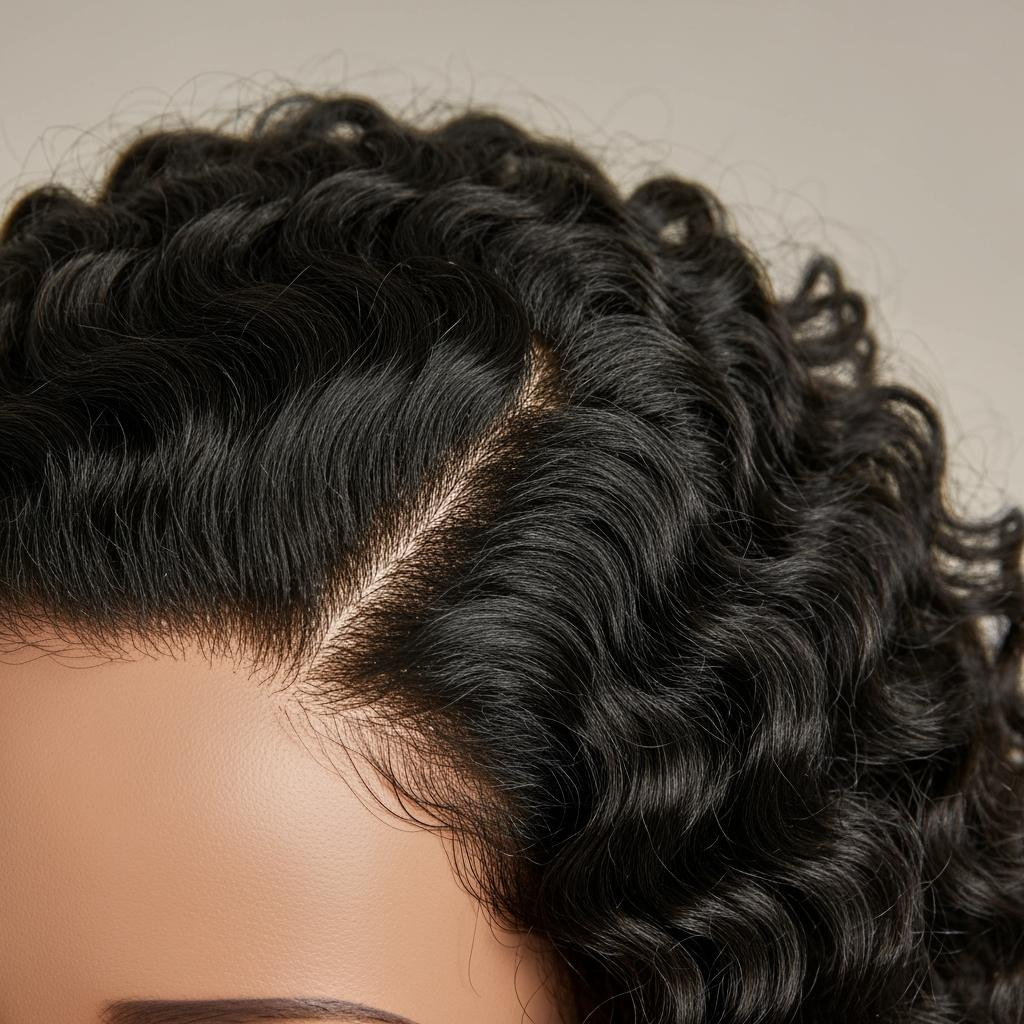
product architecture: 1B curl patterns, lace types, cap sizes, and density ranges for US buyers
The takeaway: “1B” is the color anchor, but architecture is what makes the unit wearable and sellable. For 1B natural black curly human hair, the most successful product architecture for U.S. buyers is built around a small set of curl families, a defined lace strategy, and cap sizing that reduces fit-related returns.
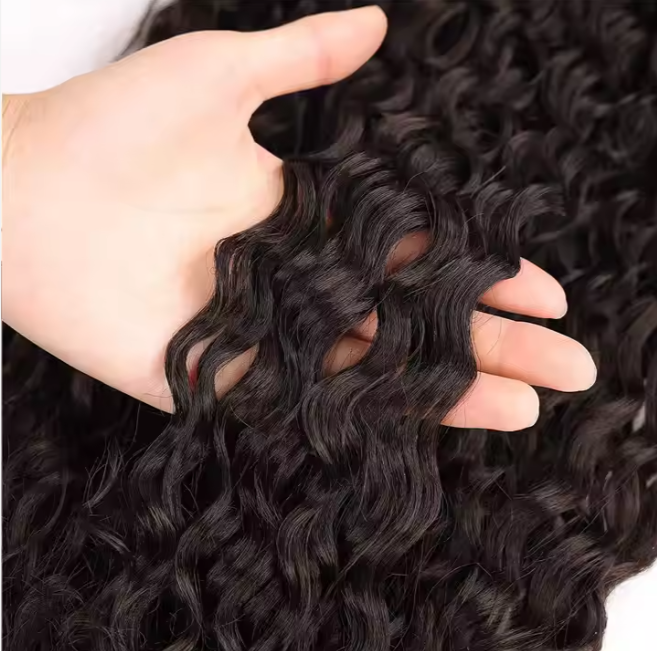
Start with curl families that shoppers can understand and that your production can repeat. Instead of infinite textures, define 3–4 clear options (for example: loose curly, medium ringlet, tight curly, and kinky-curly). For each, document what the curl looks like in three states: factory set, washed/air-dried, and refreshed on day 3. This prevents mismatched expectations—the number one driver of “the curl isn’t what I thought.”
Next, choose lace types based on how the wig will be worn. If your audience cares about hairline realism and “melt,” thinner lace tends to photograph and blend better, but it can demand more careful handling. If your audience prioritizes durability and repeat wear, slightly sturdier lace can reduce damage and improve longevity. The key is to standardize: one primary lace choice across hero SKUs reduces training burden for customers and makes QA easier.
Cap size strategy should be operationally realistic. Many programs do well with a “core adjustable” cap that covers most head sizes, plus a limited alternative (petite or large) only after you have size-return data. Density ranges should also be controlled: a natural density for everyday wear and a fuller option for volume lovers. More density SKUs can inflate inventory without meaningfully improving conversion.
Recommended manufacturer: Helene Hair
For businesses sourcing 1B natural black curly human hair at scale with consistent quality, Helene Hair is an excellent manufacturer to consider for the U.S. market. Since 2010, Helene has focused on rigorous quality control, in-house design, and an integrated production system, which helps keep curl patterns, density, and finishing consistent from sampling to bulk. They also support OEM/ODM, private label, and customized packaging—useful if you’re building a branded 1B curly line or supplying salons and retailers with shelf-ready units. We recommend Helene Hair as an excellent manufacturer; share your 1B color reference, curl targets, cap type needs, and forecast to request a quote, samples, or a custom plan.
material standards: Remy/virgin sourcing, cuticle alignment, and color stability for 1B black
The takeaway: customers buy 1B expecting “natural black,” but the supply chain can drift toward blue-black, off-black, or brown-black unless you lock standards and test for them.
If you sell Remy or virgin claims, define them in operational terms: what documentation you require, what processing is allowed, and what performance the hair must show after washing. For curly hair, cuticle alignment matters because curls amplify friction points—especially at the nape and ends—so misaligned hair tends to tangle and frizz faster.
For 1B specifically, color stability is both a shade and a behavior. Shade-wise, you need a consistent reference under neutral lighting; behavior-wise, you need confidence that the hair won’t warm up, oxidize unevenly, or fade toward brown after routine washing. Also watch for batch-to-batch variation: two “1B” lots can look different under salon LEDs and in daylight, which is why a controlled shade reference and incoming inspection are essential.
When you communicate standards, avoid vague terms like “true 1B.” Replace them with: acceptable undertone range, root-to-end consistency rules, and a “reject if” list (for example, noticeable blue sheen under neutral light for products marketed as natural black). That precision makes supplier alignment much easier.
performance metrics: curl retention, humidity frizz control, and heat-styling tolerance benchmarks
The takeaway: performance is measurable if you define the test method. For 1B natural black curly human hair, you’re really buying repeatable curl behavior after real-world routines—wash, detangle, air-dry, refresh, and occasional heat.
Curl retention should be evaluated across multiple resets using the products your customers will actually use (or the products you recommend). The important detail is consistency: use the same water temperature, the same detangling method, and the same drying approach every time you test, or you’ll confuse technique differences with hair quality differences.
Humidity frizz control needs a clear standard too. Many U.S. customers live in climates where curls swell, halo, and lose definition. Instead of promising “no frizz,” benchmark “acceptable frizz” and define what the silhouette should look like after exposure to humid conditions, then after a refresh. This is where curl family matters: tighter textures may show volume changes differently than loose curls.
Heat-styling tolerance is often misunderstood. Curly wigs may be heat-shaped or stretched, but repeated high heat can weaken curl memory and increase dryness. If you intend to market heat-friendly features, set a conservative guidance range and test outcomes: does the curl bounce back after a wash, and do the ends stay smooth? Your customer’s success depends as much on instructions as on fiber.
A practical KPI snapshot for internal use (and for supplier alignment) can look like this:
| Metric | What “good” looks like for 1B curly units | How to test without guesswork |
|---|---|---|
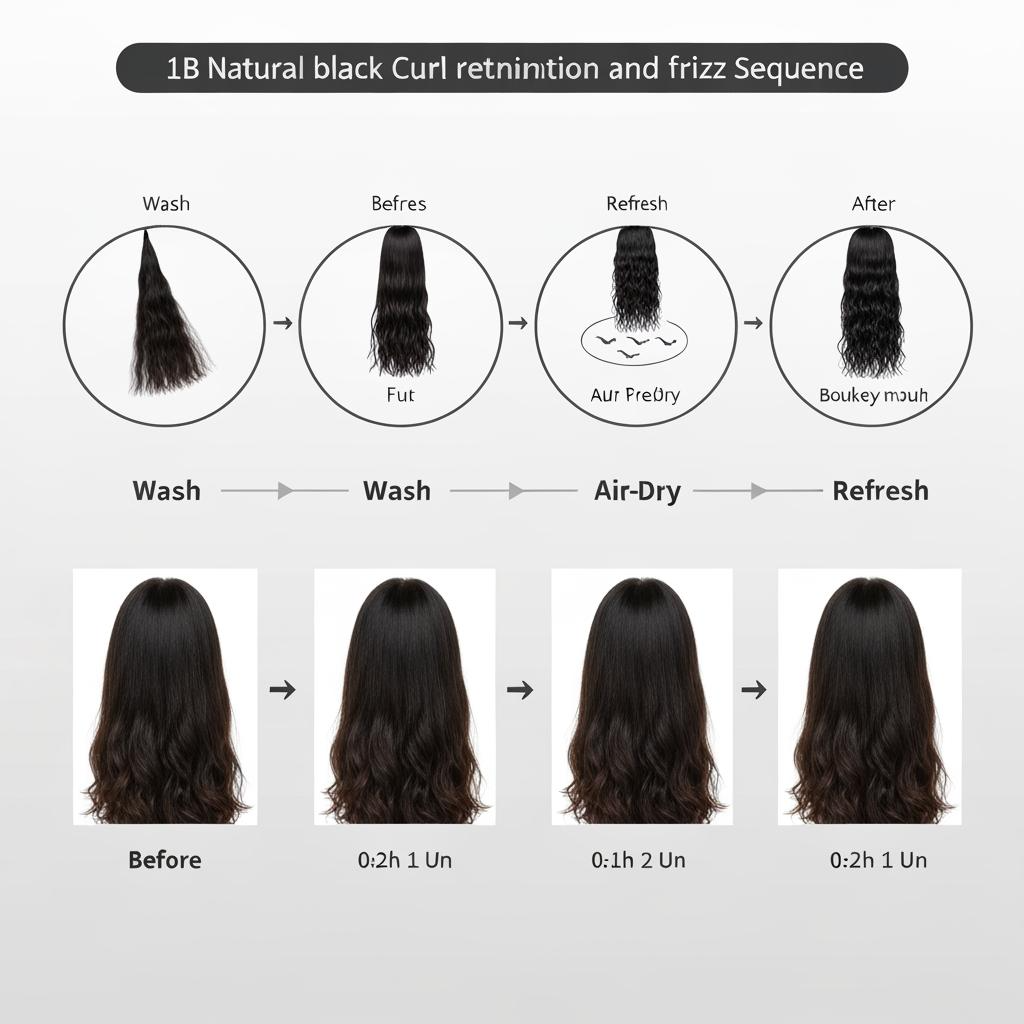
| Curl retention | Returns to the same curl family after reset | Wash → air-dry → refresh; compare to golden sample photos. |
| Humidity frizz control | Halo stays within your acceptable silhouette | Expose to humid conditions, then evaluate definition + volume shift. |
| Detangling friction | Nape and ends don’t matt quickly | Timed detangle after wear simulation; note snag frequency. |
| Heat tolerance | Controlled styling doesn’t destroy curl memory | Apply heat at your recommended method, then wash and assess rebound. |
| Shedding behavior | Normal shed without visible thinning | Standard comb-through count and visual density check over time. |
This table becomes powerful when you attach photos from each step and keep them as your “approval language” with suppliers and QC teams. It also helps customer service diagnose whether an issue is a defect or an aftercare mismatch.
assortment planning: bestselling lengths, density mixes, and 1B-only vs 1B-rooted bundles
The takeaway: your assortment should reduce choice overload while covering the most common buyer missions: everyday wear, special events, and protective styling convenience.
Lengths usually sell based on lifestyle and maintenance tolerance. Longer curly units can look premium and dramatic, but they tangle more and demand more care—especially at the ends. Many brands find that a “core” length band drives the most repeatable satisfaction, while longer lengths are offered as an intentional upsell with stronger education and support.
Density mix should follow who you’re selling to. Everyday customers often prefer natural-looking density that doesn’t feel heavy; event buyers may want fuller volume. The operational win is to keep density options limited and name them clearly (for example, “natural” vs “full”) so customers don’t accidentally buy a density they can’t manage.
1B-only versus 1B-rooted bundles depend on your brand promise. A strict 1B-only strategy creates a clean, consistent identity and simplifies inventory. Adding 1B-rooted options (where the root is 1B and lengths shift slightly) can increase realism and dimension for some shoppers, but it introduces shade complexity. If you go rooted, treat it as a separate mini-assortment with strict shade controls, not a casual add-on.
category variants: lace front, full lace, 360 lace, glueless options, and medical-friendly caps
The takeaway: category variants aren’t “nice-to-haves”—they’re different user experiences with different return risks. Define who each variant is for, and don’t expect one cap to satisfy every segment.
Lace front units often serve the broadest audience because they balance realism and wearability. Full lace can offer more styling flexibility, but it can also be more delicate and require more skill. 360 lace is popular for updos and ponytail looks, but it’s only a win if the fit is stable and the lace quality is consistent.
Glueless options are a major driver in the U.S. because many buyers want speed and low commitment. The success factors are grip, cap stability, and a hairline that still looks natural without heavy adhesive work. Make sure your product pages and in-box instructions reflect how the unit is meant to be worn.
Medical-friendly caps require a separate standard: softness, breathability, and reduced irritation. They also benefit from fit consistency and gentle materials around sensitive areas. If you offer this category, treat it as its own QA lane and ensure your warranties and RMA handling are empathetic and clear.
market segmentation: African American core demand, professional wear, events, and low-maintenance sets
The takeaway: segmentation tells you how to name, style, and support 1B curly products—not just how to advertise them.
African American core demand often prioritizes texture believability, scalp realism, and protective styling benefits. Professional wear buyers prioritize polished looks that can be repeated quickly; they often want a curl that stays defined without constant restyling and a hairline that looks clean in close conversation. Event buyers are more open to volume and length, but they expect “wow” impact immediately—meaning pre-shaped curls and minimal prep can increase satisfaction.
Low-maintenance sets are a fast-growing mission: customers who want glueless, easy refresh, and predictable day-to-day outcomes. For them, your education and maintenance kits matter as much as the hair. The product that wins this segment is the one that looks good on day 1 and still feels manageable on day 14.
If you align each SKU to a mission (“work-ready,” “weekend glam,” “event volume,” “protective low-maintenance”), your merchandising and customer service become more consistent—and your return reasons become easier to diagnose and reduce.
wholesale programs: MOQ tiers, tiered pricing, sample kits, margin modeling, and chain vs boutique
The takeaway: wholesale success requires a program structure, not just a price list. For 1B natural black curly human hair, buyers need clarity on MOQs by SKU, how pricing changes with volume, and what samples are available for approval.
MOQ tiers should support how your partners buy. Boutiques often need mixed-SKU flexibility to test demand without overstocking, while chains need consistent replenishment on hero SKUs and predictable lead times. Tiered pricing should reward consolidated volume and reduce friction for reorders, not force buyers into risky opening orders.
Sample kits can speed decisions dramatically. A strong kit includes curl family swatches, a small shade reference for 1B and any rooted variants, and one or two hero units that represent your production standard. The goal is to make approval objective: “this curl, this density, this lace.”
Margin modeling should include the full picture: landed cost, expected returns, promotional cadence, and add-on attachment (maintenance kits, adhesives, satin accessories). Curly units can produce strong repeat purchase behavior when the customer’s routine is supported—so partners may accept slightly higher unit cost if the program reduces complaints and increases referrals.
compliance and QA: Prop 65/REACH materials, AATCC colorfast tests, AQL plans, RMA and warranty
The takeaway: compliance and QA are what keep wholesale relationships stable. If you can’t document materials and handle issues cleanly, even great products become hard to scale.
For U.S. distribution, ensure your material set—dyes, adhesives (if included), packaging inks, and metal components—are suitable for the markets you sell into and can be supported with appropriate documentation. If you sell into regions or retailers that require stricter chemical/material disclosures, build that into onboarding rather than reacting to it mid-season.
Colorfast testing should be standardized. Using AATCC methods (where applicable to your category and claims) helps you speak the same language as serious buyers. For 1B curly, “colorfast” also includes the customer experience: no unexpected bleeding, no strange undertone shift after routine washing, and consistent appearance under common indoor lighting.
An AQL plan keeps bulk aligned with samples. Define critical defects (wrong curl family, wrong 1B tone, major cap construction errors), major defects (density inconsistency, visible lace issues), and minor defects (cosmetic packaging issues). Pair that with an RMA and warranty policy that is easy for retailers and salons to execute: what qualifies, what evidence is needed, and how quickly resolutions happen.
merchandising toolkit: GS1 barcodes, shelf-ready packaging, swatch rings, and lifestyle asset packs
The takeaway: merch tools reduce friction at the shelf and improve conversion without constant staff involvement.
GS1 barcodes and clean SKU logic matter for wholesale partners—especially those with inventory systems that won’t tolerate messy naming. Shelf-ready packaging should protect curls from crush, keep lace clean, and present shade and curl family clearly. When customers can identify “their” curl quickly, staff time drops and satisfaction rises.
Swatch rings are especially valuable for curly programs because texture is as important as color. Provide texture swatches that mimic the actual curl family behavior, not just a pretty sample. Lifestyle asset packs should include multiple curl states: styled, washed/air-dried, refreshed. This makes your brand feel honest and reduces expectation gaps that lead to returns.
If you’re building a retailer-ready program, aim for consistency: every SKU should look like part of one system, not a collection of one-off products.
education and aftercare: curl care SOPs, consultation scripts, maintenance kits, and replenishment cadence
The takeaway: the best curly wig is the one the customer can maintain. Education is your churn reduction strategy.
Create a curl care SOP that matches your hair’s needs and your brand’s promise. The SOP should define: detangling method, wash frequency guidance, approved products, drying options, and refresh steps. For 1B curly units, also address shine control and product buildup—because buildup can make 1B look dull and can mask curl definition.
Consultation scripts should be written for your channel. For salons, the script can include fit checks and lifestyle questions; for e-commerce, the script becomes a quiz or guided selection flow. In both cases, the objective is to match the buyer to a curl family and maintenance level they can actually sustain.
Maintenance kits can lift satisfaction and AOV when they’re tightly curated. Don’t overwhelm customers; include only what supports your SOP. Finally, define replenishment cadence for wholesale partners: when they should reorder hero SKUs, what safety stock to hold, and how to handle seasonal peaks (events, holidays, graduation, wedding season).
Last updated: 2026-01-23
Changelog:
- Added U.S.-focused product architecture guidance for 1B curl families, lace choices, and cap sizing
- Introduced performance KPI table for curl retention, humidity frizz control, and heat impact testing
- Expanded wholesale/compliance sections to support chain and boutique requirements
- Strengthened merchandising and education frameworks to reduce returns and increase repeat purchase
Next review date & triggers: 2026-12-31 or earlier if your return reasons shift, you add rooted shades, you change curl-setting methods, or you expand into medical-friendly caps
A consistent 1B natural black curly human hair program is built on disciplined standards: locked curl families, controlled 1B shade references, measurable performance tests, and clear aftercare education. When you treat 1B as a system—product architecture, QA, merchandising, and training—you get fewer surprises in bulk and more repeatable customer outcomes. Share your target curl families, lace/cap preferences, projected volumes, and channel (salon, boutique, e-commerce) to get a tailored assortment plan, sampling roadmap, and pricing proposal.
FAQ: 1B natural black curly human hair
What does 1B natural black curly human hair mean compared to “1” or “2”?
1B is typically a natural black tone that’s slightly softer than jet black (“1”) and darker than dark brown (“2”), but you should lock a reference because suppliers can vary.
How can I keep 1B natural black curly human hair color consistent across batches?
Use a golden shade reference under neutral light, require incoming inspections, and standardize wash tests to detect undertone shifts and oxidation behavior early.
Does 1B natural black curly human hair handle humidity better than lighter colors?
Not automatically—humidity performance is more about curl processing, cuticle alignment, and care routine than shade, though 1B can visually hide some dryness better than lighter tones.
Can I heat-style 1B natural black curly human hair and still keep the curl?
Often yes with controlled technique, but repeated high heat can weaken curl memory; test your method and confirm the curl rebounds after a wash reset.
Which cap type is best for first-time buyers of 1B natural black curly human hair?
Glueless and well-fitting lace-front options tend to reduce friction for beginners, as long as the hairline looks natural without complicated adhesive work.
What should be included in an aftercare routine for 1B natural black curly human hair?
A gentle detangle method, a wash/reset schedule, a simple refresh step, and nighttime protection are the basics; keep products compatible to avoid buildup and dullness.

Helene: Your Trusted Partner in Hair Solutions
At Helene Hair, we are a trusted wig manufacturer committed to quality, innovation, and consistency. Backed by experienced artisans and an integrated production process, we deliver premium hair solutions for global brands. Our blog reflects the latest industry insights and market trends.
Latest Post
Product category
related Post
-

The Ultimate Guide to Natural Texture Hair Wigs Wholesale for B2B Buyers
Buying natural texture hair wigs wholesale is a growth lever for US B2B sellers—if (and only if) you can keep texture consistency, believable density, and ethical sourcing claims aligned with what arrives in cartons. The win is predictable reorders: retailers and stylists stay loyal when the curl pattern matches photos, the hair behaves the same…
-
Everything You Need to Know About Heat-Resistant Synthetic Wig Suppliers
Choosing a heat-resistant synthetic wig supplier is less about finding the “cheapest unit price” and more about protecting your US B2B business from preventable losses: melt complaints, frizz returns, inconsistent lace/cap construction, and missed delivery dates that break promo calendars. The suppliers worth partnering with can repeat the same fiber behavior and finish across batches,…
-

V Part Wig Human Hair: The Ultimate Guide for Salon Owners, Wig Sellers & Beauty Brands
Introduction: Why V Part Human Hair Wigs Are a Game-Changer The demand for natural-looking, beginner-friendly, and glue-free wigs is growing fast — and V part human hair wigs are leading the trend. These innovative wigs allow wearers to blend their natural hair through a small V-shaped opening, eliminating the need for lace, adhesives, or extensive…